

Marie Jeanne de Heurles Laboras de Mezi
 Librería Samer Atenea
 Kálamo Books
 Librería Elías (Asturias)
 Librería Kolima (Madrid)
 Librería Proteo (Málaga)
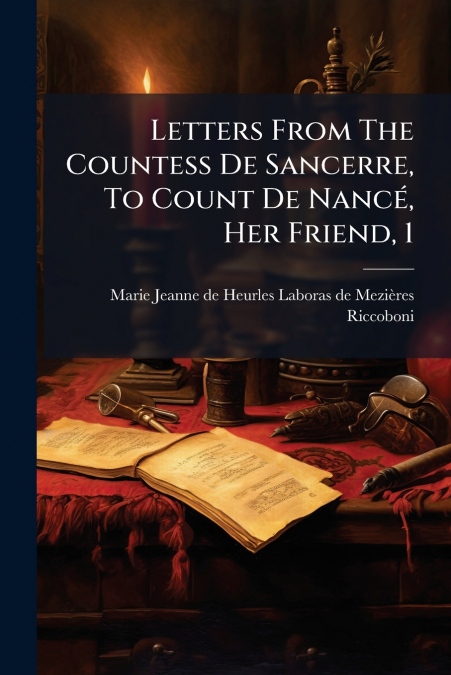
'Letters From The Countess De Sancerre, To Count De Nancé, Her Friend, 1' is an epistolary novel that delves into the intricate social circles and personal relationships of 18th-century France. Penned by Marie Jeanne de Heurles Laboras de Mézières Riccoboni, this narrative unfolds through a series of letters exchanged between the Countess de Sancerre and the Count de Nancé, offering readers an intimate glimpse into their lives, thoughts, and emotions. The countess’s letters reveal a world of courtly love, societal expectations, and personal desires, painting a vivid picture of the era’s customs and manners. Riccoboni masterfully captures the nuances of human connection, exploring themes of friendship, love, and the constraints placed upon individuals within the rigid structure of aristocratic society. This novel offers a compelling exploration of human relationships and social dynamics, making it a captivating read for those interested in historical fiction and the epistolary form.This work has been selected by scholars as being culturally important, and is part of the knowledge base of civilization as we know it. This work was reproduced from the original artifact, and remains as true to the original work as possible. Therefore, you will see the original copyright references, library stamps (as most of these works have been housed in our most important libraries around the world), and other notations in the work.This work is in the public domain in the United States of America, and possibly other nations. Within the United States, you may freely copy and distribute this work, as no entity (individual or corporate) has a copyright on the body of the work.As a reproduction of a historical artifact, this work may contain missing or blurred pages, poor pictures, errant marks, etc. Scholars believe, and we concur, that this work is important enough to be preserved, reproduced, and made generally available to the public. We appreciate your support of the preservation process, and thank you for being an important part of keeping this knowledge alive and relevant.





