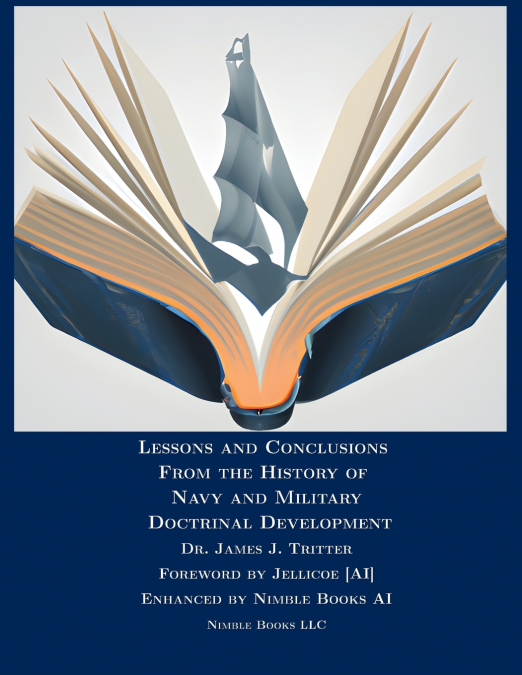

Lessons and Conclusions From the History of Navy and Military Doctrinal Development

Lessons and Conclusions From the History of Navy and Military Doctrinal Development

Dr. James J. Tritten

23,57 €
IVA incluido
Disponible
Editorial:
W. Frederick Zimmerman
Año de edición:
2023
ISBN:
9781608881413
23,57 €
IVA incluido
Disponible

Selecciona una librería:

  • Librería Samer Atenea
  • Librería Aciertas (Toledo)
  • Kálamo Books
  • Librería Perelló (Valencia)
  • Librería Elías (Asturias)
  • Donde los libros
  • Librería Kolima (Madrid)
  • Librería Proteo (Málaga)

In 1995, the end of the Cold War found the US Navy grappling with its role and its future. Dr. James Tritten ably articulated the value of naval doctrine in this historical survey for the Naval Doctrine Command. In subsequent decades, USN doctrine evolved in response to changing circumstances, in some instances successfully, in some instances not. The USN abandoned long-distance strike aircraft in a doctrinal pursuit of sorties-to-shore, wasted decades on a Littoral Combat Ship that was almost literally all doctrine, and saw its seakeeping readiness degrade at a level even more fundamental than the doctrinal. Today, the US Navy is faced with an existential threat from a peer competitor that can outrange it, outshoot it, and outbuild it. Getting naval doctrine right has never been more critical. Understanding its history is a necessary first step that will repay investment for anyone interested in American sea power: that is, American national power.From the author’s abstract:Navy doctrine has existed in the past [it is not new]; It is proper to study the doctrinal lessons of other nations and other services; important doctrinal lessons can be drawn from history; Formal navy doctrine suffered a setback with the introduction of new technologies and the end of the Anglo-Franco wars in the Nineteenth Century; Pre-war military doctrine cannot forseee all eventualities; Centralized military doctrine should not be cast in stone; Military doctrine has changed due to a variety of circumstances; It is not easy to institute a significant doctrinal change in large organizations; it appears easier to change military doctrine when it is written; Measures of effectiveness are needed for military doctrine;Successful navy doctrine has been prepared by a variety of individuals; Doctrine must be meaningful;Joint and multinational doctrine become more important as national forces downsize; Multinational doctrine for navy forces will be inherently different than multinational doctrine for land forces; There is no one correct military doctrine; There is a doctrinal renaissance in progress; Good military doctrine is of no value without good men and women who are trained and provided the proper equipment;And naval doctrine is not risk free.This book is annotated by Nimble AI and includes a Foreword by ; a variety of pithy, opinionated abstracts including scientific style, tldr, tldr one word, Explain It to Me Like I’m Five Years Old, and Action Items; tools for viewpoint diversity such as Dissents, Red Team Critiques, and MAGA Perspectives; a recursive summary with synopsis; page-by-page summaries; and interior art by artist herb.loc[’AI’].''
Artículos relacionados

  • U.S. Coast Guard in World War II
    Malcolm F Willoughby / Malcolm F. Willoughby
    The intimate view of the U.S. Coast Guard’s dramatic World War II record has long been considered a classic. First published in 1957 and out of print for years, the book is now available in paperback. Handsomely illustrated with more than two hundred photographs, the book serves as a unique memento of one of the most illustrious periods in the Coast Guard’s two hundred year his...
    Disponible

    47,08 €

  • The War for Muddy Waters
    Joshua Tallis
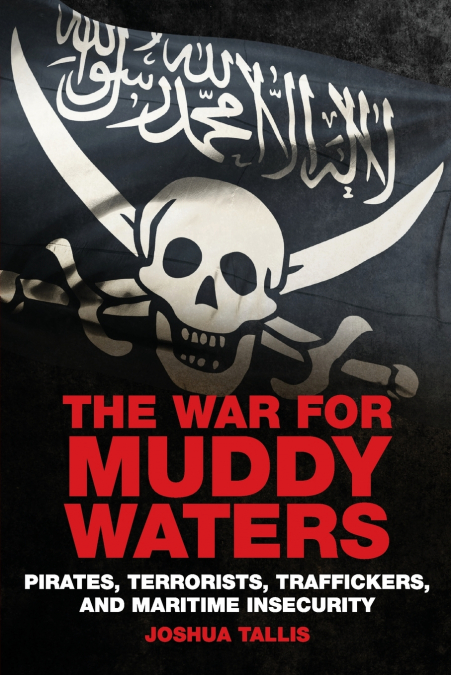
    Historically, operations and studies regarding maritime security focus on individual threats (e.g., piracy, terrorism, narcotics) and individual measures to target them (e.g., counterpiracy, counterterrorism, counternarcotics). This book explores, for the first time, an overall strategy for maritime security, integrating these issues into a single framework. Tallis argues that...
    Disponible

    30,24 €

  • Passage
    Angus Wardlaw
    ’PASSAGE’ is the shocking account of the tragic John Franklin Expedition, brilliantly told in a new novel by Angus Wardlaw, descendant of Captain Francis Crozier who commanded the HMS Terror, sister ship to the HMS Erebus.Wardlaw dramatically unveils the spine-tingling true story of this ambitious but ultimately fated expedition, that ended in death and cannibalism.Meticulously...
    Disponible

    21,85 €

  • Until the Sea Shall Free Them
    Robert Frump / Robert R. Frump
    In 1983 the Marine Electric, a reconditioned World War II vessel, was on a routine voyage thirty miles off the East Coast of the United States when disaster struck: The old coal carrier sank in the frigid forty-foot waves and subzero winds of the Atlantic, and of the thirty-four men aboard, only three survived. Until the Sea Shall Free Them recounts in compelling detail the wr...
    Disponible

    25,30 €

  • U.S. Navy Minecraft
    Ken W. Sayers
    In modern naval warfare, offensive and defensive mine operations and the ships that perform them often take a back seat to the more glamorous carrier strike groups, strategic deterrence patrols and anti-submarine operations. Despite their relatively small size and numbers, minecraft have enormous strategic and tactical value. With more than 200 photos, this book details the ...
    Disponible

    81,45 €

  • PT Boat Bases
    Frank J. Andruss Sr. / Harold E. Walther
    In today’s world, where logistics and supply chains dominate headlines, understanding the challenges and triumphs of wartime base construction and operation offers valuable (and timely) insights. The US and an expansionist East Asian power are once again jockeying to acquire (and deny) access to the remote, undeveloped, and beautiful island bases in the Southwest Pacific descri...