 Librería Samer Atenea
 Kálamo Books
 Librería Elías (Asturias)
 Librería Kolima (Madrid)
 Librería Proteo (Málaga)
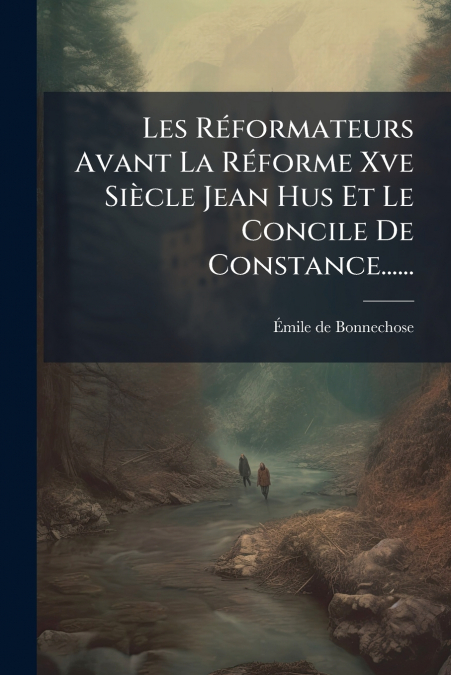
Les Réformateurs Avant La Réforme XVe Siècle Jean Hus Et Le Concile De Constance by Émile de Bonnechose delves into the pivotal pre-Reformation era, focusing on the life and impact of Jean Hus and the significant Council of Constance. This historical work illuminates the religious and political landscape of the 15th century, exploring Hus’s reformist ideas and his confrontation with the established Church. Bonnechose meticulously examines the events leading up to Hus’s condemnation and execution, providing context to the broader movement for religious reform that would eventually culminate in the Protestant Reformation. The book offers insights into the theological debates, power struggles, and the roles of key figures involved in this critical period of European history. Readers interested in religious history, the history of Bohemia, and the pre-Reformation era will find this book to be an invaluable resource.This work has been selected by scholars as being culturally important, and is part of the knowledge base of civilization as we know it. This work was reproduced from the original artifact, and remains as true to the original work as possible. Therefore, you will see the original copyright references, library stamps (as most of these works have been housed in our most important libraries around the world), and other notations in the work.This work is in the public domain in the United States of America, and possibly other nations. Within the United States, you may freely copy and distribute this work, as no entity (individual or corporate) has a copyright on the body of the work.As a reproduction of a historical artifact, this work may contain missing or blurred pages, poor pictures, errant marks, etc. Scholars believe, and we concur, that this work is important enough to be preserved, reproduced, and made generally available to the public. We appreciate your support of the preservation process, and thank you for being an important part of keeping this knowledge alive and relevant.