

 Librería Samer Atenea
 Kálamo Books
 Librería Elías (Asturias)
 Librería Kolima (Madrid)
 Librería Proteo (Málaga)
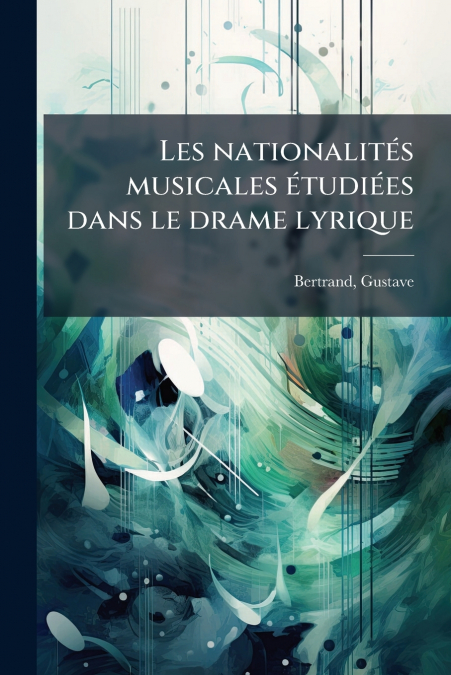
Les nationalités musicales étudiées dans le drame lyrique by Gustave Bertrand explores the concept of musical nationalism as expressed in operatic works. Published in 1872, this study examines the operas of composers such as Gluck, Mozart, Weber, Beethoven, Meyerbeer, Rossini, Auber, Berlioz, Félicien David, Glinka, and Verdi, focusing on how their compositions reflected and contributed to the burgeoning sense of national identity in 19th-century Europe. Bertrand delves into the ’Verdisme et wagnérisme’ movements, analyzing their distinct national characteristics and influences. Furthermore, the book examines the ’École française militaire,’ shedding light on the unique aspects of French military music and its role in shaping national sentiment. This work provides valuable insights into the intersection of music and nationalism during a pivotal period in European history, making it a compelling resource for music historians and enthusiasts alike.This work has been selected by scholars as being culturally important, and is part of the knowledge base of civilization as we know it. This work was reproduced from the original artifact, and remains as true to the original work as possible. Therefore, you will see the original copyright references, library stamps (as most of these works have been housed in our most important libraries around the world), and other notations in the work.This work is in the public domain in the United States of America, and possibly other nations. Within the United States, you may freely copy and distribute this work, as no entity (individual or corporate) has a copyright on the body of the work.As a reproduction of a historical artifact, this work may contain missing or blurred pages, poor pictures, errant marks, etc. Scholars believe, and we concur, that this work is important enough to be preserved, reproduced, and made generally available to the public. We appreciate your support of the preservation process, and thank you for being an important part of keeping this knowledge alive and relevant.





