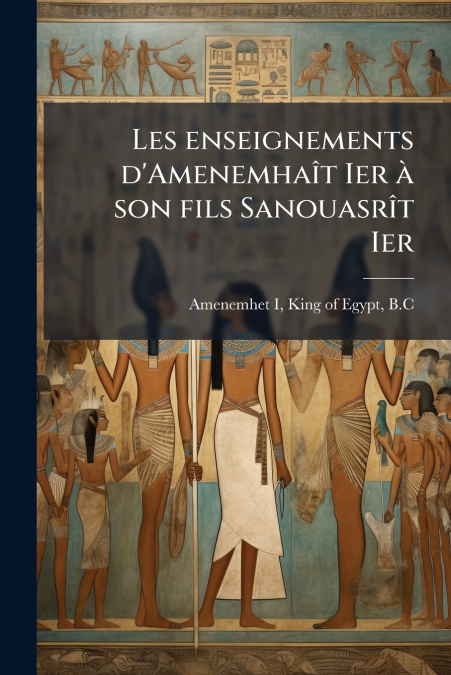
King of Egypt d. 1962 B.C Amenemhet I
 Librería Samer Atenea
 Kálamo Books
 Librería Elías (Asturias)
 Librería Kolima (Madrid)
 Librería Proteo (Málaga)
Les enseignements d’Amenemhaît Ier à son fils Sanouasrît Ier, a timeless piece of ancient Egyptian wisdom, offers invaluable insights into the political landscape and royal responsibilities of the era. Attributed to Amenemhet I, who reigned from 1991 to 1962 BC, this work serves as a comprehensive guide for his son, Sanouasret I, on the art of governance and the challenges of leadership. This instructional text provides a rare glimpse into the mindset of an Egyptian king, detailing the threats he faced and the strategies necessary to maintain power and stability. It is not only a historical document but also a profound reflection on the burdens and duties of a ruler.Presented in the form of a testament, the text conveys Amenemhet’s experiences and warnings, emphasizing the importance of vigilance and trust in a world rife with treachery. The enduring appeal of 'Les enseignements d’Amenemhaît Ier à son fils Sanouasrît Ier' lies in its universal themes of power, succession, and the moral obligations of leadership, making it a significant work for anyone interested in ancient history and political philosophy.This work has been selected by scholars as being culturally important, and is part of the knowledge base of civilization as we know it. This work was reproduced from the original artifact, and remains as true to the original work as possible. Therefore, you will see the original copyright references, library stamps (as most of these works have been housed in our most important libraries around the world), and other notations in the work.This work is in the public domain in the United States of America, and possibly other nations. Within the United States, you may freely copy and distribute this work, as no entity (individual or corporate) has a copyright on the body of the work.As a reproduction of a historical artifact, this work may contain missing or blurred pages, poor pictures, errant marks, etc. Scholars believe, and we concur, that this work is important enough to be preserved, reproduced, and made generally available to the public. We appreciate your support of the preservation process, and thank you for being an important part of keeping this knowledge alive and relevant.