François Constant 1866- Uzureau
 Librería Samer Atenea
 Kálamo Books
 Librería Elías (Asturias)
 Librería Kolima (Madrid)
 Librería Proteo (Málaga)
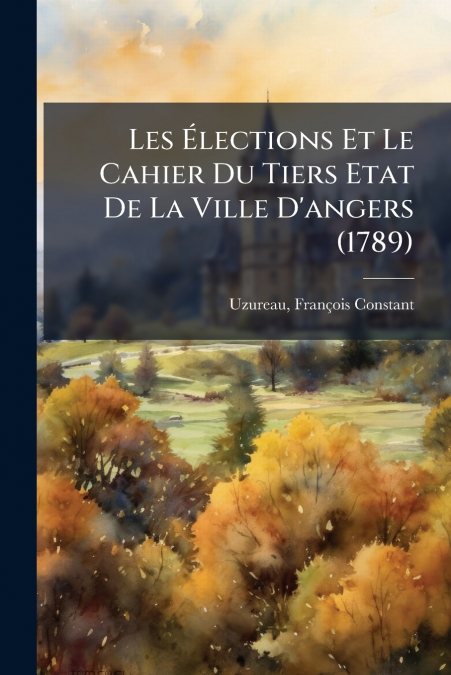
Les Élections Et Le Cahier Du Tiers Etat De La Ville D’angers (1789), by François Constant Uzureau, delves into the pivotal elections and grievances documented in the Third Estate’s register from the city of Angers during the momentous year of 1789. This detailed historical account offers invaluable insights into the political climate and social unrest that preceded the French Revolution. Uzureau’s work meticulously examines the electoral processes and the compilation of the 'cahier,' a list of demands and complaints, providing a window into the aspirations and frustrations of the common people of Angers. This book is a vital resource for historians and scholars interested in understanding the complexities of pre-revolutionary France and the crucial role played by local communities in shaping the course of national events. It sheds light on the socio-political dynamics that fueled the revolution and the enduring quest for liberty and equality.This work has been selected by scholars as being culturally important, and is part of the knowledge base of civilization as we know it. This work was reproduced from the original artifact, and remains as true to the original work as possible. Therefore, you will see the original copyright references, library stamps (as most of these works have been housed in our most important libraries around the world), and other notations in the work.This work is in the public domain in the United States of America, and possibly other nations. Within the United States, you may freely copy and distribute this work, as no entity (individual or corporate) has a copyright on the body of the work.As a reproduction of a historical artifact, this work may contain missing or blurred pages, poor pictures, errant marks, etc. Scholars believe, and we concur, that this work is important enough to be preserved, reproduced, and made generally available to the public. We appreciate your support of the preservation process, and thank you for being an important part of keeping this knowledge alive and relevant.