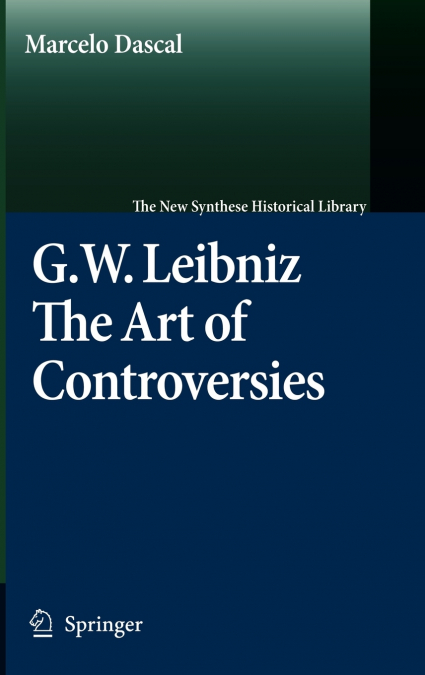
Leibniz

Leibniz

Marcelo Dascal

266,56 €
IVA incluido
Consulta disponibilidad
Editorial:
Springer Nature B.V.
Año de edición:
2008
Materia
Ética y filosofía moral
ISBN:
9781402086670

Selecciona una librería:

  • Librería Samer Atenea
  • Librería Aciertas (Toledo)
  • Kálamo Books
  • Librería Perelló (Valencia)
  • Librería Elías (Asturias)
  • Donde los libros
  • Librería Kolima (Madrid)
  • Librería Proteo (Málaga)

Gottfried Wilhelm Leibniz was an outstanding contributor to many fields of human knowledge. The historiography of philosophy has tagged him as a 'rationalist'. But what does this exactly mean? Is he a 'rationalist' in the same sense in Mathematics and Politics, in Physics and Jurisprudence, in Metaphysics and Theology, in Logic and Linguistics, in Technology and Medicine, in Epistemology and Ethics? What are the most significant features of his 'rationalism', whatever it is? For the first time an outstanding group of Leibniz researchers, some acknowledged as leading scholars, others in the beginning of a promising career, who specialize in the most significant areas of Leibniz’s contributions to human thought and action, were requested to spell out the nature of his rationalism in each of these areas, with a view to provide a comprehensive picture of what it amounts to, both in its general drive and in its specific features and eventual inner tensions. The chapters of the book are the result of intense discussion in the course of an international conference focused on the title question of this book, and were selected in view of their contribution to this topic. They are clustered in thematically organized parts. No effort has been made to hide the controversies underlying the different interpretations of Leibniz’s 'rationalism' - in each particular domain and as a whole. On the contrary, the editor firmly believes that only through a variety of conflicting interpretive perspectives can the multi-faceted nature of an oeuvre of such a magnitude and variety as Leibniz’s be brought to light and understood as it deserves.

Artículos relacionados

  • Ka Ab Ba Building The Lighted Temple
    Dr Terri R. Nelson / Dr Terri RNelson
    The book KaAbBa Building The Lighted Temple/Metaphysical Keys to the Tree of Life draws a circle that is inclusive of the Afrikan origin of the Ancient Kemetic/Egyptian wisdom. It reveals the undeniable root and link of Ancient Africa to all the religious systems that would develop worldwide. This book is explosive in its power to convey the meaning of KaAbBa, the Medu Neter  (...
    Disponible

    37,41 €

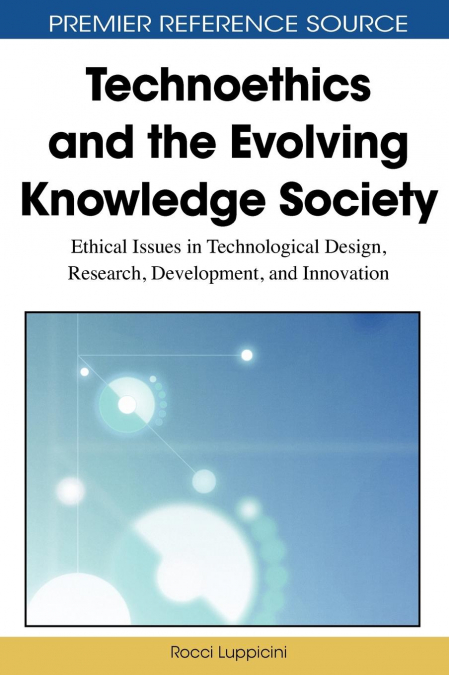
  • Technoethics and the Evolving Knowledge Society
    Rocci Luppicini
    Recently, there has been a major push to rediscover the ethical dimension of technology across the sciences, social sciences, and humanities. Technoethics and the Evolving Knowledge Society: Ethical Issues in Technological Design, Research, Development, and Innovation examines human processes and practices connected to technology embedded within social, political, and moral sph...
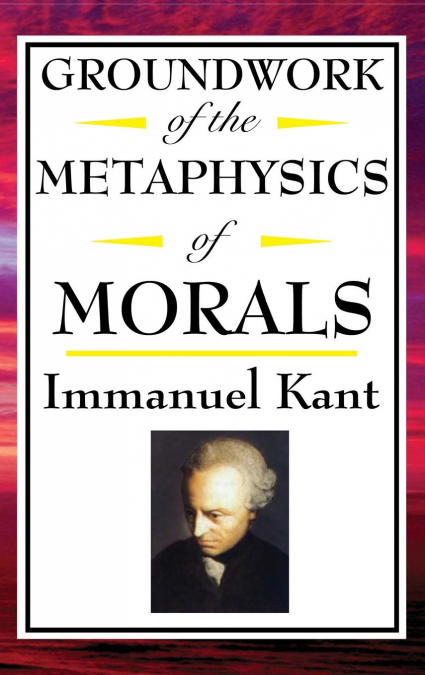
  • Kant
    Immanuel Kant
    Kant’s Groundwork of the Metaphysics of Morals is one of the most important works in modern moral philosophy. It belongs beside Plato, Aristotle, Machiavelli, and Hobbes. Here Kant sets out to articulate and defend the Categorical Imperative - the fundamental principle that underlies moral reasoning - and to lay the foundation for a comprehensive account of justice and human vi...
  • On the Duty of Civil Disobedience
    HENRY DAVID THOREAU
    Civil Disobedience argues that citizens should not permit their governments to overrule their consciences, and that they have a duty to avoid allowing their acquiescence to enable the government to make them the agents of injustice. Thoreau was motivated in part by his disgust with slavery and the Mexican-American War, but the sentiments he expresses here are just as pertinent ...
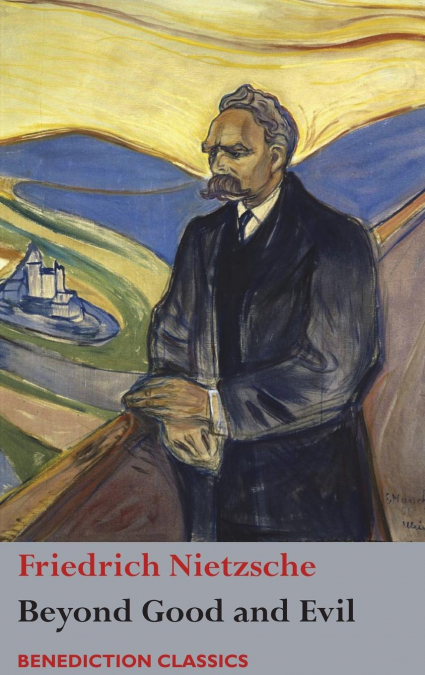
  • Beyond Good and Evil
    Friedrich Nietzsche
    Nietzsche, though primarily a philosopher, wrote widely on art, philology, history, religion, tragedy, culture, and science.  In 1886, at the height of his powers, he published Beyond Good and Evil.  Here he examines much of the best of human thought--dogmatic philosophy, Judeo-Christian morality, science and democracy – and finds it lacking.  Rejecting “slave-morality” he pres...
  • Beyond Good and Evil
    Friedrich Nietzsche
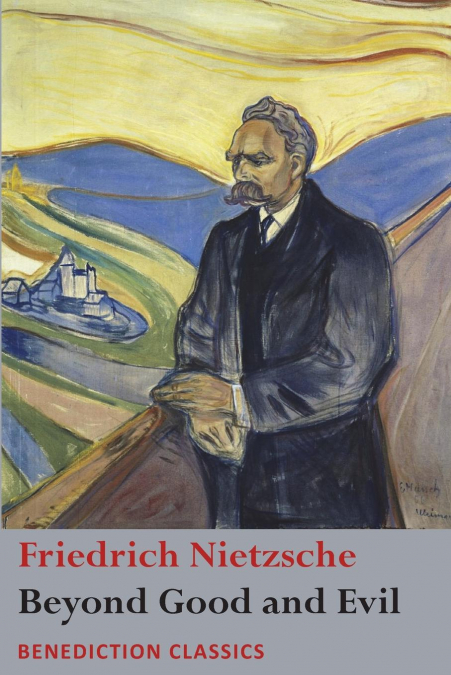
    Nietzsche, though primarily a philosopher, wrote widely on art, philology, history, religion, tragedy, culture, and science.  In 1886, at the height of his powers, he published Beyond Good and Evil.  Here he examines much of the best of human thought--dogmatic philosophy, Judeo-Christian morality, science and democracy – and finds it lacking.  Rejecting “slave-morality” he pres...
    Disponible

    9,99 €

Otros libros del autor

  • Gottfried Wilhelm Leibniz
    Marcelo Dascal
    Remembered mainly as a logician and mathematician, Leibniz also endeavored to resolve political and religious conflicts of his day by bringing opponents into negotiation. The dialectical Leibniz who emerges from the texts here translated, commented, and interpreted is certainly not the familiar one. The book sheds new light on the familiar, yet incomplete image of Leibniz, prov...
    Disponible

    267,74 €

  • Gottfried Wilhelm Leibniz
    Marcelo Dascal
    Remembered mainly as a logician and mathematician, Leibniz also endeavored to resolve political and religious conflicts of his day by bringing opponents into negotiation. The dialectical Leibniz who emerges from the texts here translated, commented, and interpreted is certainly not the familiar one. The book sheds new light on the familiar, yet incomplete image of Leibniz, prov...