 Librería Samer Atenea
 Kálamo Books
 Librería Elías (Asturias)
 Librería Kolima (Madrid)
 Librería Proteo (Málaga)
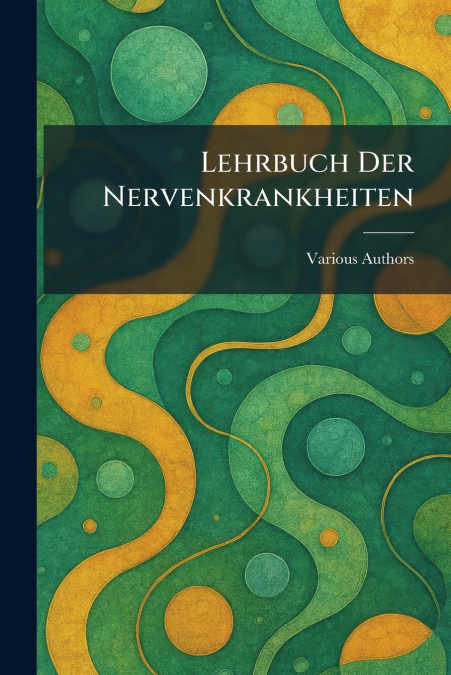
'H. Oppenheims Lehrbuch der Nervenkrankheiten' gilt als eines der einflussreichsten Standardwerke in der Geschichte der modernen Neurologie. Das umfassende Handbuch bietet eine tiefgreifende systematische Darstellung sämtlicher bekannter Erkrankungen des zentralen und peripheren Nervensystems. Mit einem starken Fokus auf die klinische Beobachtung, die präzise Diagnostik und die damals fortschrittlichsten Therapiemethoden fasst das Werk das gesamte Wissen der neurologischen Forschung des frühen 20. Jahrhunderts zusammen.Der Leser findet detaillierte Abhandlungen über organische Nervenkrankheiten, Neurosen sowie die Anatomie und Physiologie des Gehirns und des Rückenmarks. Die wissenschaftliche Präzision und die klare Gliederung machten das Buch über Generationen hinweg zum unverzichtbaren Begleiter für Ãrzte und Studenten. Heute stellt es nicht nur eine wertvolle Quelle für Medizinhistoriker dar, sondern dokumentiert eindrucksvoll die Entwicklung der klinischen Neurowissenschaften und die Grundlegung diagnostischer Standards, die teilweise bis heute nachwirken. Dieses Lehrbuch ist ein monumentales Zeugnis der medizinischen Fachliteratur und ein Muss für jede Sammlung zur Geschichte der Heilkunde.This work has been selected by scholars as being culturally important, and is part of the knowledge base of civilization as we know it. This work was reproduced from the original artifact, and remains as true to the original work as possible. Therefore, you may see the original copyright references, library stamps (as most of these works have been housed in our most important libraries around the world), and other notations in the work.This work is in the public domain in the United States of America, and possibly other nations. Within the United States, you may freely copy and distribute this work, as no entity (individual or corporate) has a copyright on the body of the work.As a reproduction of a historical artifact, this work may contain missing or blurred pages, poor pictures, errant marks, etc. Scholars believe, and we concur, that this work is important enough to be preserved, reproduced, and made generally available to the public. We appreciate your support of the preservation process, and thank you for being an important part of keeping this knowledge alive and relevant.