 Librería Samer Atenea
 Kálamo Books
 Librería Elías (Asturias)
 Librería Kolima (Madrid)
 Librería Proteo (Málaga)
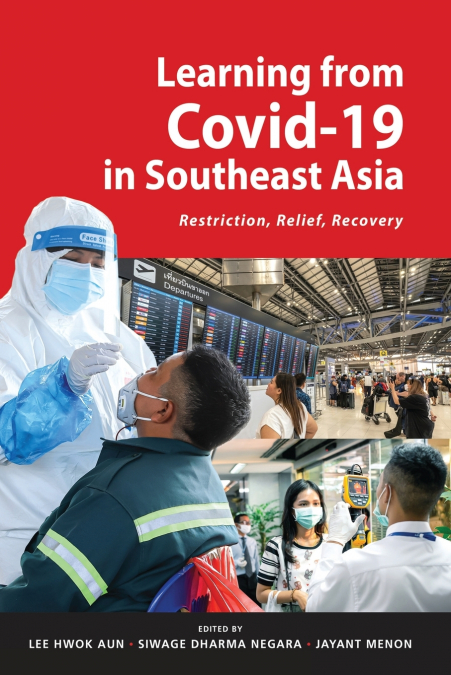
'The Covid-19 pandemic was unprecedented in its impact and repercussions which are still being felt today. The Southeast Asian region is no exception with the loss of hundreds of thousands of lives, economic contraction, and increased poverty. The impact varied across the region. Some countries were more effective than others at implementing lockdowns and delivering public health interventions. Pandemic responses were also differentiated by the efficacy of communication, policy coordination, and leadership. Policy evaluations have highlighted the need to improve institutional capacity as well as global and regional cooperation to respond to future public health crises. This timely and crucial volume, authored by leading regional scholars, thoroughly explores these issues and more. It is indispensable reading for anyone interested in Southeast Asia and broader international development challenges.' -- Mari Pangestu, Managing Director of Development Policy and Partnerships, World Bank (2020-23); Former Minister of Trade and Minister of Tourism and Creative Economy, Indonesia'The Covid-19 pandemic was a period of tumultuous upheavals and awakening. It was also a period when every government was tested on how they managed their public health systems and their stressed economies. What lessons can we learn from this pivotal chapter in history? What were the strengths and weaknesses of existing governance structures, and how can countries do better? This book tells us all. With thorough analysis covering both thematic and country case studies, focusing on Southeast Asia, the editors value add by providing the cogent comparative synthesis needed to understand the diversity of measures taken and leave no doubt as to how we could successfully prepare for future pandemics.' -- Euston Quah, Albert Winsemius Chair Professor of Economics, Nanyang Technological University; President, Economic Society of Singapore; Editor, Singapore Economic Review'The Covid pandemic hit Southeast Asia hard. Hundreds of thousands of people lost their lives, poverty spiked, economies contracted, and there are ongoing ’scarring’ effects owing to the loss of schooling opportunities. The effects across the region were uneven, with some countries better able to protect their citizenry than others. The pandemic also prompted a broader policy rethink on the importance of a strong universal public health system, the need for more robust social protection arrangements, and the vital role of safeguards against disruptions to food distribution and pharmaceutical supply networks. In addition, serious international inequalities were exposed, related to vaccine availability and fiscal stimulus measures. This important and timely volume, by a group of leading regional scholars, comprehensively addresses these and other issues. Essential reading for anybody interested in Southeast Asia and broader international development issues.' -- Hal Hill, H.W. Arndt Professor Emeritus of Southeast Asian Economies, Australian National University