

 Librería Samer Atenea
 Kálamo Books
 Librería Elías (Asturias)
 Librería Kolima (Madrid)
 Librería Proteo (Málaga)
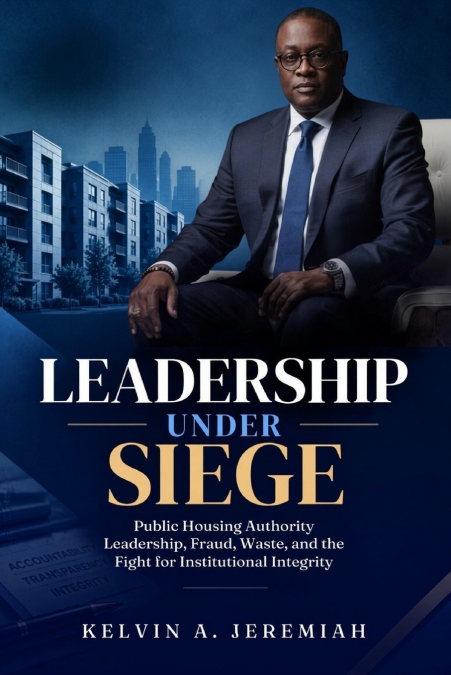
Public housing authorities are among the most consequential institutions in American local government, yet they are noticed mainly when they fail-when buildings deteriorate, families are displaced, scandals erupt, or federal investigators arrive. For millions of residents these agencies are the front line of shelter, safety, and survival. Competent, ethical leadership stabilizes families and preserves public trust; weak or indifferent leadership does damage that is human, structural, and generational.Leadership Under Siege begins with a clear premise: fraud and waste in public housing are never merely accounting problems. They are leadership problems. They emerge where controls are weak, procurement is treated as a formality, boards confuse loyalty with oversight, executives tolerate mediocrity, and culture teaches that silence is safer than truth. Corruption rarely arrives dramatically. It enters as favoritism, a rushed contract, an ignored exception, an unfilled vacancy, or a metric adjusted just enough to escape scrutiny-compromises that accumulate and harden into a system.Drawing on recurring public housing patterns, federal oversight guidance, and the realities of reform, Kelvin A. Jeremiah treats the subject as both diagnosis and field guide. The book examines why leadership matters, how fraud, waste, and mismanagement take root, why procurement and contracting remain chronic danger zones, how weak board governance enables institutional drift, and why culture often decides whether wrongdoing flourishes or is stopped. It addresses data and internal controls, the costs of serious reform, the human consequences residents bear, and the ways policymakers demand accountability in theory while undermining it in practice.Documented cases from Philadelphia, New York, and elsewhere illustrate how kickbacks, divided loyalties, false invoicing, and small-contract opacity scale when scrutiny is absent. Hypothetical teaching examples show how everyday operational failures become openings for abuse. Throughout, the emphasis remains on stewardship: procurement rules that are actually enforced, metrics that reveal rather than conceal, independent audit functions, boards that understand their fiduciary role, and leaders willing to absorb conflict in order to tell the truth about what is broken.Written for housing authority executives, board members, compliance and finance leaders, procurement staff, investigators, policymakers, and the public, the book argues that high-integrity leadership is neither rhetorical nor accidental. It is built through systems that make wrongdoing harder to hide, easier to report, and costlier to excuse. The appendices supply practical governance tools, a management improvement and succession framework, and a fraud-control checklist so readers can turn diagnosis into assigned work.Read these pages as both diagnosis and field guide-for anyone responsible for protecting public purpose when money is tight, scrutiny is intense, and the institution is already under strain.





