
Inicio > Sociedad y ciencias sociales > Política y gobierno > Relaciones internacionales > Le ONG e la gestione delle catastrofi nell’Africa centrale
Le ONG e la gestione delle catastrofi nell’Africa centrale

Le ONG e la gestione delle catastrofi nell’Africa centrale

Hermann Ndadjo Mba

73,70 €
IVA incluido
Disponible
Editorial:
KS OmniScriptum Publishing
Año de edición:
2026
Materia
Relaciones internacionales
ISBN:
9786630177428
73,70 €
IVA incluido
Disponible

Selecciona una librería:

  • Librería Samer Atenea
  • Kálamo Books
  • Librería Elías (Asturias)
  • Librería Kolima (Madrid)
  • Librería Proteo (Málaga)

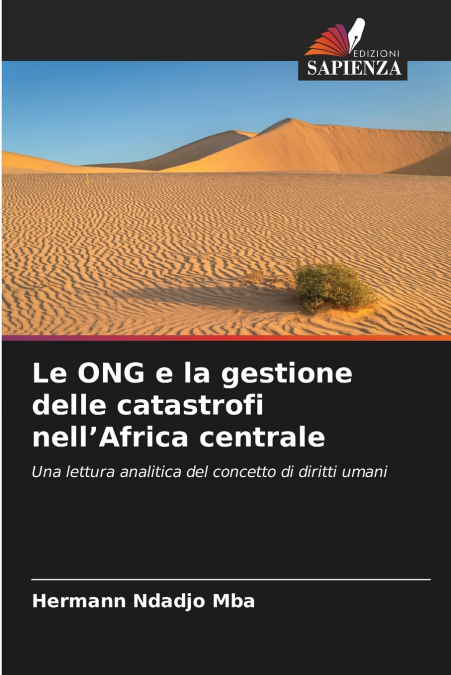
È finita l’era dello statocentrismo, in cui la scena internazionale era dominata dallo Stato come unico attore delle relazioni internazionali. Dalla fine della Guerra Fredda, la complessità delle problematiche che i popoli devono affrontare ha segnato la fine dello Stato assistenziale a favore dell’emergere di attori non statali (ONG, multinazionali, ecc.), le cui azioni contrastano, integrano e rafforzano in modo sostanziale le iniziative degli Stati. Inoltre, il ripetersi di crisi, conflitti e catastrofi ha permesso alle ONG di trovare un terreno fertile nella subregione dell’Africa centrale. È nell’ambito di questa cosiddetta diplomazia dei diritti umani che il presente lavoro si propone di fornire una lettura analitica del concetto di diritti umani alla luce dell’azione delle ONG nella gestione delle catastrofi in Africa centrale. Con il presente studio si intende condurre una modesta riflessione sulle modalità operative delle ONG nella gestione delle catastrofi in Africa centrale. Allo stesso modo, è importante esaminare i vincoli incontrati sul campo da queste organizzazioni, corredati da eventuali proposte.
Artículos relacionados

  • Realism in Practice
    The purpose of this book is to appraise the current relevance and validity of realism as an interpretative tool in contemporary International Relations. All chapters of the book are animated by a theoretical effort to define the conceptual aspects of realism and attempt to establish whether the tradition still provides the necessary conceptual tools to scholars.The chapters add...
    Disponible

    20,36 €

  • Predicting gender violence in India
    Shritha K Vasudevan
    In this provocative new book, Shritha Vasudevan argues that feminist international relations (IR) theory has inadvertently resulted in a biased worldview, the very opposite of what feminist IR set out to try to rectify. This book contests theoretical presumptions of Western feminist IR and attempts to reformulate it in contexts of non-Western cultures. Vasudevan deftly utilizes...
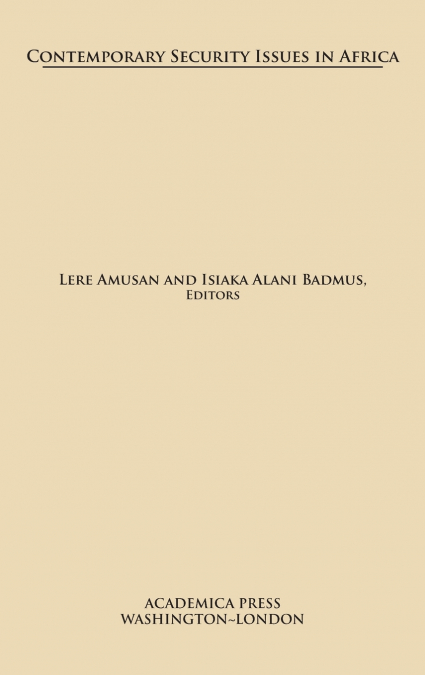
  • Contemporary security issues in Africa
    Isiaka Alani Badmus / Lere Amusan
    In volume, an emerging generation of African scholars examines specific states in Africa where instability is the order of the day. Considerations of African instability are highly relevant in today’s world, where one examines the types of regimes that were put in place after the Cold War and their effects on Africa. Multiparty systems introduced in Africa, rather than bringing...
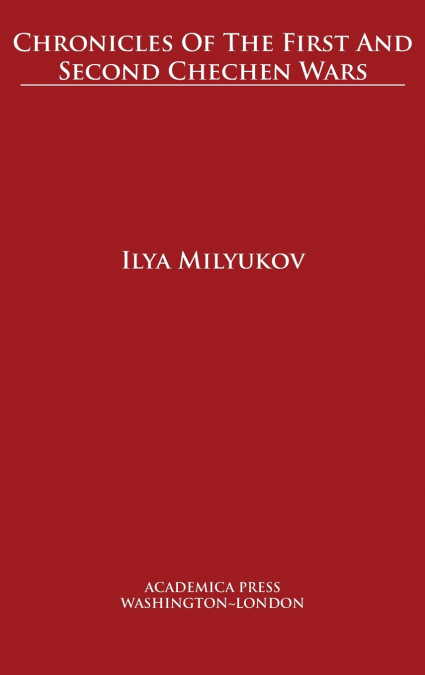
  • Chronicles of the first and second chechen wars
    Ilya Milyukov
    Presented by Russian author and attorney Ilya Milyukov, Chronicles of the First and Second Chechen War presents the main events of the First (1994-1996) and Second (1999-2009) Wars in Chechnya, Russia’s deadliest conflicts since World War II. The First War began in December 1994 and lasted for one year and nine months, ending in August 1996. There were two major urban battles -...
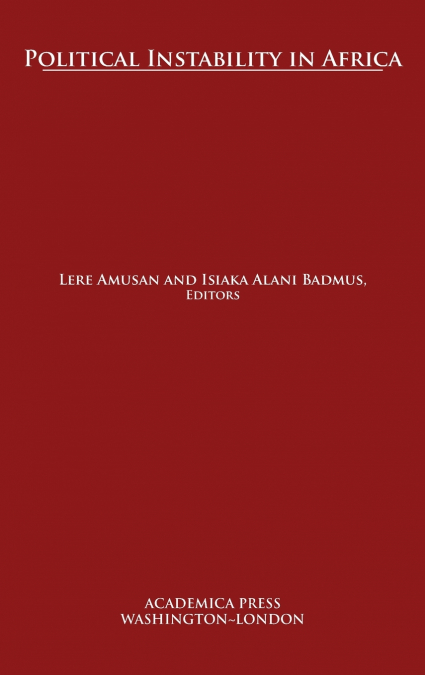
  • Political instability in Africa
    Isiaka Alani Badmus / Lere Amusan
    This book offers broad-gauged analyses of the causes, nature, and changing patterns of armed conflict in Africa as well as the reasons for these patterns. It also situates conflicts that have been haunting the African continent since the time of decolonization within the various theoretical schools such as 'new war,' 'economic war,' 'neo-patrimonial,' and 'globalization.' It be...
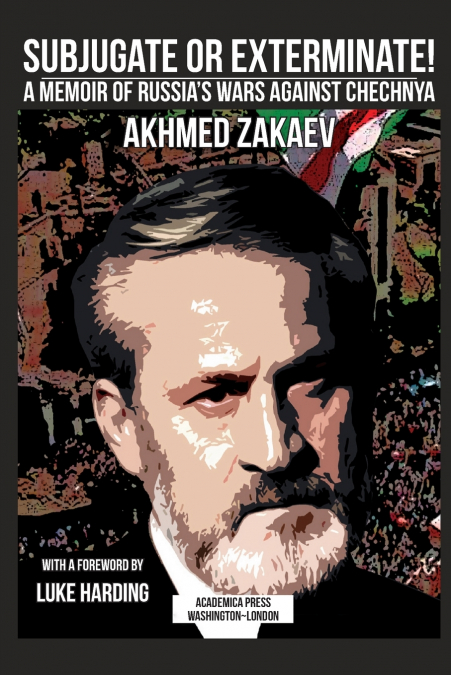
  • Subjugate or exterminate!
    Akhmed Zakaev / Arch Tait
    Foreword by Luke HardingAkhmed Zakaev is a symbol of the indomitable will of the Chechen nation. In this important memoir, he tells the story of the Chechen struggle as he experienced it, describing the conflict in human terms and providing a detailed documentary record of little known or badly understood events that will be of benefit to historians for generations to come.- Da...
    Disponible

    41,63 €

Otros libros del autor

  • Organizacje pozarządowe a zarządzanie katastrofami w Afryce Środkowej
    Hermann Ndadjo Mba
    Minęła już epoka etnocentryzmu, w której na arenie międzynarodowej państwo odgrywało rolę jedynego podmiotu w stosunkach międzynarodowych. Od zakończenia zimnej wojny złożoność problemów, z jakimi borykają się narody, zapowiadała koniec państwa opiekuńczego na rzecz pojawienia się podmiotów niepaństwowych (organizacji pozarządowych, międzynarodowych korporacji itp.), których dz...
    Disponible

    101,26 €

  • Nichtstaatliche Organisationen und der Katastrophenschutz in Zentralafrika
    Hermann Ndadjo Mba
    Die Ära des Staatszentrismus, in der der Staat als einziger Akteur der internationalen Beziehungen die internationale Bühne prägte, ist vorbei. Seit dem Ende des Kalten Krieges hat die Komplexität der Probleme, mit denen die Völker konfrontiert sind, dem Wohlfahrtsstaat den Garaus gemacht und den Aufstieg nichtstaatlicher Akteure (NGOs, multinationale Unternehmen usw.) begünsti...
    Disponible

    101,33 €

  • NGOs and Disaster Management in Central Africa
    Hermann Ndadjo Mba
    Gone are the days of state-centrism, when the international stage was dominated by the state as the sole actor in international relations. Since the end of the Cold War, the complexity of the issues facing people has sounded the death knell for the welfare state, paving the way for the emergence of non-state actors (NGOs, multinational corporations, etc.), whose actions counter...
    Disponible

    73,70 €

  • As ONG e a Gestão de Catástrofes na África Central
    Hermann Ndadjo Mba
    Acabou-se a era do estatocentrismo, em que a cena internacional era marcada pelo Estado como único interveniente nas relações internacionais. Desde o fim da Guerra Fria, a complexidade dos problemas com que os povos se deparam marcou o fim do Estado providencial, dando lugar ao surgimento de atores não estatais (ONG, empresas multinacionais, etc.), cujas ações vêm contrariar, c...
    Disponible

    101,20 €