 Librería Samer Atenea
 Kálamo Books
 Librería Elías (Asturias)
 Librería Kolima (Madrid)
 Librería Proteo (Málaga)
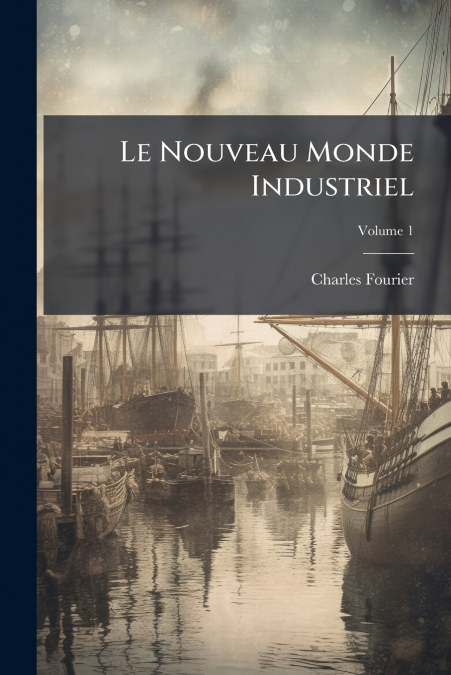
Le Nouveau Monde Industriel, Volume 1, by Charles Fourier, presents a detailed vision of a utopian society structured around communal living and cooperative labor. Fourier, a key figure in early socialist thought, critiques the emerging industrial order and proposes an alternative model based on ’phalanxes’ - self-sufficient communities designed to foster individual fulfillment and collective prosperity. This seminal work outlines Fourier’s radical ideas on social organization, advocating for the abolition of wage labor and the integration of work and leisure. Through his meticulous plans and passionate arguments, Fourier challenges the foundations of 19th-century capitalism and offers a compelling vision of a more equitable and harmonious future. ’Le Nouveau Monde Industriel’ remains a vital text for understanding the history of socialist thought and its enduring relevance to contemporary debates about economic justice and social reform.This work has been selected by scholars as being culturally important, and is part of the knowledge base of civilization as we know it. This work was reproduced from the original artifact, and remains as true to the original work as possible. Therefore, you will see the original copyright references, library stamps (as most of these works have been housed in our most important libraries around the world), and other notations in the work.This work is in the public domain in the United States of America, and possibly other nations. Within the United States, you may freely copy and distribute this work, as no entity (individual or corporate) has a copyright on the body of the work.As a reproduction of a historical artifact, this work may contain missing or blurred pages, poor pictures, errant marks, etc. Scholars believe, and we concur, that this work is important enough to be preserved, reproduced, and made generally available to the public. We appreciate your support of the preservation process, and thank you for being an important part of keeping this knowledge alive and relevant.