 Librería Samer Atenea
 Kálamo Books
 Librería Elías (Asturias)
 Librería Kolima (Madrid)
 Librería Proteo (Málaga)
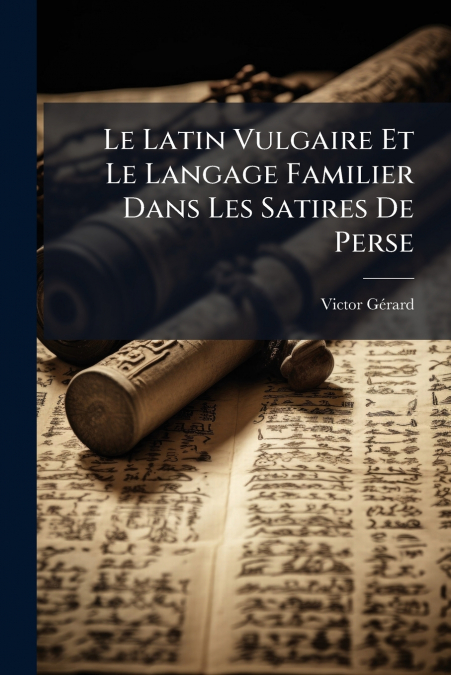
Le Latin Vulgaire Et Le Langage Familier Dans Les Satires De Perse, written by Victor Gérard and originally published in 1897, offers a detailed exploration of Vulgar Latin and its manifestation within the satires of Persius. This study provides valuable insights into the evolution of the Latin language and the nuances of colloquial expressions used in Roman society. Gérard’s analysis illuminates the linguistic landscape of the era, examining how everyday speech permeated literary works and offering a nuanced understanding of the social context in which these satires were created.This work is essential for linguists, classicists, and historians seeking a deeper appreciation of the dynamic interplay between formal and informal language in ancient Rome. It remains a significant contribution to the field of Latin studies, providing a rich resource for understanding the complexities of linguistic change and cultural expression.This work has been selected by scholars as being culturally important, and is part of the knowledge base of civilization as we know it. This work was reproduced from the original artifact, and remains as true to the original work as possible. Therefore, you will see the original copyright references, library stamps (as most of these works have been housed in our most important libraries around the world), and other notations in the work.This work is in the public domain in the United States of America, and possibly other nations. Within the United States, you may freely copy and distribute this work, as no entity (individual or corporate) has a copyright on the body of the work.As a reproduction of a historical artifact, this work may contain missing or blurred pages, poor pictures, errant marks, etc. Scholars believe, and we concur, that this work is important enough to be preserved, reproduced, and made generally available to the public. We appreciate your support of the preservation process, and thank you for being an important part of keeping this knowledge alive and relevant.