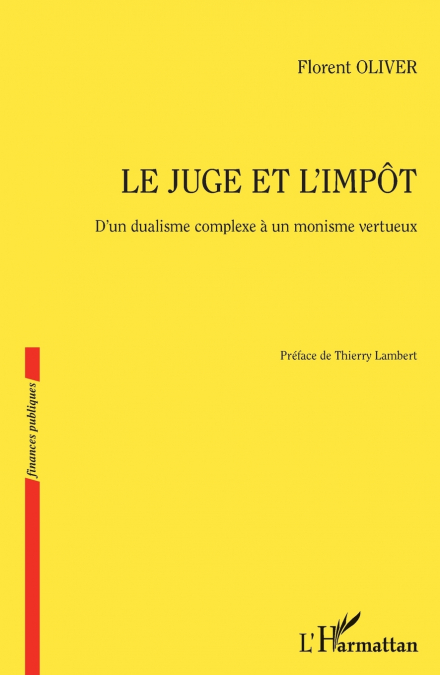

Le juge et l’impôt

Le juge et l’impôt

Florent Oliver

58,19 €
IVA incluido
Disponible
Editorial:
Editions L’Harmattan
Año de edición:
2022
Materia
Teoría general del derecho
ISBN:
9782140253478
58,19 €
IVA incluido
Disponible

Selecciona una librería:

  • Librería Samer Atenea

  • Kálamo Books
  • Librería Elías (Asturias)
  • Librería Kolima (Madrid)
  • Librería Proteo (Málaga)

Le juge de l’impôt n’existe pas. Il faut reconnaître qu’il n’est qu’un juge de droit commun transformé en juge de l’impôt le temps du litige fiscal et appliquant des normes venues d’horizons variés. Le contentieux fiscal, unanimement reconnu comme résultant d’un droit complexe et obscur, incarne pour le contribuable un rocher de Sisyphe. À la genèse de cette complexité se trouve le dualisme juridictionnel. Ce rapport entre le juge et l’impôt, troublé par une répartition entre le juge administratif et le juge judiciaire, érodée par le temps, produit des effets néfastes pour le contribuable et pour l’ensemble des acteurs du contentieux fiscal. Face à ce constat, il convient de proposer une réforme structurelle du contentieux fiscal et ainsi promouvoir une simplification. Une vision moniste emporte indubitablement des effets vertueux. Unifier un contentieux épars autour d’un juge spécialisé, d’un corps normatif renforcé, incarne une exigence démocratique qu’il convient de considérer. Faciliter l’accès au juge, par la création d’une juridiction unique, clarifier les normes applicables, promouvoir une harmonie quel que soit l’impôt sont autant d’objectifs défendus par l’auteur.

Artículos relacionados

  • EU General Data Protection Regulation (GDPR)
    IT Governance Privacy Team
    An in-depth guide to complying with the EU GDPR.Now in its second edition, EU GDPR – An Implementation and Compliance Guide is a clear and comprehensive guide to this new data protection law, providing a detailed commentary on the Regulation, and setting out the obligations of data  processors and controllers in clear and comprehensible terms.Read this book to learn: How the ...
    Disponible

    30,10 €

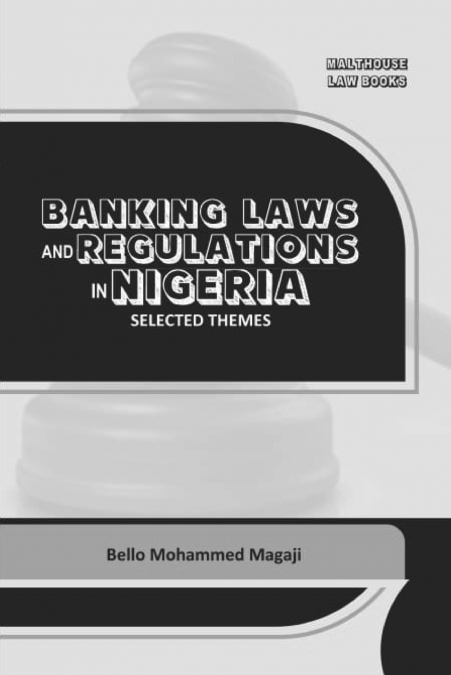
  • Banking Laws and Regulations in Nigeria
    Bello Mohammed Magaji
    Banking Law and Regulations in Nigeria: Selected Themes essentially deals with the laid down rules or code of conduct meant to control and set standards for banking business. Indeed, the main aim of the ongoing banking reforms in Nigeria, started in 2004, is to ensure banks’ conformity to the laid down banking rules and regulations. The eleven-chapter book contains vital and ri...
    Disponible

    41,17 €

  • States and the Interpretation of Treaties
    Dimitris Liakopoulos
    States and the Interpretation of Treaties opens with a provocative reconsideration of a debate on the subject of comparative international legal obligations by the United Nations’s International Law Commission. In this book, distinguished Tufts University legal scholar Dimitris Liakopoulos identifies and explores relevant considerations in the work of the Commission and offers ...
  • The role of customs in international treaties
    Dimitris Liakopoulos
    The Role of Customs in International Treaties concentrates on issues of friction between member states of the United Nations. In view of the role played by the United Nations in resolving international disputes, Dimitris Liakopoulos hypothesizes that 'practical guides' based on custom often catalyze the positions taken by states, courts, scholars, and other actors, constituting...
  • Debtor protection in American and European Union bankruptcy law
    Dimitris Liakopoulos
    In Debtor Protection in American and European Union Bankruptcy Law, international law scholar Dimitris Liakopulos raises a delicate issue at the foundations of the modern banking system by analyzing US bankruptcy law with a focus on the concept of automatic stay. His work identifies legal sources and authorities having repercussions in terms of operational protection. It then e...
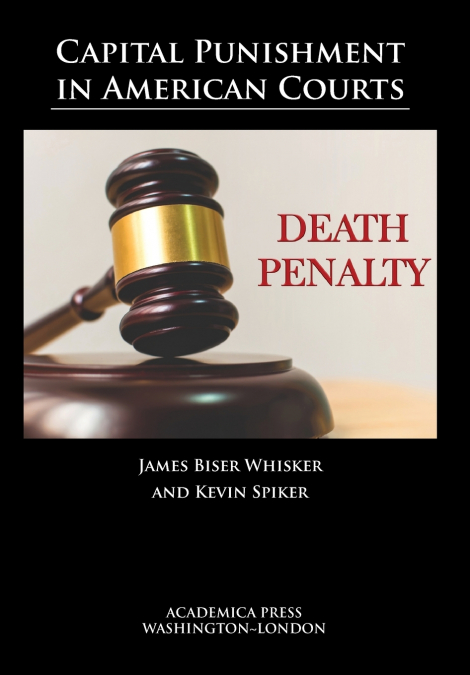
  • Capital punishment in American courts
    James Biser Whisker / Kevin Spiker
    In the 400 years since the first known execution was carried out for treason in Virginia, American jurisdictions have debated both the appropriateness and methods of capital punishment. Over that time, courts have placed varying restrictions on its application, excluding categories of citizens (for example the insane or the underaged) and evaluating and excluding methods of exe...