 Librería Samer Atenea
 Kálamo Books
 Librería Elías (Asturias)
 Librería Kolima (Madrid)
 Librería Proteo (Málaga)
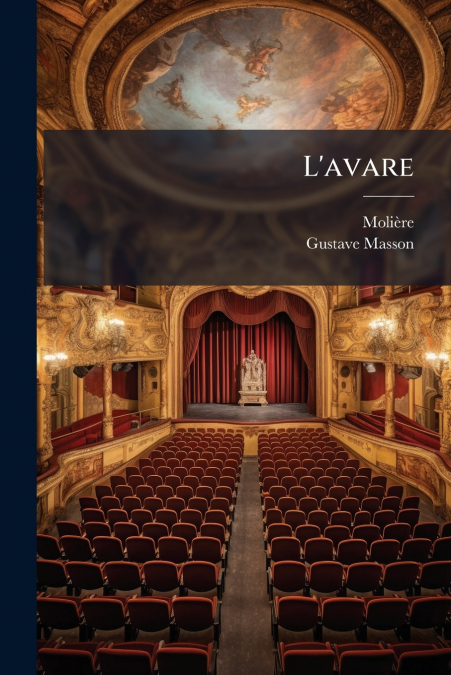
L’Avare est une comédie en cinq actes de Molière, représentée pour la première fois en 1668. Cette pièce met en scène Harpagon, un vieil homme obsédé par son argent et constamment méfiant envers ceux qui l’entourent. Son avarice extrême affecte ses relations avec ses enfants, Élise et Cléante, qui cherchent respectivement à se marier à Mariane et à une jeune veuve, mais se heurtent à l’opposition de leur père, qui souhaite les marier à des personnes riches ou plus âgées afin de préserver sa fortune. L’intrigue se complique avec des rivalités amoureuses, des quiproquos et des stratagèmes visant à déjouer l’avarice d’Harpagon. La pièce est une satire mordante de l’avarice et de ses conséquences destructrices sur les relations humaines. Considérée comme l’une des œuvres majeures de Molière, 'L’Avare' continue d’être jouée et étudiée pour sa critique sociale et ses personnages mémorables.This work has been selected by scholars as being culturally important, and is part of the knowledge base of civilization as we know it. This work was reproduced from the original artifact, and remains as true to the original work as possible. Therefore, you will see the original copyright references, library stamps (as most of these works have been housed in our most important libraries around the world), and other notations in the work.This work is in the public domain in the United States of America, and possibly other nations. Within the United States, you may freely copy and distribute this work, as no entity (individual or corporate) has a copyright on the body of the work.As a reproduction of a historical artifact, this work may contain missing or blurred pages, poor pictures, errant marks, etc. Scholars believe, and we concur, that this work is important enough to be preserved, reproduced, and made generally available to the public. We appreciate your support of the preservation process, and thank you for being an important part of keeping this knowledge alive and relevant.