
Inicio > Economía, finanzas, empresa y gestión > Economía > Läßt sich das Ziel der Verpackungsverordnung, die Mehrwegquote von 72 % einzuhalten, mit Hilfe des geplanten Zwangspfandes erreichen?
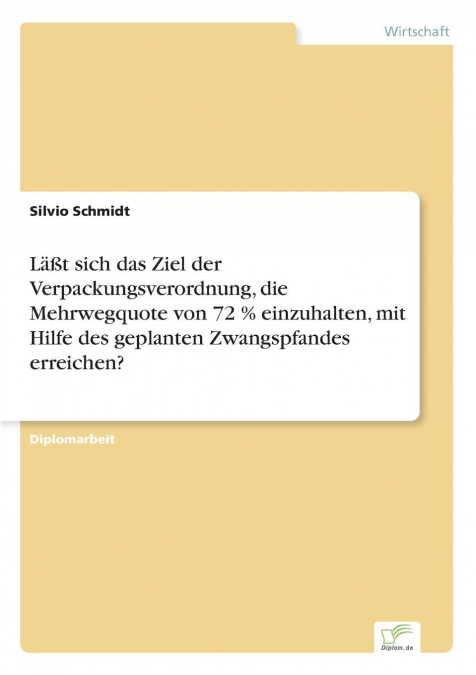
Läßt sich das Ziel der Verpackungsverordnung, die Mehrwegquote von 72 % einzuhalten, mit Hilfe des geplanten Zwangspfandes erreichen?

Läßt sich das Ziel der Verpackungsverordnung, die Mehrwegquote von 72 % einzuhalten, mit Hilfe des geplanten Zwangspfandes erreichen?

Läßt sich das Ziel der Verpackungsverordnung, die Mehrwegquote von 72 % einzuhalten, mit Hilfe des geplanten Zwangspfandes erreichen?

Silvio Schmidt

57,93 €
IVA incluido
Disponible
Editorial:
diplom.de
Año de edición:
2002
Materia
Economía
ISBN:
9783838660752
57,93 €
IVA incluido
Disponible

Selecciona una librería:

  • Librería Samer Atenea
  • Librería Aciertas (Toledo)
  • Kálamo Books
  • Librería Perelló (Valencia)
  • Librería Elías (Asturias)
  • Donde los libros
  • Librería Kolima (Madrid)
  • Librería Proteo (Málaga)

Inhaltsangabe:Einleitung:Von der Bundesregierung ist zum 01.01.2003 ein Zwangspfand auf bestimmte Getränke in Einwegverpackungen geplant. Ob ein Zwangspfand wirklich dazu beitragen kann, die Einwegflut zurückzudrängen, ist sehr umstritten. Eine Reihe von Studien hat diesbezüglich widersprüchliche Ergebnisse hervorgebracht. Teilweise legen die Arbeiten dabei unterschiedliche Ausgestaltungen des Zwangspfandes zu Grunde. Zudem diskutieren sie eine Pfanderhebung auf sämtliche Einweggetränkeverpackungen. Die vorliegende Studie untersucht das Zwangspfand wie es ab 2003 zum Tragen kommen wird. Sie zeigt auf, daß das Zwangspfand eine Abnahme von Einwegverpackungen bewirkt. Allerdings reicht diese nicht aus, um die Mehrwegquote auf die geforderten 72% zu heben. Sein umweltpolitisches Ziel gemäß Verpackungsverordnung verfehlt das „Dosenpfand“ somit. Für die Arbeit wurden der Wirkungsmechanismus des Zwangspfandes analysiert sowie zwei Umfragen unter Vertreibern und Verbrauchern durchgeführt. Inhaltsverzeichnis:Inhaltsverzeichnis: VorbemerkungI InhaltsverzeichnisII AbkürzungsverzeichnisIV AbbildungsverzeichnisV TabellenverzeichnisVI 1.Zwangspfand und Verpackungsverordnung1 1.1Anlaß der Untersuchung1 1.2Hintergründe für den Erlaß der Verpackungsverordnung2 1.3Rechtliche Ausgestaltung der Regelungen für Getränkeverpackungen3 1.4Entwicklung der Mehrwegquote5 1.5Allgemeiner Wirkungsmechanismus des Zwangspfandes7 1.6Fragestellung, Aufbau und Untersuchungsmethoden der Arbeit8 2.Lenkungswirkung des Zwangspfandes10 2.1Bestimmung der vom Pfand betroffenen Akteure10 2.2Bewertung der Einflußgrößen Kosten und Pfand12 2.2.1Kosten des Zwangspfandes12 2.2.1.1Kostenarten nach Akteuren12 2.2.1.2Berechnung der erwarteten Kosten15 2.2.1.3Vergleich der Kosten von Einweg und Mehrweg18 2.2.1.4Rationalisierungspotentiale24 2.2.2Pfand26 2.2.2.1Das Pfand als „Kaution“26 2.2.2.2Opportunitätskosten des Pfandes - entgangene Zinsen27 2.2.2.3Erträge aus verfallenen Pfändern27

Artículos relacionados

  • Principles of Economics 2e
    David Shapiro / Steven A. Greenlaw / Steven AGreenlaw / Timothy Taylor
    Principles of Economics 2e covers the scope and sequence of most introductory economics courses. The text includes many current examples, which are handled in a politically equitable way. The outcome is a balanced approach to the theory and application of economics concepts. The second edition has been thoroughly revised to increase clarity, update data and current event impact...
    Disponible

    49,73 €

  • Perspectivas sobre desarrollo y territorio en el nuevo contexto
    José I. Távara / Roxana Barrantes
    Las contribuciones de este volumen intentan expresar el reconocimiento y el homenaje a Efraín Gonzales de Olarte, entrañable integrante de nuestra comunidad universitaria, una persona comprometida con la investigación y la formación de varias generaciones de profesionales y ciudadanos, dedicada al fortalecimiento de la educación en nuestro país, tanto dentro como fuera de las a...
    Disponible

    20,75 €

  • Comparable Worth
    Elaine Sorensen
    For decades women working as nurses, librarians, and secretaries have argued that they are paid less than men in jobs requiring comparable skill and effort. By the late 1980s, the notion of 'comparable worth' had become a familiar one, and comparable worth initiatives were being developed to counteract the persistent disparities between male and female pay. In a comprehensive a...
    Disponible

    47,60 €

  • The Social Life of Money
    Nigel Dodd
    A reevaluation of what money is-and what it might beQuestions about the nature of money have gained a new urgency in the aftermath of the global financial crisis. Even as many people have less of it, there are more forms and systems of money, from local currencies and social lending to mobile money and Bitcoin. Yet our understanding of what money is-and what it might be-hasn’t ...
    Disponible

    36,83 €

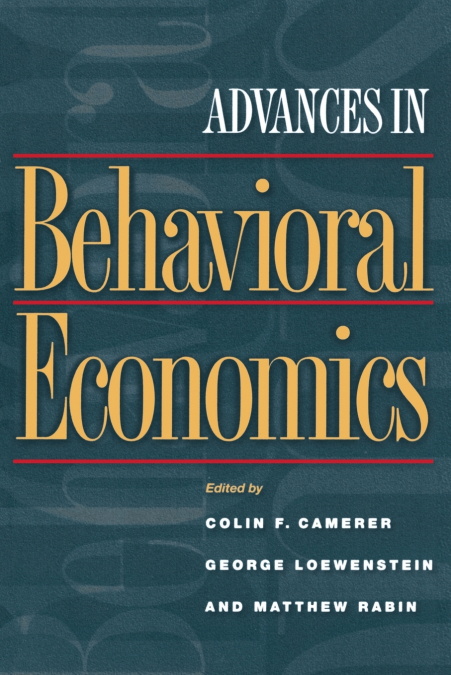
  • Advances in Behavioral Economics
    Twenty years ago, behavioral economics did not exist as a field. Most economists were deeply skeptical--even antagonistic--toward the idea of importing insights from psychology into their field. Today, behavioral economics has become virtually mainstream. It is well represented in prominent journals and top economics departments, and behavioral economists, including several con...
    Disponible

    113,11 €

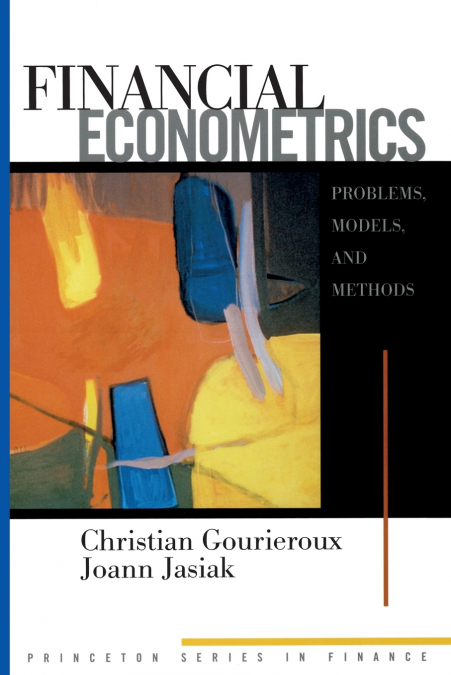
  • Financial Econometrics
    Christian Gouriéroux / Joann Jasiak
    Financial econometrics is a great success story in economics. Econometrics uses data and statistical inference methods, together with structural and descriptive modeling, to address rigorous economic problems. Its development within the world of finance is quite recent and has been paralleled by a fast expansion of financial markets and an increasing variety and complexity of f...
    Disponible

    216,13 €