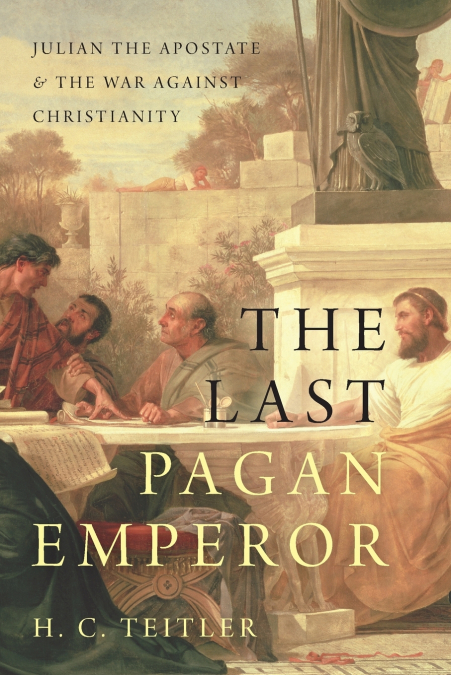

Last Pagan Emperor

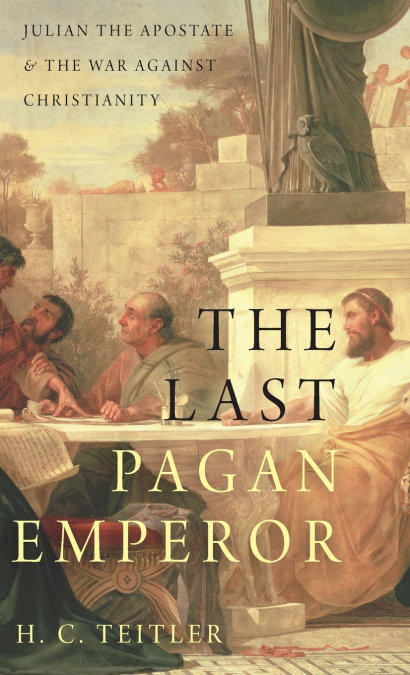
Last Pagan Emperor

H. C. Teitler

31,24 €
IVA incluido
Disponible
Editorial:
Oxford University Press
Año de edición:
2020
Materia
Historia antigua: hasta c. 500 e. c.
ISBN:
9780197540732
31,24 €
IVA incluido
Disponible

Selecciona una librería:

  • Librería Samer Atenea
  • Librería Aciertas (Toledo)
  • Kálamo Books
  • Librería Perelló (Valencia)
  • Librería Elías (Asturias)
  • Donde los libros
  • Librería Kolima (Madrid)
  • Librería Proteo (Málaga)

Flavius Claudius Julianus was the last pagan to sit on the Roman imperial throne (361-363). Born in Constantinople in 331 or 332, Julian was raised as a Christian, but apostatized, and during his short reign tried to revive paganism, which, after the conversion to Christianity of his uncle Constantine the Great early in the fourth century, began losing ground at an accelerating pace. Having become an orphan when he was still very young, Julian was taken care of by his cousin Constantius II, one of Constantine’s sons, who permitted him to study rhetoric and philosophy and even made him co-emperor in 355. But the relations between Julian and Constantius were strained from the beginning, and it was only Constantius’ sudden death in 361 which prevented an impending civil war. As sole emperor, Julian restored the worship of the traditional gods. He opened pagan temples again, reintroduced animal sacrifices, and propagated paganism through both the spoken and the written word. In his treatise Against the Galilaeans he sharply criticised the religion of the followers of Jesus whom he disparagingly called ’Galilaeans’. He put his words into action, and issued laws which were displeasing to Christians--the most notorious being his School Edict. This provoked the anger of the Christians, who reacted fiercely, and accused Julian of being a persecutor like his predecessors Nero, Decius, and Diocletian. Violent conflicts between pagans and Christians made themselves felt all over the empire. It is disputed whether or not Julian himself was behind such outbursts. Accusations against the Apostate continued to be uttered even after the emperor’s early death. In this book, the feasibility of such charges is examined.

Artículos relacionados

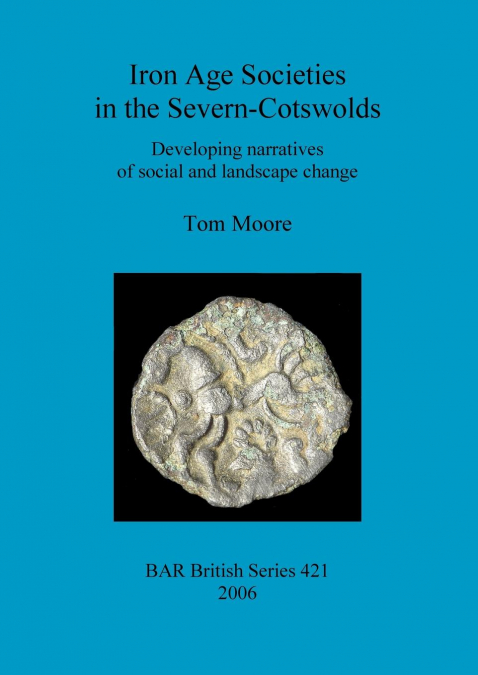
  • Iron Age Societies in the Severn-Cotswolds
    Tom Moore
    The central theme of this study is an examination of the processes of change in Iron Age social organisation and identity on a regional scale using the Severn-Cotswolds area in England as a case study. It aims to provide a coherent narrative of the period in the region based on the wealth of current data now available, providing a basic storyboard against which future studies c...
    Disponible

    144,57 €

  • Somewhere Beyond The Sea Les îles bretonnes (France)
    The Seminar on the Archaeology of Western France, which focused on the islands of Brittany, was held on 1 April 2014 at the University of Rennes 1. The desire to organize this seminar arose spontaneously from the dynamism which currently animates archaeological research on island spaces of the western seaboard of France. Indeed, the seminar took place during a pivotal period of...
    Disponible

    86,11 €

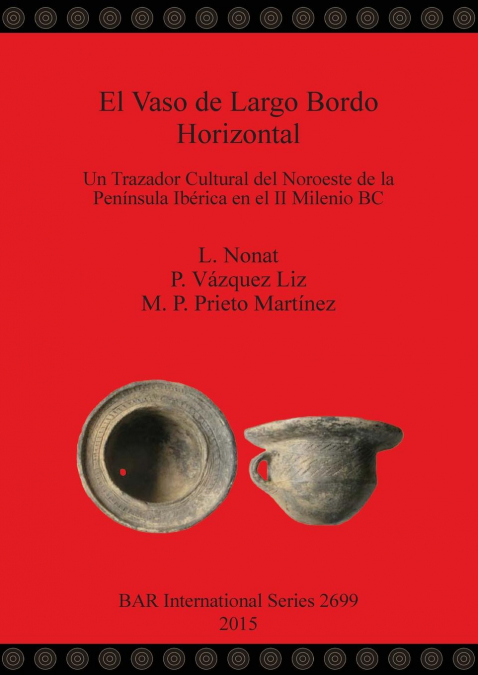
  • El Vaso de Largo Bordo Horizontal
    L. Nonat / LNonat / M. P. Prieto Martínez / MPPrieto Martínez / P. Vázquez Liz / PVázquez Liz
    In this paper the authors study a specific type of pottery from the northwest Iberian Peninsula, known as the Wide Horizontal Rim (WHR) vessel. One of its distinctive aspects is precisely the fact that it is exclusively found in this region, which now comprises the Spanish region of Galicia and northern Portugal, as far south as the River Duero. This type of pottery, of which t...
    Disponible

    115,71 €

  • A Connecting Sea
    Stašo Forenbaher
    This book includes papers stemming from a session at the EAA conference held in Zadar in September 2007.                          ...
    Disponible

    79,97 €

  • The Roman Pottery Production Site at Wickham Barn, Chiltington, East Sussex
    Chris Butler / Malcolm Lyne
    The excavations undertaken at Chiltington in East Sussex revealed two Roman pottery kilns, as well as remains from prehistory and from medieval period.The kilns are well documented, and all the finds were examined and catalogued. Three phases were identified. The pottery produced on the site indicate a strong New Forest influence. ...
    Disponible

    55,62 €

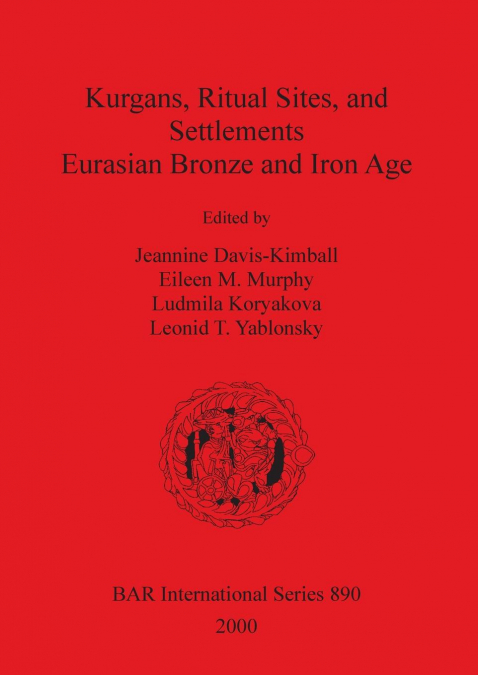
  • Kurgans, Ritual Sites, and Settlements
    Edited by: Jeannine Davis-Kimball, Eileen M. Murphy, Ludmila Koryakova and Leonid T. YablonskyThis richly illustrated volume adds immensely to the small but growing corpus of Eurasian Archaeology published in the English language. Comprised of thirty articles, the authors have focused on the Bronze Age, continuing to include the first millennium BC Early Iron Age, with a termin...
    Disponible

    158,26 €

Otros libros del autor

  • Last Pagan Emperor
    H. C. Teitler
    Flavius Claudius Julianus was the last pagan to sit on the Roman imperial throne (361-363). Born in Constantinople in 331 or 332, Julian was raised as a Christian, but apostatized, and during his short reign tried to revive paganism, which, after the conversion to Christianity of his uncle Constantine the Great early in the fourth century, began losing ground at an accelerating...