 Librería Samer Atenea
 Kálamo Books
 Librería Elías (Asturias)
 Librería Kolima (Madrid)
 Librería Proteo (Málaga)
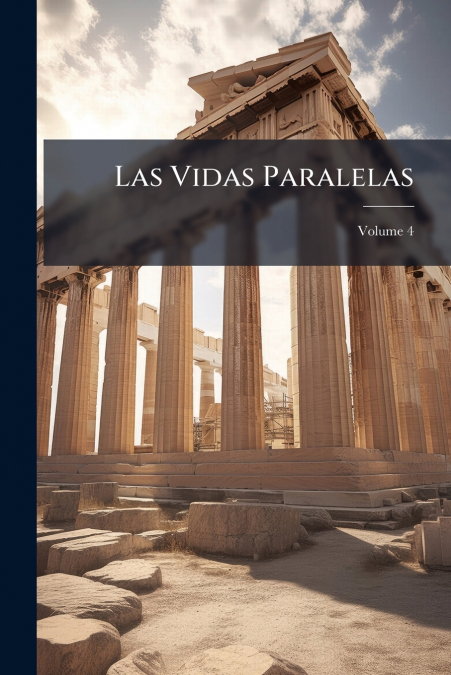
Las Vidas Paralelas (Vidas Paralelas) de Plutarco es una serie de biografías de famosos griegos y romanos, dispuestas en parejas para iluminar sus virtudes y vicios comunes. El presente volumen, 'Volumen 4', continúa la exploración de estos influyentes personajes históricos y ofrece profundas reflexiones sobre el liderazgo, la moralidad y el destino. Plutarco, un filósofo e historiador griego, busca examinar el impacto del carácter en las vidas y destinos de hombres importantes. Cada biografía está emparejada con otra, comparando a un griego famoso con un romano de logros similares, como Alejandro Magno con Julio César. El propósito no es simplemente registrar la historia, sino explorar preguntas éticas y morales. Las ’Vidas’ han sido una fuente de inspiración para escritores, artistas y líderes políticos durante siglos, y siguen siendo relevantes hoy en día por sus profundas reflexiones sobre la naturaleza humana.This work has been selected by scholars as being culturally important, and is part of the knowledge base of civilization as we know it. This work was reproduced from the original artifact, and remains as true to the original work as possible. Therefore, you will see the original copyright references, library stamps (as most of these works have been housed in our most important libraries around the world), and other notations in the work.This work is in the public domain in the United States of America, and possibly other nations. Within the United States, you may freely copy and distribute this work, as no entity (individual or corporate) has a copyright on the body of the work.As a reproduction of a historical artifact, this work may contain missing or blurred pages, poor pictures, errant marks, etc. Scholars believe, and we concur, that this work is important enough to be preserved, reproduced, and made generally available to the public. We appreciate your support of the preservation process, and thank you for being an important part of keeping this knowledge alive and relevant.