Constantin François Chasseb De Volney / Constantin Francois De Volney
 Librería Samer Atenea
 Kálamo Books
 Librería Elías (Asturias)
 Librería Kolima (Madrid)
 Librería Proteo (Málaga)
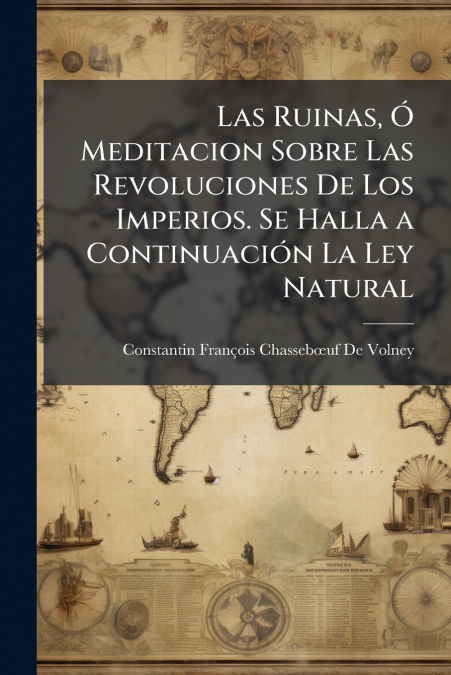
'Las Ruinas, Ó Meditación Sobre Las Revoluciones De Los Imperios' de Constantin François Chassebœuf de Volney, es una obra influyente que examina el ascenso y la caída de civilizaciones a lo largo de la historia. Escrito durante la época de la Ilustración y la Revolución Francesa, Volney ofrece una perspectiva crítica sobre las causas del declive de los imperios, atribuyéndolo a la tiranía, la injusticia y la ignorancia.A través de una serie de meditaciones, Volney insta a la reflexión sobre la importancia de la razón, la justicia y la libertad para el progreso de la humanidad. La inclusión de 'La Ley Natural' complementa el análisis, proporcionando un marco ético y moral para una sociedad justa y equitativa. Este texto sigue siendo relevante para comprender los desafíos políticos y sociales contemporáneos, así como para promover los valores de la tolerancia, la igualdad y el respeto por los derechos humanos.This work has been selected by scholars as being culturally important, and is part of the knowledge base of civilization as we know it. This work was reproduced from the original artifact, and remains as true to the original work as possible. Therefore, you will see the original copyright references, library stamps (as most of these works have been housed in our most important libraries around the world), and other notations in the work.This work is in the public domain in the United States of America, and possibly other nations. Within the United States, you may freely copy and distribute this work, as no entity (individual or corporate) has a copyright on the body of the work.As a reproduction of a historical artifact, this work may contain missing or blurred pages, poor pictures, errant marks, etc. Scholars believe, and we concur, that this work is important enough to be preserved, reproduced, and made generally available to the public. We appreciate your support of the preservation process, and thank you for being an important part of keeping this knowledge alive and relevant.