Inicio > Lenguas > Lingüistica > Language Identification Using Excitation Source Features
Language Identification Using Excitation Source Features

Language Identification Using Excitation Source Features

Dipanjan Nandi / K. Sreenivasa Rao / KSreenivasa Rao

64,60 €
IVA incluido
Disponible
Editorial:
Springer Nature B.V.
Año de edición:
2015
Materia
Lingüistica
ISBN:
9783319177243
64,60 €
IVA incluido
Disponible

Selecciona una librería:

  • Librería Samer Atenea
  • Librería Aciertas (Toledo)
  • Kálamo Books
  • Librería Perelló (Valencia)
  • Librería Elías (Asturias)
  • Donde los libros
  • Librería Kolima (Madrid)
  • Librería Proteo (Málaga)

This book discusses the contribution of excitation source information in discriminating language. The authors focus on the excitation source component of speech for enhancement of language identification (LID) performance. Language specific features are extracted using two different modes: (i) Implicit processing of linear prediction (LP) residual and (ii) Explicit parameterization of linear prediction residual. The book discusses how in implicit processing approach, excitation source features are derived from LP residual, Hilbert envelope (magnitude) of LP residual and Phase of LP residual; and in explicit parameterization approach, LP residual signal is processed in spectral domain to extract the relevant language specific features. The authors further extract source features from these modes, which are combined for enhancing the performance of LID systems. The proposed excitation source features are also investigated for LID in background noisy environments. Each chapter of this book provides the motivation for exploring the specific feature for LID task, and subsequently discuss the methods to extract those features and finally suggest appropriate models to capture the language specific knowledge from the proposed features. Finally, the book discuss about various combinations of spectral and source features, and the desired models to enhance the performance of LID systems.

Artículos relacionados

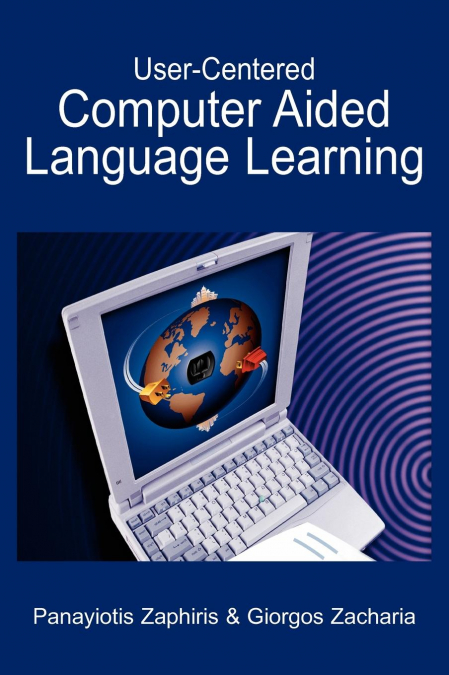
  • User-Centered Computer Aided Language Learning
    Giorgos Zacharia / Panayiotis Zaphiris
    ...
    Disponible

    112,14 €

  • Deep Learning for Natural Language Processing
    Marco Antonio Valenzuela-Escárcega / Mihai Surdeanu
    ...
    Disponible

    47,60 €

  • Deep Learning for Natural Language Processing
    Marco Antonio Valenzuela-Escárcega / Mihai Surdeanu
    ...
    Disponible

    144,63 €

  • Lecciones sobre espinosa medrano
    Luis Jaime Cisneros Vizquerra
    La obra de Juan de Espinosa Medrano, apodado en su tiempo «El Lunarejo» (c. 1629-1688), fue uno de los mayores focos de interés académico de Luis Jaime Cisneros (1921-2011). En 1980 aparecieron sus primeros trabajos dedicados a estudiar los textos capitales de Espinosa Medrano (el Apologético en favor de don Luis de Góngora, la Panegírica declamación por la protección de las ci...
    Disponible

    17,63 €

  • Lyre Book
    Matthew Kilbane
    Redefines modern lyric poetry at the intersection of literary and media studies.In The Lyre Book, Matthew Kilbane urges literary scholars to consider lyric not as a genre or a reading practice but as a media condition: the generative tension between writing and sound. In addition to clarifying issues central to the study of modern poetry--including its proximity to popular song...
    Disponible

    50,84 €

  • Translation-mediated Communication in a Digital World
    David Ashworth / Minako O’Hagan
    The Internet is accelerating globalization by exposing organizations and individuals to global audiences. This in turn is driving teletranslation and teleinterpretation, new types of multilingual support, which are functional in digital communications environments. The book describes teletranslation and teleinterpretation by exploring a number of key emerging contexts for langu...
    Disponible

    45,19 €