
Inicio > Lenguas > Lingüistica > Language and Recursion
Language and Recursion

Language and Recursion


171,67 €
IVA incluido
Consulta disponibilidad
Editorial:
Springer Nature B.V.
Año de edición:
2013
Materia
Lingüistica
ISBN:
9781461494133

Selecciona una librería:

  • Librería Samer Atenea
  • Librería Aciertas (Toledo)
  • Kálamo Books
  • Librería Perelló (Valencia)
  • Librería Elías (Asturias)
  • Donde los libros
  • Librería Kolima (Madrid)
  • Librería Proteo (Málaga)

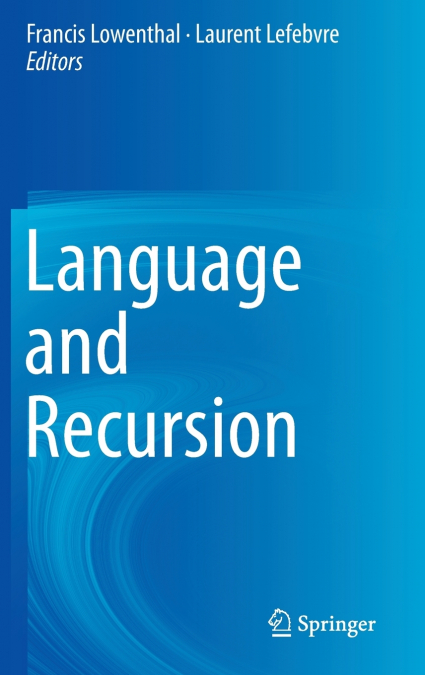
As humans, our many levels of language use distinguish us from the rest of the animal world. For many scholars, it is the recursive aspect of human speech that makes it truly human. But linguists continue to argue about what recursion actually is, leading to the central dilemma: is full recursion, as defined by mathematicians, really necessary for human language? Language and Recursion defines the elusive construct with the goal of furthering research into language and cognition. An up-to-date literature review surveys extensive findings based on non-verbal communication devices and neuroimaging techniques. Comparing human and non-human primate communication, the book’s contributors examine meaning in chimpanzee calls, and consider the possibility of a specific brain structure for recursion. The implications are then extended to formal grammars associated with artificial intelligence, and to the question of whether recursion is a valid concept at all. Among the topics covered: • The pragmatic origins of recursion. • Recursive cognition as a prelude to language. • Computer simulations of recursive exercises for a non-verbal communication device. • Early rule learning ability and language acquisition. • Computational language related to recursion, incursion, and fractals • Why there may be no recursion in language. Regardless of where one stands in the debate, Language and Recursion has much to offer the science community, particularly cognitive psychologists and researchers in the science of language. By presenting these multiple viewpoints, the book makes a solid case for eventual reconciliation.
Artículos relacionados

  • User-Centered Computer Aided Language Learning
    Giorgos Zacharia / Panayiotis Zaphiris
    ...
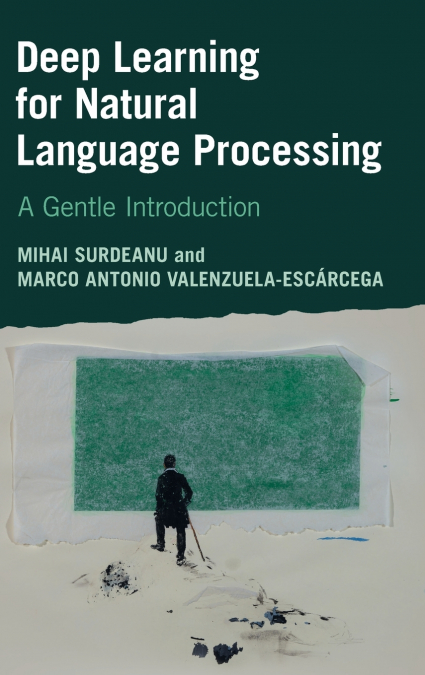
  • Deep Learning for Natural Language Processing
    Marco Antonio Valenzuela-Escárcega / Mihai Surdeanu
    ...
    Disponible

    47,60 €

  • Deep Learning for Natural Language Processing
    Marco Antonio Valenzuela-Escárcega / Mihai Surdeanu
    ...
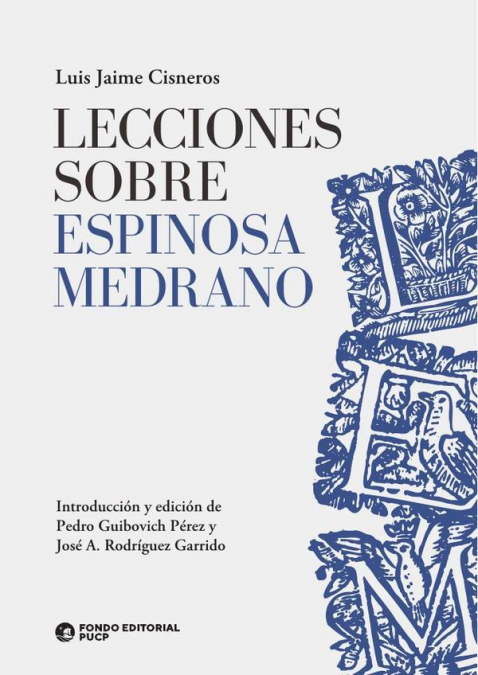
  • Lecciones sobre espinosa medrano
    Luis Jaime Cisneros Vizquerra
    La obra de Juan de Espinosa Medrano, apodado en su tiempo «El Lunarejo» (c. 1629-1688), fue uno de los mayores focos de interés académico de Luis Jaime Cisneros (1921-2011). En 1980 aparecieron sus primeros trabajos dedicados a estudiar los textos capitales de Espinosa Medrano (el Apologético en favor de don Luis de Góngora, la Panegírica declamación por la protección de las ci...
    Disponible

    17,63 €

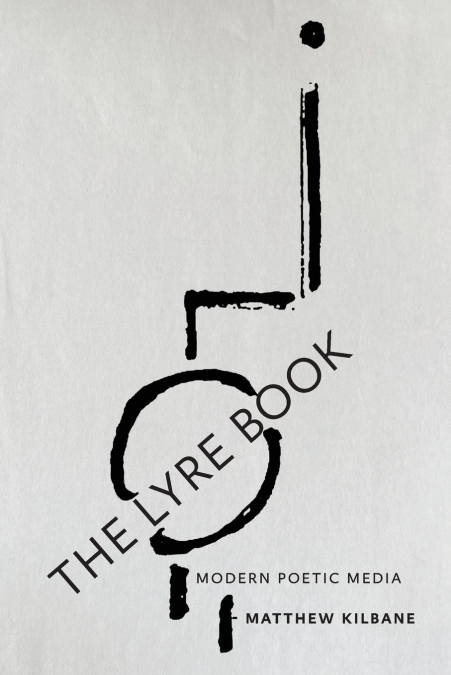
  • Lyre Book
    Matthew Kilbane
    Redefines modern lyric poetry at the intersection of literary and media studies.In The Lyre Book, Matthew Kilbane urges literary scholars to consider lyric not as a genre or a reading practice but as a media condition: the generative tension between writing and sound. In addition to clarifying issues central to the study of modern poetry--including its proximity to popular song...
    Disponible

    50,84 €

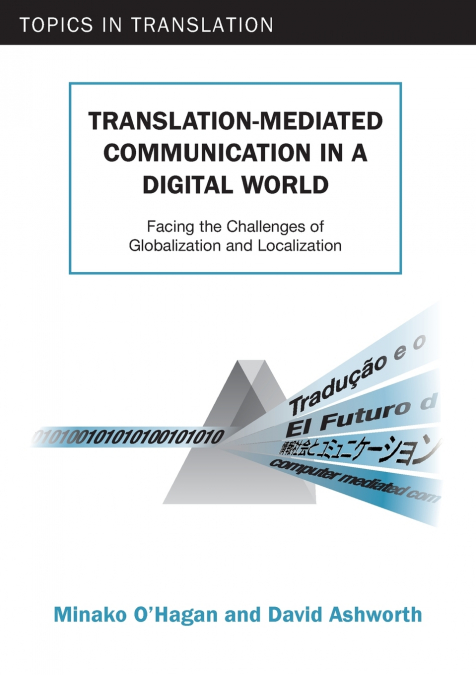
  • Translation-mediated Communication in a Digital World
    David Ashworth / Minako O’Hagan
    The Internet is accelerating globalization by exposing organizations and individuals to global audiences. This in turn is driving teletranslation and teleinterpretation, new types of multilingual support, which are functional in digital communications environments. The book describes teletranslation and teleinterpretation by exploring a number of key emerging contexts for langu...
    Disponible

    45,19 €