Inicio > Sociedad y ciencias sociales > Política y gobierno > Relaciones internacionales > La Lutte contre le Terrorisme dans la Region du Sahel
La Lutte contre le Terrorisme  dans la Region du Sahel

La Lutte contre le Terrorisme dans la Region du Sahel

Mamadou BAGAYOKO

88,19 €
IVA incluido
Disponible
Editorial:
Eliva Press
Año de edición:
2026
Materia
Relaciones internacionales
ISBN:
9789999341233
88,19 €
IVA incluido
Disponible

Selecciona una librería:

  • Librería Samer Atenea

  • Kálamo Books
  • Librería Elías (Asturias)
  • Librería Kolima (Madrid)
  • Librería Proteo (Málaga)

Le terrorisme en tant que mode de combat n’a pas définition universellement plébiscitée. Le terme est abondamment utilisé par les responsables politiques et les médias pour désigner des situations aussi différentes les unes des autres. Tandis que pour un État victime, le terrorisme relève de la criminalité, un autre État qualifiera les partisans de cette forme de violence, de combattants de la liberté, d’où les difficultés d’avoir une définition universelle. Dans l’optique de rationaliser notre étude au vu des évènements récents ayant exposé spécialement certains pays du sahel à la menace terroriste, nous avons orienté notre réflexion vers les États suivants : le Burkina Faso, le Mali, la Mauritanie, le Niger et le Tchad. L’immensité des espaces sahéliens, les clivages ethniques sur le fond de revendications terroristes, la corruption endémique au sommet des États, la percée des trafics internationaux en tout genre, la radicalisation croissante de l’Islam, tels sont autant de facteurs qui expliquent le regain de la menace terroriste dans la région sahélienne. Les évènements liés à la rébellion Touareg au Mali en 2012 ont permis à ces groupes terroristes de s’installer durablement dans la région sahélienne. Entre 1990 et 2013, plusieurs groupes extrémistes se sont installés dans les espaces non contrôlé par certains pays du sahel et y ont commis des exactions qui resteront gravées dans la mémoire de la population des pays victimes. Des villages entiers brulés, des massacres de tout genre (hommes, femmes y compris les enfants), des animaux emportés, contraindre les femmes à porter des voiles, tout sorte de divertissements interdit... Cette situation a poussée des milliers de personnes à se déplacer ou se réfugier dans les pays voisins. Ces groupes terroristes sont entre autre : Al Qu’Aïda au Maghreb Islamique (AQMI), le Mouvement pour l’Unicité du Jihad en Afrique de l’Ouest (MUJAO), Ansar Eddine, Al Mourabitoune et Boko Haram.

Artículos relacionados

  • Realism in Practice
    The purpose of this book is to appraise the current relevance and validity of realism as an interpretative tool in contemporary International Relations. All chapters of the book are animated by a theoretical effort to define the conceptual aspects of realism and attempt to establish whether the tradition still provides the necessary conceptual tools to scholars.The chapters add...
    Disponible

    24,79 €

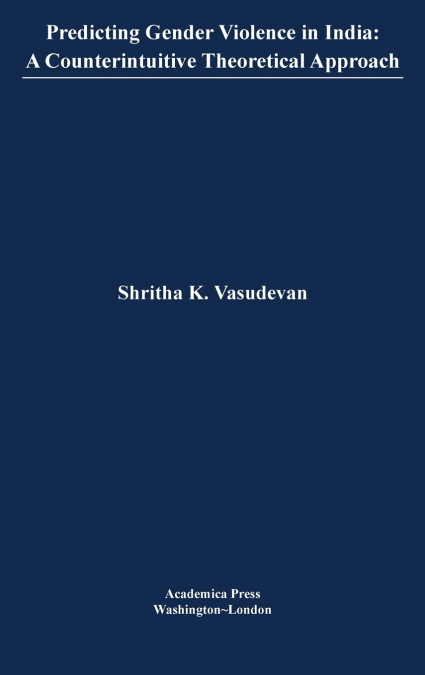
  • Predicting gender violence in India
    Shritha K Vasudevan
    In this provocative new book, Shritha Vasudevan argues that feminist international relations (IR) theory has inadvertently resulted in a biased worldview, the very opposite of what feminist IR set out to try to rectify. This book contests theoretical presumptions of Western feminist IR and attempts to reformulate it in contexts of non-Western cultures. Vasudevan deftly utilizes...
  • Contemporary security issues in Africa
    Isiaka Alani Badmus / Lere Amusan
    In volume, an emerging generation of African scholars examines specific states in Africa where instability is the order of the day. Considerations of African instability are highly relevant in today’s world, where one examines the types of regimes that were put in place after the Cold War and their effects on Africa. Multiparty systems introduced in Africa, rather than bringing...
  • Chronicles of the first and second chechen wars
    Ilya Milyukov
    Presented by Russian author and attorney Ilya Milyukov, Chronicles of the First and Second Chechen War presents the main events of the First (1994-1996) and Second (1999-2009) Wars in Chechnya, Russia’s deadliest conflicts since World War II. The First War began in December 1994 and lasted for one year and nine months, ending in August 1996. There were two major urban battles -...
  • Political instability in Africa
    Isiaka Alani Badmus / Lere Amusan
    This book offers broad-gauged analyses of the causes, nature, and changing patterns of armed conflict in Africa as well as the reasons for these patterns. It also situates conflicts that have been haunting the African continent since the time of decolonization within the various theoretical schools such as 'new war,' 'economic war,' 'neo-patrimonial,' and 'globalization.' It be...
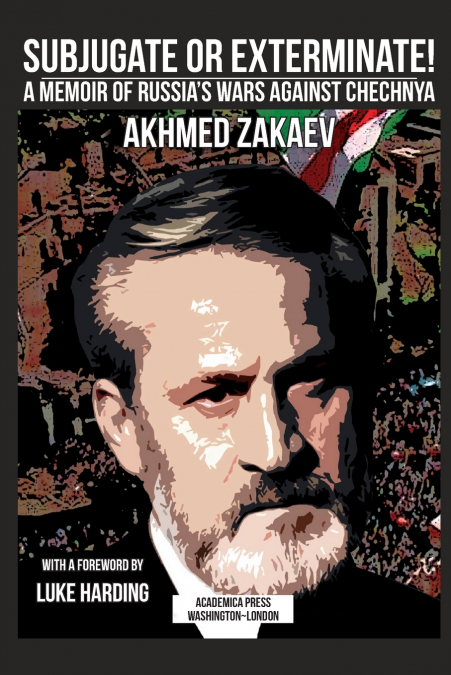
  • Subjugate or exterminate!
    Akhmed Zakaev / Arch Tait
    Foreword by Luke HardingAkhmed Zakaev is a symbol of the indomitable will of the Chechen nation. In this important memoir, he tells the story of the Chechen struggle as he experienced it, describing the conflict in human terms and providing a detailed documentary record of little known or badly understood events that will be of benefit to historians for generations to come.- Da...
    Disponible

    46,43 €