
Inicio > Lenguas > Lenguaje: consulta y general > La literatura misionera como fuente de confianza sobre las lenguas indígenas de Hispanoamérica
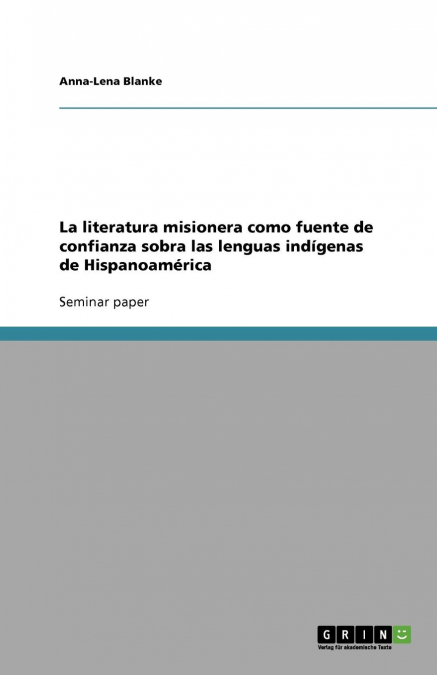
La literatura misionera como fuente de confianza sobre las lenguas indígenas de Hispanoamérica

La literatura misionera como fuente de confianza sobre las lenguas indígenas de Hispanoamérica

Anna-Lena Blanke

18,99 €
IVA incluido
Disponible
Editorial:
GRIN Publishing
Año de edición:
2010
Materia
Lenguaje: consulta y general
ISBN:
9783640729142
18,99 €
IVA incluido
Disponible

Selecciona una librería:

  • Librería Samer Atenea
  • Librería Aciertas (Toledo)
  • Kálamo Books
  • Librería Perelló (Valencia)
  • Librería Elías (Asturias)
  • Donde los libros
  • Librería Kolima (Madrid)
  • Librería Proteo (Málaga)

Seminar paper del año 2008 en eltema Romanística - Español, literatura, cultura general, Nota: 2,0, Universität Bremen, Idioma: Español, Resumen: Un argumento en contra de esta literatura desarrollada en las misiones como fuente sobre las lenguas indígenas es de Wilhelm von Humboldt cuando explica que al escribir estos textos ya estas lenguas se impregnaron de los coneptos religiosos europeos: Noch verkehrter und mangelhafter ist der an sich schwierige lexicalische (sic!) Theil (sic!) ihrer Arbeiten behandelt.[...] Wenn man darin auf moralische und intelektuelle Ideen stößt, so muß man sich wohl vor erdichteten Wörtern hüten, welche die Väter der Missionen, immer nur ihrem Zweck, christliche Wörter in die fremde Sprache zu übertragen, und zu predigen, im Auge habend, sich zu bilden erlauben. Humboldt expresa aquí que al tratar los textos de estas misiones el lector siempre tiene que ser conciente de que la meta de los misioneros era la de persuadir a los indígenas de que se convirtieran a una religión totalmente diferente a las suyas. A la pregunta de si integrar palabras nuevas y cristianas en los idiomas indígenas fue verdaderamente un objetivo en sí queda abierta. Sin embargo, Zimmermann observó que en el nahuatl se introdujo la palabra Dios, ya que la palabra azteca teotl se refería a un ser supremo pero que a su vez llevaba impresa otro significado porque el concepto era el de un díos entre varios.[18]

Artículos relacionados

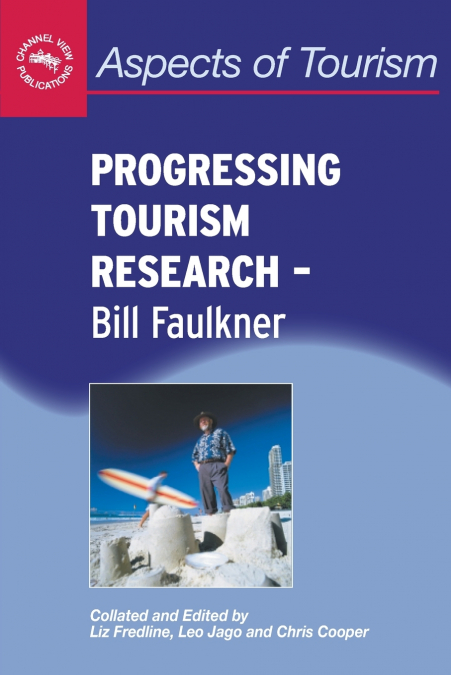
  • Progressing Tourism Research - Bill Faulkner
    Professor Bill Faulkner was the father of tourism research in Australia, having spent 20 years in the field, first within government and then in academe. He was a visionary whose impact on the tourism research field extended well beyond Australia. This book contains a collection of Bill’s publications grouped thematically under the headings Methods, Events, Destinations, and Re...
    Disponible

    51,23 €

  • The Cambridge Handbook of Experimental Syntax
    Grant Goodall
    ...
    Disponible

    76,23 €

  • Progressing Tourism Research - Bill Faulkner
    Professor Bill Faulkner was the father of tourism research in Australia, having spent 20 years in the field, first within government and then in academe. He was a visionary whose impact on the tourism research field extended well beyond Australia. This book contains a collection of Bill’s publications grouped thematically under the headings Methods, Events, Destinations, and Re...
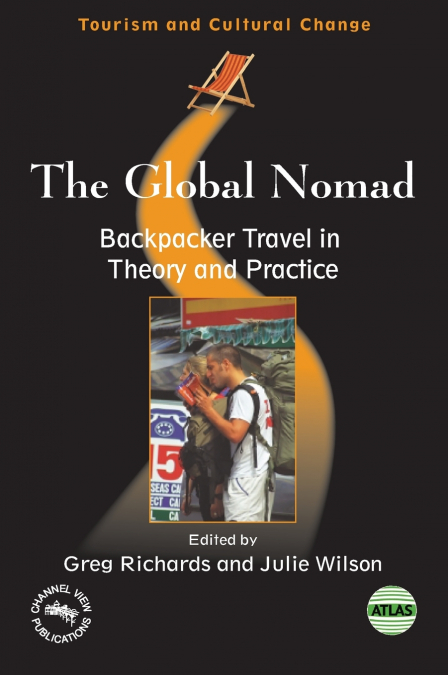
  • The Global Nomad
    Backpackers have shifted from the margins of the travel industry into the global spotlight. This volume explores the international backpacker phenomenon, drawing together different disciplinary perspectives on its meaning, impact and significance. Links are drawn between theory and practice, setting backpacking in its wider social, cultural and economic context. ...
  • Just Kids
    Risa Applegarth
    Although children have prompted and participated in numerous acts of protest and advocacy, their words and labors are more likely to be dismissed than discussed as serious activism. Whether treated disparagingly by antagonistic audiences or lauded as symbols of hope by sympathetic ones, children and teens are rarely considered capable organizers and advocates for change. In Jus...
    Disponible

    44,88 €

  • Just Kids
    Risa Applegarth
    Although children have prompted and participated in numerous acts of protest and advocacy, their words and labors are more likely to be dismissed than discussed as serious activism. Whether treated disparagingly by antagonistic audiences or lauded as symbols of hope by sympathetic ones, children and teens are rarely considered capable organizers and advocates for change. In Jus...