
Inicio > Humanidades > Historia > La Expedicion de la Kon-Tiki
La Expedicion de la Kon-Tiki

La Expedicion de la Kon-Tiki

Thor Heyerdahl

19,90 €
IVA incluido
Consulta disponibilidad
Editorial:
Blurb
Año de edición:
2026
Materia
Historia
ISBN:
9781006705571

Selecciona una librería:

  • Librería Samer Atenea
  • Librería Aciertas (Toledo)
  • Kálamo Books
  • Librería Perelló (Valencia)
  • Librería Elías (Asturias)
  • Donde los libros
  • Librería Kolima (Madrid)
  • Librería Proteo (Málaga)

Kon-tiki fue el nombre de la balsa utilizada por el explorador noruego Thor Heyerdahl (1914-2002) en su expedición de 1947 por el océano Pacífico desde Sudamérica hasta la Polinesia. El nombre de la embarcación se debía al dios solar de los incas, Viracocha, de quien se decía que antiguamente había llevado el nombre de Kon-Tiki. Kon-Tiki es también el nombre del libro que escribió Heyerdahl sobre su experiencia. Heyerdahl sostenía que pobladores procedentes de Sudamérica podrían haber llegado hasta la Polinesia ya en tiempos precolombinos. El propósito de Heyerdahl era demostrar la posibilidad de que el poblamiento de la Polinesia se hubiese llevado a cabo por vía marítima, desde América del Sur, en balsas idénticas a la usada durante la expedición y movidas únicamente por las mareas, las corrientes y la fuerza del viento, que es casi constante, en dirección este-oeste, a lo largo del Ecuador. No obstante, la expedición dispuso de ciertos elementos como una radio, relojes, mapas, sextantes y cuchillos, aunque los mismos no fueron relevantes a la hora de probar que una balsa como la utilizada podía realizar la travesía. La expedición Kon-Tiki fue financiada mediante préstamos y contó con donaciones de parte del ejército de Estados Unidos. Heyerdahl viajó tiempo antes a Perú, donde, junto con un pequeño grupo de personas y dentro del espacio provisto por las autoridades nacionales, se dedicó a la construcción de la balsa. Para ello, se emplearon troncos de madera balsa y otros materiales autóctonos, y se mantuvo el estilo de construcción indígena tal como se observó en las ilustraciones dejadas por los conquistadores españoles. La travesía comenzó el 28 de abril de 1947. Heyerdahl y otros cinco integrantes viajaron durante 101 días a lo largo de casi 7000 km por el océano Pacífico, hasta llegar a un arrecife en el atolón de Raroia, en las islas Tuamotu, el 7 de agosto de 1947. Toda la tripulación llegó a tierra sana y salva.

Artículos relacionados

  • Raising Freedom's Banner
    Paul Harris
    World wide history of peaceful street demonstrations from their earliest beginning in eighteenth century England to their use throughout the world in the twenty-first century. Describes why some demonstration movements succeeded and others failed. Contrasts demonstrations within the law with civil disobedience demonstrations. Describes Peterloo, the Chartists, the Suffragettes,...
    Disponible

    23,59 €

  • Waipi’o Valley
    Jeffrey L. Gross
    Waipi’o Valley: A Polynesian Journey from Eden to Eden recounts the remarkable migrations of the Polynesians across a third of the circumference of the earth. Their amazing journey began from Kalana i Hau’ola, the biblical “Garden of Eden” located along the shore of the Persian Gulf, extended to the Indus River Valley of ancient Vedic India, to Egypt where some ancestors of the...
  • Floralia
    June Rainsford Butler
    A century characterized by a growing interest in science, the opportunity for travel, and leisure for gardening furnishes the setting for Butler’s book. The rise of landscape gardening in England is traced, and the origin and history of its most famous gardens are given. The close relation between England and America in the field of horticulture is also discussed.Originally pub...
    Disponible

    61,20 €

  • President Wilson’s Addresses
    Woodrow Wilson
    'These addresses of President Woodrow Wilson are almost entirely concerned with political affairs, and more specifically with defining Americanism. Yet they also show that even as he moved from academia to the heights of politics, Wilson retained something of the teacher’s interest in showing the relation between specific instances and the general forms of thought or action of ...
  • The Story of my Life
    John Albert Macy
    The Story of My Life, is Helen Keller’s autobiography detailing her early life, especially her experiences with Anne Sullivan. The book is dedicated to inventor Alexander Graham Bell. The dedication reads, 'To ALEXANDER GRAHAM BELL Who has taught the deaf to speak and enabled the listening ear to hear speech from the Atlantic to the Rockies, I dedicate this Story of My Life.' ...
  • The Story of My Life Vol. 6 Spanish Passions
    Giacomo Casanova
    Casanova was an Italian adventurer and author from the Republic of Venice. His autobiography, Histoire de ma vie (Story of My Life), is regarded as one of the most authentic sources of the customs and norms of European social life during the 18th century. He has become so famous for his often complicated and elaborate affairs with women that his name is now synonymous with 'wom...

Otros libros del autor

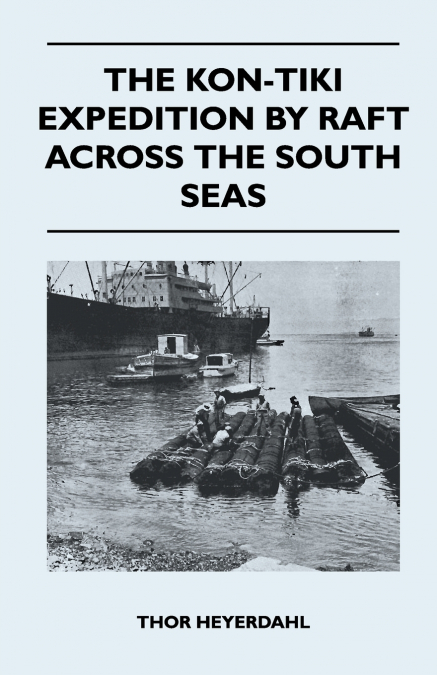
  • The Kon-Tiki Expedition by Raft Across the South Seas
    Thor Heyerdahl
    The adventure of Thor Heyerdahl and his companions on their raft the Kon-Tiki has gone down in legend as a feat of endurance and courage. This is that story in his own words. Travelling across the Pacific ocean for 4,340 miles for 101 days on a wooden raft built using skills and materials only available to the pre-conquest Peruvians. Many of the earliest books, particularly tho...
    Disponible

    40,52 €