Inicio > Sociedad y ciencias sociales > Política y gobierno > Relaciones internacionales > La Coopération entre le Burkina Faso et la République du Mali sous Sangoulé Lamizana (1966-1980)
La Coopération entre le Burkina Faso et la République du Mali sous Sangoulé Lamizana (1966-1980)

La Coopération entre le Burkina Faso et la République du Mali sous Sangoulé Lamizana (1966-1980)

Seydou MANDE

70,77 €
IVA incluido
Disponible
Editorial:
Eliva Press
Año de edición:
2026
Materia
Relaciones internacionales
ISBN:
9789999338004
70,77 €
IVA incluido
Disponible

Selecciona una librería:

  • Librería Samer Atenea

  • Kálamo Books
  • Librería Elías (Asturias)
  • Librería Kolima (Madrid)
  • Librería Proteo (Málaga)

L’objectif des pays africains notamment ceux de l’Afrique de l’ouest au lendemain de leurs indépendances est d’amorcer un développement réel.cet objectif ne peut être atteint qu’en mutualisant les efforts dans une sorte de partenariat, autrement dit dans un esprit de coopération. Comme tous les pays, le Burkina Faso et la République du Mali pour se lancer dans la quête du développement, nourrissent une politique étrangère visant à défendre sur le plan régional et international les intérêts et aspirations de leurs peuples. Les deux pays conscients alors des difficultés que rencontrerait chaque Etat en cas de replis sur lui-même dans le cadre territorial,se sont projetés ensemble dans une relation bilatérale.cette coopération bilatérale est le résultat d’une politique étrangère mise en place par les dirigeants des deux pays. Cette politique étrangère a donné naissance à l’élaboration de leur coopération, car la politique étrangère met en relief les rapports qu’un Etat entretient avec un autre ou avec le reste du monde.la coopération entre le Burkina Faso et le Mali s’est faite sur la base des accords de coopération qui sont des instruments juridiques qui en encadrent et formalisent leur partenariat bilatéral. La coopération entre les deux pays sous Sangoulé LAMIZANA a impacté positivement la vie socio-économique de chaque Etat, puisque les accords conclus le domaine économique ont réglementé et conditionné les échanges commerciaux. Pour le domaine social les dirigeants ont montré à travers la coopération que le Burkina Faso et le Mali sont deux pays frères historiquement, géographiquement et même culturellement. C’est ce esprit de fraternité qui a guidé les dirigeants de l’époque à faire taire leur incident frontalier déclenché en fin 1974 pour préserver, consolider et sauvegarder leurs relations bilatérale.

Artículos relacionados

  • Realism in Practice
    The purpose of this book is to appraise the current relevance and validity of realism as an interpretative tool in contemporary International Relations. All chapters of the book are animated by a theoretical effort to define the conceptual aspects of realism and attempt to establish whether the tradition still provides the necessary conceptual tools to scholars.The chapters add...
    Disponible

    24,79 €

  • Predicting gender violence in India
    Shritha K Vasudevan
    In this provocative new book, Shritha Vasudevan argues that feminist international relations (IR) theory has inadvertently resulted in a biased worldview, the very opposite of what feminist IR set out to try to rectify. This book contests theoretical presumptions of Western feminist IR and attempts to reformulate it in contexts of non-Western cultures. Vasudevan deftly utilizes...
  • Contemporary security issues in Africa
    Isiaka Alani Badmus / Lere Amusan
    In volume, an emerging generation of African scholars examines specific states in Africa where instability is the order of the day. Considerations of African instability are highly relevant in today’s world, where one examines the types of regimes that were put in place after the Cold War and their effects on Africa. Multiparty systems introduced in Africa, rather than bringing...
  • Chronicles of the first and second chechen wars
    Ilya Milyukov
    Presented by Russian author and attorney Ilya Milyukov, Chronicles of the First and Second Chechen War presents the main events of the First (1994-1996) and Second (1999-2009) Wars in Chechnya, Russia’s deadliest conflicts since World War II. The First War began in December 1994 and lasted for one year and nine months, ending in August 1996. There were two major urban battles -...
  • Political instability in Africa
    Isiaka Alani Badmus / Lere Amusan
    This book offers broad-gauged analyses of the causes, nature, and changing patterns of armed conflict in Africa as well as the reasons for these patterns. It also situates conflicts that have been haunting the African continent since the time of decolonization within the various theoretical schools such as 'new war,' 'economic war,' 'neo-patrimonial,' and 'globalization.' It be...
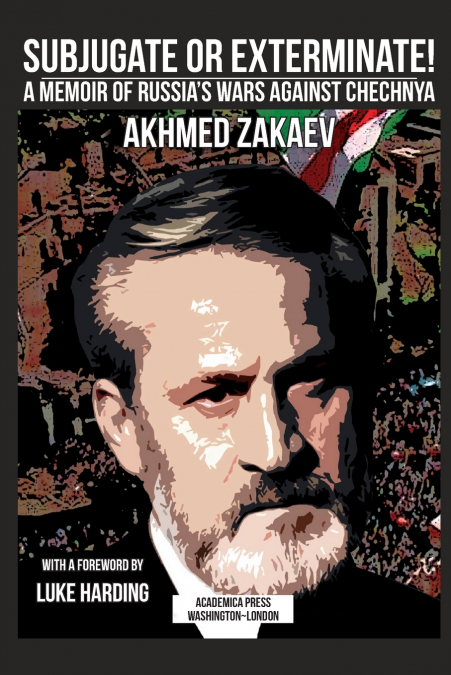
  • Subjugate or exterminate!
    Akhmed Zakaev / Arch Tait
    Foreword by Luke HardingAkhmed Zakaev is a symbol of the indomitable will of the Chechen nation. In this important memoir, he tells the story of the Chechen struggle as he experienced it, describing the conflict in human terms and providing a detailed documentary record of little known or badly understood events that will be of benefit to historians for generations to come.- Da...
    Disponible

    46,43 €