

 Librería Samer Atenea
 Kálamo Books
 Librería Elías (Asturias)
 Librería Kolima (Madrid)
 Librería Proteo (Málaga)
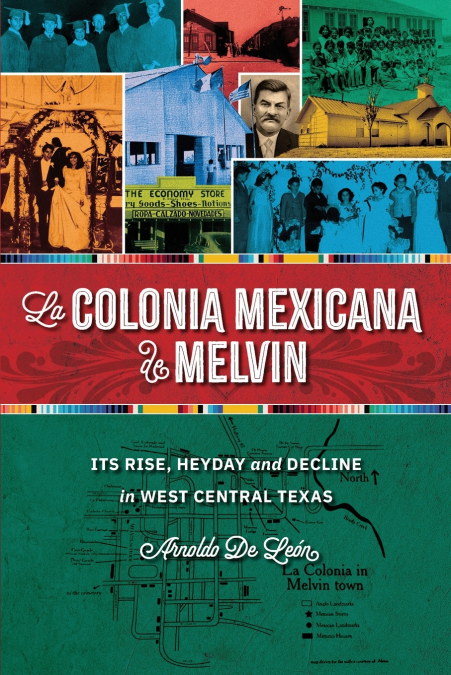
During the late nineteenth century and early years of the twentieth century, pioneers from Mexico and different parts of Texas moved into farms around what would become the predominantly Anglo-American town of Melvin, a settlement founded around the year 1905. Committed to starting a new life for themselves and their children in the United States, the Mexican settlers, or pobladores (colonizers), began the process of community building. Though undereducated, most were resourceful and determined. By the late 1910s, they had cultivated a territorial space of their own liking in Melvin and adjacent farm areas. These settlers established social and cultural institutions that functioned as bulwarks against adversity and prejudice, and bolstered community endurance. A strong work ethic, a deep faith in the American dream, and a willingness to join in the march of progress aided in promoting community survival and, for many, personal achievement. Mexican Americans from Melvin became leaders in eliminating segregation in public education in Texas shortly after World War II, during which many young Mexican American men from the town served in the military. A good number of Mexican Americans from Melvin, shaped by their experiences in their hometown, would assume responsibilities across the country, if not the world, and leave their mark as educators, military figures, doctors, scientists, attorneys, politicians, and more. This study of Melvin’s Mexican-American community challenges the fiction of an a historic Mexican-American population. It reconstructs the history of a small but important rural community in McCulloch County, inhabited mainly by working people coping with hardships but stridently determined to prevail over the barriers before them.








