

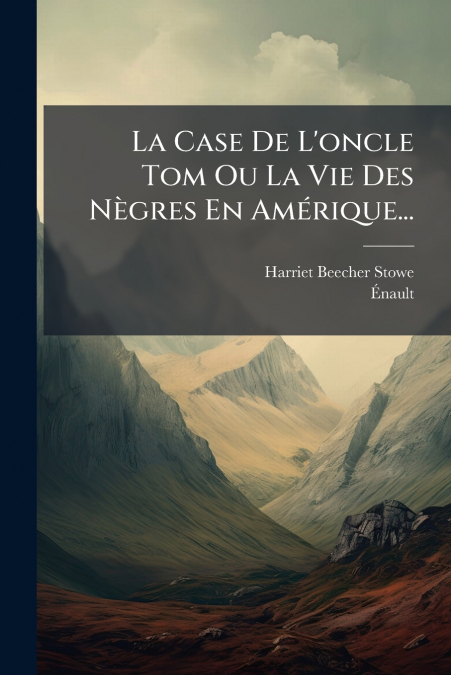
Énault / Harriet Beecher Stowe
 Librería Samer Atenea
 Kálamo Books
 Librería Elías (Asturias)
 Librería Kolima (Madrid)
 Librería Proteo (Málaga)
La Case de l’Oncle Tom, or Uncle Tom’s Cabin, is a powerful and influential anti-slavery novel by Harriet Beecher Stowe, translated into French by Énault. Published in 1852, the novel depicts the harsh realities of slavery and its dehumanizing effects on individuals and families. Set in the American South during the mid-19th century, the story follows Uncle Tom, a resilient and deeply religious slave, as he endures immense suffering and hardship. Through vivid characters and compelling narratives, Stowe’s novel exposes the moral bankruptcy of slavery and advocates for its abolition.La Case de l’Oncle Tom played a significant role in shaping public opinion about slavery and fueled the abolitionist movement in the United States. Its enduring themes of freedom, justice, and human dignity continue to resonate with readers today, making it a timeless classic of American literature. This French translation makes Stowe’s poignant story accessible to a wider audience, preserving its historical and literary value for generations to come.This work has been selected by scholars as being culturally important, and is part of the knowledge base of civilization as we know it. This work was reproduced from the original artifact, and remains as true to the original work as possible. Therefore, you will see the original copyright references, library stamps (as most of these works have been housed in our most important libraries around the world), and other notations in the work.This work is in the public domain in the United States of America, and possibly other nations. Within the United States, you may freely copy and distribute this work, as no entity (individual or corporate) has a copyright on the body of the work.As a reproduction of a historical artifact, this work may contain missing or blurred pages, poor pictures, errant marks, etc. Scholars believe, and we concur, that this work is important enough to be preserved, reproduced, and made generally available to the public. We appreciate your support of the preservation process, and thank you for being an important part of keeping this knowledge alive and relevant.





