
Inicio > Economía, finanzas, empresa y gestión > Finanzas y contabilidad > Finanzas > Kritische Würdigung der Bewertung von Immobilien nach IAS 40
Kritische Würdigung der Bewertung von Immobilien nach IAS 40

Kritische Würdigung der Bewertung von Immobilien nach IAS 40

Kritische Würdigung der Bewertung von Immobilien nach IAS 40

Stefan Gockeln

16,64 €
IVA incluido
Disponible
Editorial:
GRIN Publishing
Año de edición:
2009
Materia
Finanzas
ISBN:
9783640395538
16,64 €
IVA incluido
Disponible

Selecciona una librería:

  • Librería Samer Atenea
  • Librería Aciertas (Toledo)
  • Kálamo Books
  • Librería Perelló (Valencia)
  • Librería Elías (Asturias)
  • Donde los libros
  • Librería Kolima (Madrid)
  • Librería Proteo (Málaga)

Studienarbeit aus dem Jahr 2008 im Fachbereich BWL - Investition und Finanzierung, Note: 1,7, Leuphana Universität Lüneburg (Institut für Betriebswirtschaftslehre), Sprache: Deutsch, Abstract: Der deutsche Immobilienmarkt gilt als der größte in Europa. Der Rat der Immobilienweisen schätzt in seinem Frühjahrsgutachten, dass sich das Immobilienvermögen in 2003 auf ca. EUR 7,2 Billionen in Deutschland belief und somit einen Anteil von 88% am gesamtdeutschen Anlagevermögen hatte. Damit kommt dem Immobilienbestand eine beträchtliche volkswirtschaftliche Bedeutung zu. Aus der Mikrosicht verfügen insbesondere hierzulande Unternehmen über einen vergleichsweise hohen Immobilienbestand. Konkret sind Immobilien regelmäßig der größte Einzelposten im Anlagevermögen von Unternehmen und stellen nach den Personalkosten in vielen Branchen den zweitgrößten Kostenblock dar. Ein Teil der gehaltenen Immobilien ist dem nicht betrieblich genutzten Immobilienbestand zuzuordnen. Diese werden als Kapitalanlage angesehen und bilden somit Finanzinvestitionen in Immobilien des Unternehmens ab. „Grund und Boden, Gebäude und Gebäudeteile oder beides, die gehalten werden, um  Miet- oder Pachterträge oder  Wertsteigerungen oder  beides zu erzielen, werden offiziell als Investment Properties bezeichnet'. Die Begriffe Renditeliegenschaften oder Anlageimmobilien werden im Schriftentum als Synonym für den Ausdruck Investment Properties verwendet. Der Ansatz und die Bewertung von Investment Properties werden durch das International Accounting Standards Board (IASB) im International Accounting Standards (IAS) 40 geregelt. Der IAS 40 hat seine Wurzeln im Exposure Draft E64, der im Dezember 1999 veröffentlicht wurde und schließlich mit seiner verpflichtenden Anwendung seit dem 1. Januar 2001 den Standard IAS 25 ersetzte. Im Rahmen des Improvement Projekts vom 18.12.2003 wurde der IAS 40 nochmals an einzelnen Stellen überarbeitet und trat für die nach dem 1. Januar 2005 beginnenden Geschäftsjahr

Artículos relacionados

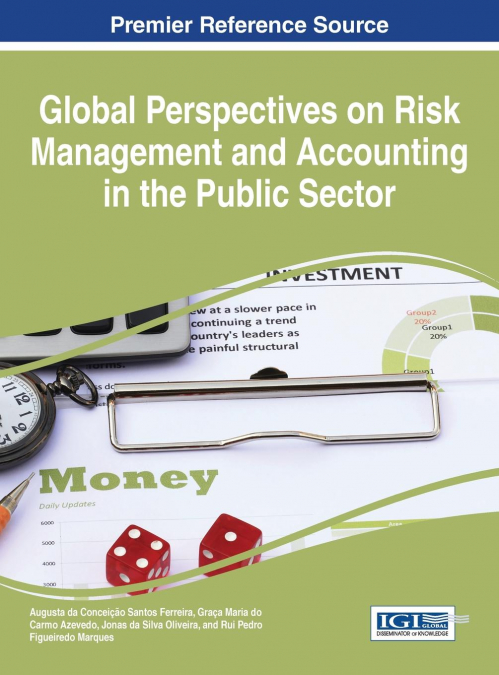
  • Global Perspectives on Risk Management and Accounting in the Public Sector
    The effects of recent economic and financial crises have reached an international scale; a number of different nations have experienced the fallout of these events, calling into question issues of accountability and reform in public management. Global Perspectives on Risk Management and Accounting in the Public Sector is a pivotal reference source for the latest research on cur...
  • Alternative Decision-Making Models for Financial Portfolio Management
    Narela Spaseski
    Economics is an integral aspect to every successful society, yet basic financial practices have gone unchanged for decades. Analyzing unconventional finance methods can provide new ways to ensure personal financial futures on an individual level, as well as boosting international economies. Alternative Decision-Making Models for Financial Portfolio Management: Emerging Research...
  • Multi-Sided Platforms (MSPs) and Sharing Strategies in the Digital Economy
    Sergey Yablonsky
    Rapid technological advancements have the ability to positively or negatively impact corporate growth and success. Professional leaders and decision makers must consider such advancements when designing and implementing new policies in preparation for the sustainable future of the business environment. Multi-Sided Platforms (MSPs) and Sharing Strategies in the Digital Economy: ...
  • The Complete Penny Stock Course
    Jamil Ben Alluch
    You can learn trading penny stocks from the masses and become part of the 90% of traders who lose money in the stock market, or you can learn from the Best. The Complete Penny Stock Course is based on Timothy Sykes’, various training programs. His strategies have helped individuals like Tim Grittani, Michael Goode and Stephen Dux become millionaires within a couple of years.Thi...
    Disponible

    37,63 €

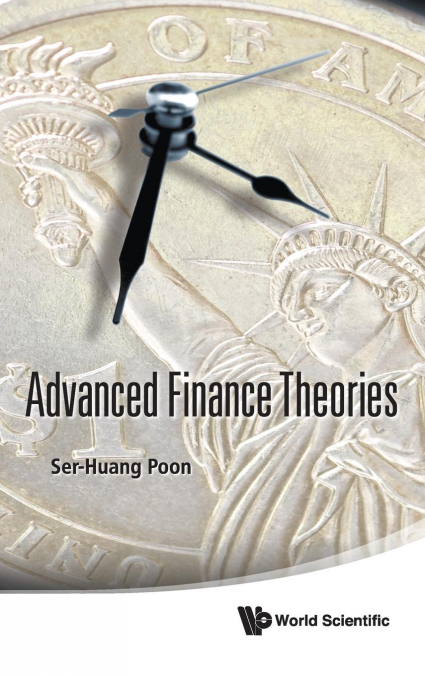
  • ADVANCED FINANCE THEORIES
    POON SER-HUANG / Ser-Huang Poon
    For PhD finance courses in business schools, there is equal emphasis placed on mathematical rigour as well as economic reasoning. Advanced Finance Theories provides modern treatments to five key areas of finance theories in Merton's collection of continuous time work, viz. portfolio selection and capital market theory, optimum consumption and intertemporal portfolio selecti...
  • Jefferson's Nightmare
    William O. Joseph
    Common working people have been getting screwed by the banking industry for hundreds of years. In the United States over 21 million family members have lost their homes since 2007. Millions more have watched their careers go up in smoke. If you think there is nothing wrong with such a system then don't bother to read this book.   Two hundred years ago, Thomas Jefferson ha...
    Disponible

    12,42 €