 Librería Samer Atenea
 Kálamo Books
 Librería Elías (Asturias)
 Librería Kolima (Madrid)
 Librería Proteo (Málaga)
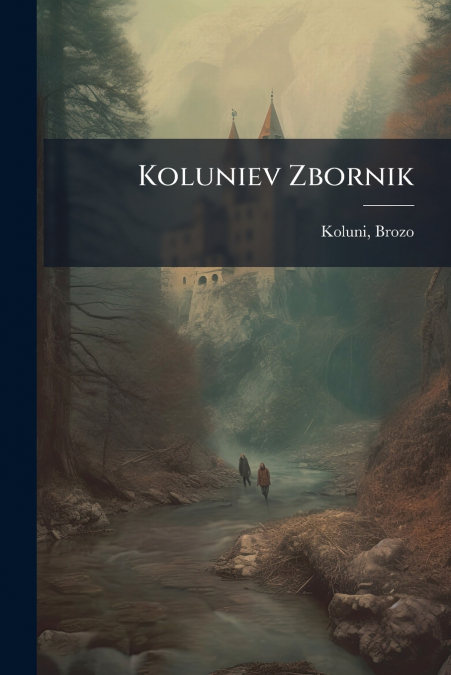
'Koluniev Zbornik: Hrvatski Glagolski Rukopis Od Godine 1486,' meticulously transcribed into Latin script by the Yugoslav Academy of Sciences and Arts, offers a unique window into 15th-century Croatian Glagolitic writing. Authored by Brozo Koluni, this historical document, originally penned in 1486, showcases the rich linguistic and cultural heritage of the Croatian people during a pivotal period in European history. This edition makes the rare manuscript accessible to a broader audience, preserving its content while bridging the gap between the ancient Glagolitic script and contemporary readers. As a testament to the enduring legacy of Slavic literacy and the scholarly dedication to preserving it, 'Koluniev Zbornik' remains an invaluable resource for historians, linguists, and anyone interested in the intersection of language, culture, and history.This work has been selected by scholars as being culturally important, and is part of the knowledge base of civilization as we know it. This work was reproduced from the original artifact, and remains as true to the original work as possible. Therefore, you will see the original copyright references, library stamps (as most of these works have been housed in our most important libraries around the world), and other notations in the work.This work is in the public domain in the United States of America, and possibly other nations. Within the United States, you may freely copy and distribute this work, as no entity (individual or corporate) has a copyright on the body of the work.As a reproduction of a historical artifact, this work may contain missing or blurred pages, poor pictures, errant marks, etc. Scholars believe, and we concur, that this work is important enough to be preserved, reproduced, and made generally available to the public. We appreciate your support of the preservation process, and thank you for being an important part of keeping this knowledge alive and relevant.