Knowing Illusion

Knowing Illusion

The Yakherds

71,41 €
IVA incluido
Disponible
Editorial:
Oxford University Press
Año de edición:
2021
Materia
Filosofía de la religión
ISBN:
9780197603635
71,41 €
IVA incluido
Disponible

Selecciona una librería:

  • Librería Samer Atenea
  • Librería Aciertas (Toledo)
  • Kálamo Books
  • Librería Perelló (Valencia)
  • Librería Elías (Asturias)
  • Donde los libros
  • Librería Kolima (Madrid)
  • Librería Proteo (Málaga)

Tsongkhapa (1357-1419) is by any measure the single most influential philosopher in Tibetan history. His articulation of Prasangika Madhyamaka, and his interpretation of the 7th Century Indian philosopher Candrakirti’s interpretation of Madhyamaka is the foundation for the understanding of that philosophical system in the Geluk school in Tibet. Tsongkhapa argues that Candrakirti shows that we can integrate the Madhyamaka doctrine of the two truths, and of the ultimate emptiness of all phenomena with a robust epistemology that explains how we can know both conventional and ultimate truth and distinguish truth from falsity within the conventional world. The Sakya scholar Taktsang Lotsawa (born 1405) published the first systematic critique of Tsongkhapa’s system. In the fifth chapter of his Freedom from Extremes Accomplished through Comprehensive Knowledge of Philosophy, Taktsang attacks Tsongkhapa’s understanding of Candrakirti and the cogency of integrating Prasangika Madhyamaka with any epistemology. This attack launches a debate between Geluk scholars on the one hand and Sakya and Kagyu scholars on the other regarding the proper understanding of this philosophical school and the place of epistemology in the Madhyamaka program. This debate raged with great ferocity from the 15th through the 18th centuries, and continues still today. The two volumes of Knowing Illusion study that debate and present translations of the most important texts produced in that context. Volume I: A Philosophical History of the Debate provides historical and philosophical background for this dispute and elucidates the philosophical issues at stake in the debate, exploring the principal arguments advanced by the principals on both sides, and setting them in historical context. This volume examines the ways in which the debate raises issues that are relevant to contemporary debates in epistemology, and concludes with two contributions by contemporary Tibetan scholars, one on each side of the debate.
Artículos relacionados

  • The Writings of Charles De Koninck
    Charles De Koninck
    The Writings of Charles De Koninck, volumes 1 and 2, present the first English editions of collected works of the Catholic Thomist philosopher Charles De Koninck (1906-1965). Ralph McInerny (1929-2010) was the project editor and prepared the excellent translations. Volume 1 contains writings ranging from De Koninck’s 1934 dissertation at the University of Louvain on the philoso...
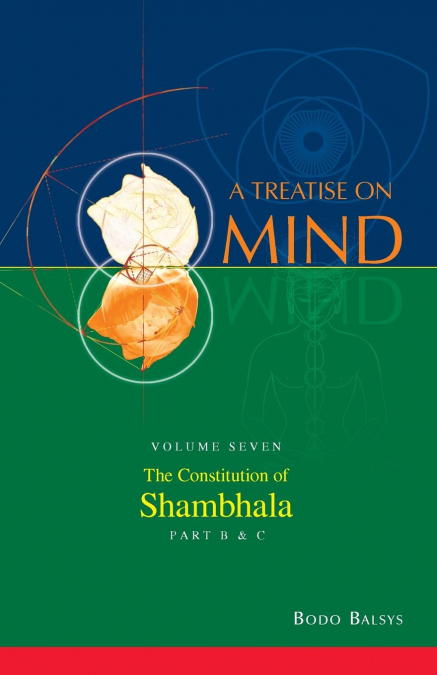
  • The Constitution of Shambhala (Vol. 7B of a Treatise on Mind)
    Bodo Balsys
    The theme of the first of the two parts of this volume concerns the feminine deva hierarchy, their relation to Hierarchy and Shambhala. Many concepts are introduced that most seekers have little cognisance (e.g., the nature of the deva Lord Varuna). The Mother of the World’s role is revealed, and the feminine function in cosmos, (e.g., the Pleiades). Advanced teaching concernin...
    Disponible

    44,89 €

  • A Labyrinth Walk Of Life
    Lewis Tagliaferre
    Here is a collection of journaled essays leading to the inevitable belief in theological fatalism, aka Theofatalism. They include arguments from theology, psychology, politics, geology, technology, sociology, economics, history, cosmology and more. With this belief system, you can feel good inside no matter what happens outside. It may take several readings to get it, but anyth...
    Disponible

    13,41 €

  • Religion
    Arthur Schopenhauer
    Collected here are five short essays, A Dialogue, A Few Words on Pantheism, On Books and Reading, Physiognomy, and, Psychological Observations, by the world renowned philosopher Arthur Schopenhauer. ...
  • The Handbook
    Epictetus Epictetus
    No writings of Epictetus himself are really known. His discourses were transcribed and compiled by his pupil Arrian (author of the Anabasis Alexandri). The main work is The Discourses, four books of which have been preserved (out of an original eight). Arrian also compiled a popular digest, entitled the Enchiridion, or Handbook. In a preface to the Discourses, addressed to Luci...
  • The Origin Comes Alive
    Cale Rainer
    Believers and Atheists alike will get a firsthand look at the Divine Presence as it reveals the intimate behaviors and processes that compose a sense of GOD, and how this arose in social consciousness to inspire a global phenomenon known as Religion.The sense of life is taken to the limits of extreme perspective in this somewhat involved, yet intimate look into our social origi...
    Disponible

    9,92 €