Inicio > Humanidades > Historia > Kinship, Business, and Politics
Kinship, Business, and Politics

Kinship, Business, and Politics

David W. Walker / David WWalker

38,92 €
IVA incluido
Disponible
Editorial:
Univ of Chicago behalf of University of Texas
Año de edición:
2015
Materia
Historia
ISBN:
9781477306499
38,92 €
IVA incluido
Disponible

Selecciona una librería:

  • Librería Samer Atenea
  • Librería Aciertas (Toledo)
  • Kálamo Books
  • Librería Perelló (Valencia)
  • Librería Elías (Asturias)
  • Donde los libros
  • Librería Kolima (Madrid)
  • Librería Proteo (Málaga)

The Martínez del Río family was a vigorous contestant in the highly politicized economy of early national Mexico. David Walker’s case study of its successes and failures provides a unique insider’s view of the trials and tribulations of doing business in a hostile environment. The family’s ordeal in Mexico-a series of personal dislocations and traumas-mirrored the painful contractions of an old society reluctantly giving birth to a new nation. Using previously undiscovered primary source materials (including the private correspondence and business records of the family, public notary documents, transcripts of judicial proceedings, and the archives of Mexico’s Ministry of Foreign Relations and the British Foreign Office), Walker employs family history to analyze problems relating more generally to the development of state and society in newly independent Mexico. The processes of socioeconomic formation in Mexico differed from those of Western Europe and the United States; accordingly, entrepreneurial activity had markedly contrasting implications for economic development and class formation. In the downwardly spiraling economy of nineteenth-century Mexico, economic activity was a zero-sum game. No new wealth was being created; most sectors remained stagnant and unproductive. To make their fortunes, empresarios, the Mexican capitalists, could not rely on income generated from authentic economic growth. Instead, they exploited the arbitrary acts of the interventionist Mexican state, which proscribed the free movement of factors within the marketplace. Speculation in the public debt took the place of more substantive undertakings. Coercive state power was diverted to create artificial environments in which otherwise inefficient and unproductive enterprises could flourish. But however well the empresarios might imitate the outward forms of industrial capitalism, they could not unlock the productive capacity of the Mexican economy. Instead, they and their allies and rivals engaged in destructive struggles to manipulate the state for personal gain, to the detriment of class interests, economic growth, and political stability.


Artículos relacionados

  • Raising Freedom's Banner
    Paul Harris
    World wide history of peaceful street demonstrations from their earliest beginning in eighteenth century England to their use throughout the world in the twenty-first century. Describes why some demonstration movements succeeded and others failed. Contrasts demonstrations within the law with civil disobedience demonstrations. Describes Peterloo, the Chartists, the Suffragettes,...
    Disponible

    23,59 €

  • Waipi’o Valley
    Jeffrey L. Gross
    Waipi’o Valley: A Polynesian Journey from Eden to Eden recounts the remarkable migrations of the Polynesians across a third of the circumference of the earth. Their amazing journey began from Kalana i Hau’ola, the biblical “Garden of Eden” located along the shore of the Persian Gulf, extended to the Indus River Valley of ancient Vedic India, to Egypt where some ancestors of the...
  • Floralia
    June Rainsford Butler
    A century characterized by a growing interest in science, the opportunity for travel, and leisure for gardening furnishes the setting for Butler’s book. The rise of landscape gardening in England is traced, and the origin and history of its most famous gardens are given. The close relation between England and America in the field of horticulture is also discussed.Originally pub...
    Disponible

    61,20 €

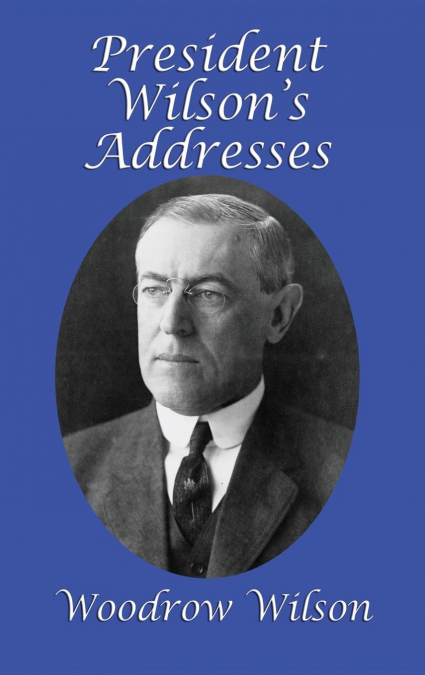
  • President Wilson’s Addresses
    Woodrow Wilson
    'These addresses of President Woodrow Wilson are almost entirely concerned with political affairs, and more specifically with defining Americanism. Yet they also show that even as he moved from academia to the heights of politics, Wilson retained something of the teacher’s interest in showing the relation between specific instances and the general forms of thought or action of ...
  • The Story of my Life
    John Albert Macy
    The Story of My Life, is Helen Keller’s autobiography detailing her early life, especially her experiences with Anne Sullivan. The book is dedicated to inventor Alexander Graham Bell. The dedication reads, 'To ALEXANDER GRAHAM BELL Who has taught the deaf to speak and enabled the listening ear to hear speech from the Atlantic to the Rockies, I dedicate this Story of My Life.' ...
  • The Story of My Life Vol. 6 Spanish Passions
    Giacomo Casanova
    Casanova was an Italian adventurer and author from the Republic of Venice. His autobiography, Histoire de ma vie (Story of My Life), is regarded as one of the most authentic sources of the customs and norms of European social life during the 18th century. He has become so famous for his often complicated and elaborate affairs with women that his name is now synonymous with 'wom...