
Kernel Limits and Refusal Geometry

Kernel Limits and Refusal Geometry

Mario Schipflinger

34,31 €
IVA incluido
Disponible
Editorial:
Published by Apollo (Mario Schipflinger)
Año de edición:
2026
Materia
Filosofía: epistemología y teoría del conocimiento
ISBN:
9783903679252
34,31 €
IVA incluido
Disponible

Selecciona una librería:

  • Librería Samer Atenea

  • Kálamo Books
  • Librería Elías (Asturias)
  • Librería Kolima (Madrid)
  • Librería Proteo (Málaga)

EXA · Volume I.4 - Kernel Limits and Refusal GeometryExecution Ineligibility BoundariesEXA Volume I.4 defines the terminal boundaries of execution architecture. It specifies where execution does not proceed, not because of failure, overload, or collapse, but because execution is structurally ineligible.This volume does not describe breakdown, error, recovery, or mitigation. It defines refusal as a boundary condition that precedes execution itself. Where refusal applies, no execution instance forms, no load is instantiated, and no response is possible.Volume I.4 completes the execution architecture established in Volumes I.1 through I.3. All prior definitions remain in force without modification. No new runtimes, modes, schedulers, or recovery mechanisms are introduced. This volume closes the execution domain by specifying its outer limits.Refusal is defined as distinct from failure and distinct from absence. Failure presumes attempted execution that does not complete. Absence presumes active execution in which constraints are removed. Refusal occurs before eligibility and excludes execution entirely. It produces no traces, signals, residues, or partial states.The volume formalizes refusal conditions, including impossible couplings, invalid execution contexts, and non-adaptable load states. These conditions are not extreme cases of instability or overload. They are configurations for which execution cannot instantiate without violating non-negotiable kernel invariants.Kernel non-response is defined as the only possible outcome under refusal. Non-response is not delay, suppression, or withholding. It is the absence of response because no executor exists. Escalation, stabilization, adaptation, and recovery are shown to be inapplicable once refusal applies.Termination without failure is specified as the end of applicability of execution semantics. No shutdown sequence occurs because no execution state exists. Concepts such as restart, rollback, continuation, or repair do not apply beyond refusal boundaries.Volume I.4 establishes the end of survivability within execution architecture. This does not imply collapse, damage, or loss. It indicates that execution criteria are no longer relevant because execution does not instantiate.The scope of this volume excludes experience, interpretation, ethics, safety, optimization, or control. It provides no guidance, safeguards, or detection methods. It describes architectural boundaries only.EXA · Volume I.4 exists to prevent misinterpretation of non-occurrence as failure, intent, or causality. Where refusal applies, nothing happens, nothing is missing, and nothing follows. Execution architecture ends here.


Artículos relacionados

  • Vier Quellen Der Erkenntnis
    Ellis Potter
    Woher wissen wir etwas? Weil es ‚wissenschaftlich bewiesen‘ ist oder ‚in der Bibel steht‘ oder es ‚sich in mir einfach richtig und wahr anfühlt ‘? Wissen wir alles auf gleiche Weise? Passen unterschiedliche Wege der Erkenntnis zusammen in ein Leben und eine Wirklichkeit?In dieser kompakten Ausgabe, dem zweiten Teil einer Trilogie, zeigt der internationale Referent Ellis Potter ...
    Disponible

    12,44 €

  • Fichte’s 1804 Wissenschaftslehre
    Illuminating new essays on Fichte’s 1804 Wissenschaftslehre, or The Science of Knowing.Fichte’s 1804 Wissenschaftslehre, or The Science of Knowing, consists of a series of lectures he delivered in his Berlin home to members of the city’s political and cultural elite in 1804. The lectures mark a dramatic shift in the terminology and methodology he uses to explore the nature of k...
  • Cybernetics for the 21st Century Vol. 1
    Andrew Pickering / Katherine Hayles
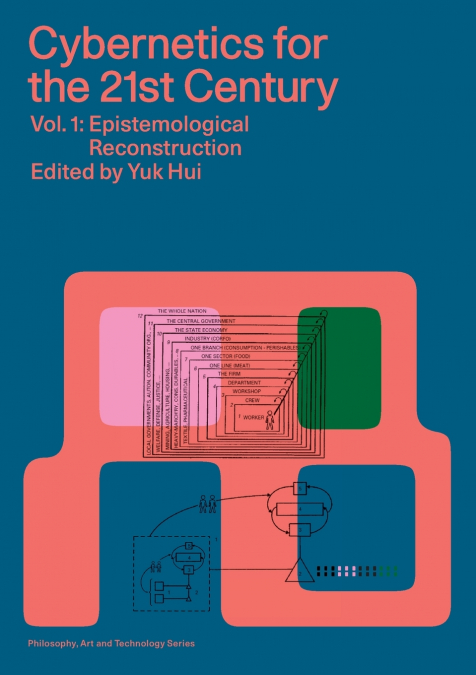
    Cybernetics for the 21st Century Vol.1 is dedicated to the epistemological reconstruction of cybernetics, consisting of a series of historical and critical reflections on the subject - which according to Martin Heidegger marked the completion of Western metaphysics. In this anthology, historians, philosophers, sociologists and media studies scholars explore the history of cyber...
    Disponible

    20,84 €

  • Huellas de San Agustín en Kant
    Javier Narváez Arango
    El libro se desarrolla en tres partes. En la primera encontramos el tiempo, el espacio, el fenómeno, el númeno, las categorías, los juicios sintéticos a priori, el mundo, el alma y Dios, expuestos por Kant en la Crítica de la razón pura. En la segunda parte encontramos los mismos temas desde san Agustín, haciendo un paralelo, para mostrar las semejanzas entre estos autores, enc...
  • Materialist Phenomenology
    Manuel DeLanda
    Bringing together phenomenology and materialism, two perspectives seemingly at odds with each other, leading international theorist, Manuel DeLanda, has created an entirely new theory of visual perception. Engaging the scientific (biology, ecological psychology, neuroscience and robotics), the philosophical (idea of ’the embodied mind’) and the mathematical (dynamic systems the...
  • A Certain Ambiguity
    Gaurav Suri / Hartosh Singh Bal
    While taking a class on infinity at Stanford in the late 1980s, Ravi Kapoor discovers that he is confronting the same mathematical and philosophical dilemmas that his mathematician grandfather had faced many decades earlier--and that had landed him in jail. Charged under an obscure blasphemy law in a small New Jersey town in 1919, Vijay Sahni is challenged by a skeptical judge ...
    Disponible

    23,19 €

Otros libros del autor

  • Do You Want to Update?
    Mario Schipflinger
    RTFM - Book 1 introduces a way of observing cognition without relying on narrative, interpretation, or personal belief.Rather than presenting arguments or explanations, the book functions as a field manual. It invites the reader to notice how meaning, identity, and internal storytelling arise, and how they shape perception before they are recognized as mechanisms. The focus is ...
    Disponible

    23,72 €

  • Applied Non-Narrative Cognition
    Mario Schipflinger
    RTFM - Book 5: Applied Non-Narrative Cognition moves from description to application, without introducing instruction, technique, or self-improvement framing.This volume examines how non-narrative cognition functions in practical contexts once structural clarity is stable. Rather than teaching methods, the book documents how cognition behaves when narrative, emotional signaling...
    Disponible

    23,46 €

  • Trans-Architectural Domain
    Mario Schipflinger
    RTFM · Volume 2 · Book 2.6 - Trans-Architectural Domain examines the threshold where architecture becomes capable of operating on itself.After dismantling narrative cognition and establishing structural perception, internal architecture, external architecture, integration, and origin-conditions (Books 2.1-2.5), this volume enters the Trans-Architectural Domain. Here, architectu...
    Disponible

    23,65 €

  • Meta-Architecture
    Mario Schipflinger
    RTFM · Volume 2 · Book 2.7 - Meta-Architecture: Architecture Operating Across Architectures completes the architectural domain by making architecture itself the object of observation.This volume does not extend architecture further. It establishes the conditions under which extension must stop.After dismantling narrative cognition (Volume 1) and establishing perception, interna...
    Disponible

    23,66 €

  • Internal Structural Formation
    Mario Schipflinger
    RTFM - Volume 2, Book 2.2: Internal Structural Formation introduces the internal operating system that becomes visible once narrative cognition has fallen silent.This book marks the first transition from perception to internal structure. Where Book 2.1 established non-narrative perception, Book 2.2 reveals the human operating system as an architectural system composed of module...
    Disponible

    23,21 €

  • External Structural Formation
    Mario Schipflinger
    RTFM - Volume 2, Book 2.3: External Structural Formation marks the transition from internal system visibility to the direct observation of external architecture.Where Book 2.1 recalibrated perception and Book 2.2 revealed the internal operating system, Book 2.3 extends structural readability beyond the individual. External behavior, interaction, and environments are no longer i...
    Disponible

    23,15 €