

 Librería Samer Atenea
 Kálamo Books
 Librería Elías (Asturias)
 Librería Kolima (Madrid)
 Librería Proteo (Málaga)
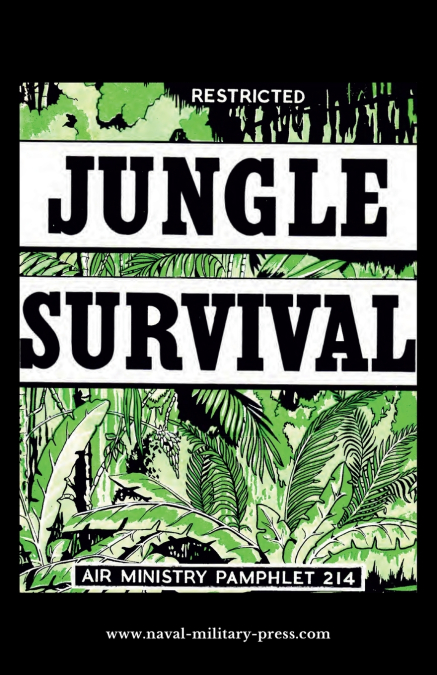
Jungle Survival was the Air Ministry’s official handbook for RAF aircrew flying over the tropical forests of the Far East. First issued in February 1950, reprinted in 1951 and 1957, and originally marked Restricted, it tells a crew forced down in the jungle exactly how to stay alive and walk out.The introduction explains what jungle really is: the difference between tall primary forest and the dense secondary jungle that grows back after clearing, and why rubber, tea and coconut plantations are a sure sign that people are near. The pamphlet then sets out the qualities that keep a survivor alive, from the determination to live to the ability to learn from mistakes, and the decisions to take in an emergency: whether to bale out or stay with the aircraft, how to choose a forced-landing ground on beaches, clearings, paddy fields, lakes and rivers, and the immediate actions on landing, from first aid, rendezvous and rationing to a plan of action, with ground and distress signals for the search aircraft.Jungle hazards are covered in turn: panic, sun and heat, malaria, dysentery, sandfly fever and typhus; mosquitoes, hornets, leeches, ticks and ants; scorpions, centipedes and big game; and the snakes of the region, from the python, king cobra, krait and banded krait to Russell’s viper, the hump-nosed viper, the saw-scaled viper and sea snakes, each described and illustrated.The practical chapters teach jungle travel by compass, blazed trail and river, the building of log rafts, the choice of camping sites and the making of shelters, fire-lighting by bow and drill, fire thong and fire-saw, and the cooking of fruits, roots, small game, fish and crustaceans. Water is found and purified from rain traps, streams, bamboo, vines and coconuts. The food chapters identify sweet potato, taro, tapioca, breadfruit, edible ferns, bamboo, coconuts, seaweeds and water lilies, warn against the poisonous plants (strychnine plant, milky mangrove, cowhage, nettle tree, thorn apple, pangi, physic nut, castor oil bean and rengas tree), and show how insects, birds and animals can be eaten. Fishing with home-made hooks, lines and traps and gathering shellfish on the shore are fully explained, and a final chapter advises on meeting and dealing with local people.Illustrated throughout with fine line drawings of snakes, insects, plants, rafts and fire-making methods, this is an authentic record of post-war RAF survival training and remains a clear and practical guide to living in the tropical forest.






