
Inicio > > Programación informática/desarrollo de software > Journeys Between Formal Methods and the Railway Industry
Journeys Between Formal Methods and the Railway Industry

Journeys Between Formal Methods and the Railway Industry


141,99 €
IVA incluido
Disponible
Editorial:
Springer Nature B.V.
Año de edición:
2026
Materia
Programación informática/desarrollo de software
ISBN:
9783032124838
141,99 €
IVA incluido
Disponible

Selecciona una librería:

  • Librería Samer Atenea

  • Kálamo Books
  • Librería Elías (Asturias)
  • Librería Kolima (Madrid)
  • Librería Proteo (Málaga)

Alessandro Fantechi earned a Laurea Degree in Computer Science from the University of Pisa and a Diploma from the Scuola Normale Superiore di Pisa, both in 1978. He has lectured at the University of Florence for decades on the foundations of Computer Science and Software Engineering, where he was also responsible for the curriculum of the PhD school in Information Engineering, coordinator of the Bachelor’s and Master’s curricula in Computer Engineering, and President of the School of Engineering. He has collaborated with CNR-ISTI Pisa, Télécom ParisTech, and the Technical University of Denmark, and he has had many research, teaching, and consulting projects in leading companies and state enterprises.Prof. Fantechi’s main area of research is Software Engineering, in particular the application of formal specification and verification methods in industrial, safety-critical applications such as the railway domain, where he has been a leading practitioner for many years. He has been an active member of the ERCIM working group Formal Methods for Industrial Critical Systems (FMICS), he has chaired scientific events such as FMOODS, SPLC, SERENE, RSSRail and VaMoS, he is a member of IFIP WG 6.1, and he is one of the expert members of the Scientific Steering Group of Europe’s Rail Joint Undertaking.This volume contains chapters from leading scientists and engineers, their contributions honor an influential researcher, practitioner, and educator.

Artículos relacionados

  • SPARK 2014 Reference Manual
    AdaCore / Altran UK Ltd
    SPARK 2014 is a programming language and a set of verification tools designed to meet the needs of high-assurance software development. SPARK 2014 is based on Ada 2012, both subsetting the language to remove features that defy verification, but also extending the system of contracts and aspects to support modular, formal verification.This manual is available online for free at ...
    Disponible

    19,91 €

  • Software and Intelligent Sciences
    Yingxu Wang
    The junction of software development and engineering combined with the study of intelligence has created a bustling intersection of theory, design, engineering, and conceptual thought. Software and Intelligent Sciences: New Transdisciplinary Findings sits at a crossroads and informs advanced researchers, students, and practitioners on the developments in computer science, theor...
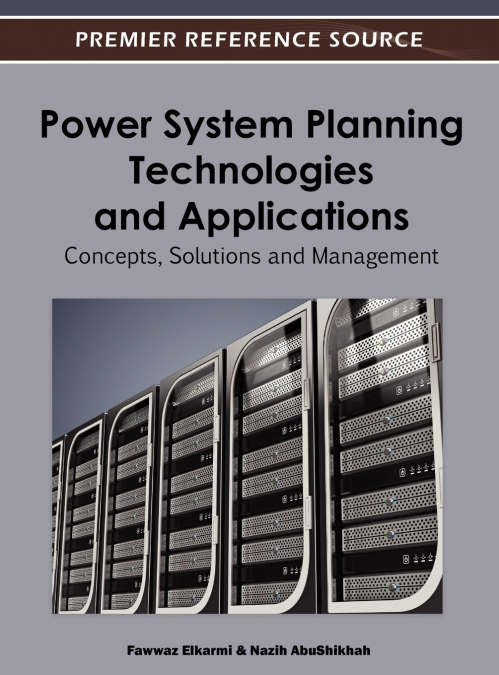
  • Power System Planning Technologies and Applications
    Fawwaz Elkarmi / Nazih Abu Shikhah / Nazih Abu-Shikhah
    Planning is an important function of the management of any business, providing knowledge of future prospects and enabling prudent and appropriate decision-making. Planning is especially critical for power systems, since electricity is a fundamental part of modern societies and many conventional electrical energy resources currently in use are limited. Power System Planning Tech...
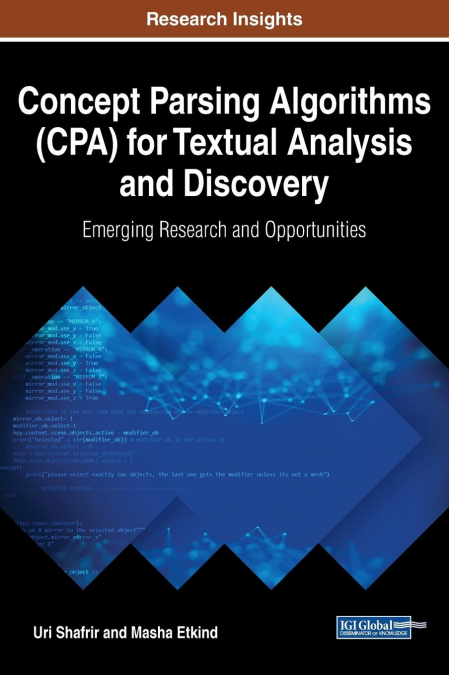
  • Concept Parsing Algorithms (CPA) for Textual Analysis and Discovery
    Masha Etkind / Uri Shafrir
    Text analysis tools aid in extracting meaning from digital content. As digital text becomes more and more complex, new techniques are needed to understand conceptual structure. Concept Parsing Algorithms (CPA) for Textual Analysis and Discovery: Emerging Research and Opportunities provides an innovative perspective on the application of algorithmic tools to study unstructured d...
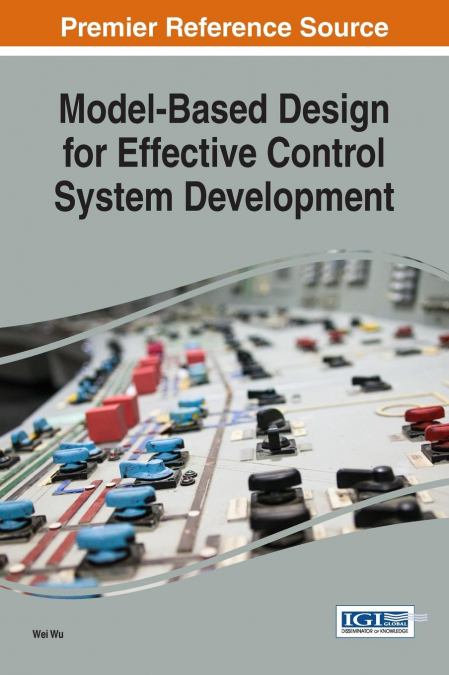
  • Model-Based Design for Effective Control System Development
    Wei Wu
    Control systems are an integral aspect of modern society and exist across numerous domains and applications. As technology advances more and more, the complexity of such systems continues to increase exponentially. Model-Based Design for Effective Control System Development is a critical source of scholarly information on model-centric approaches and implementations for control...
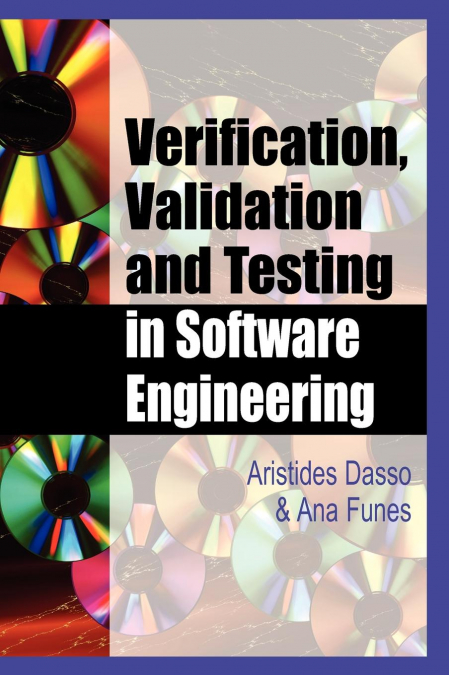
  • Verification, Validation and Testing in Software Engineering
    ...