 Librería Samer Atenea
 Kálamo Books
 Librería Elías (Asturias)
 Librería Kolima (Madrid)
 Librería Proteo (Málaga)
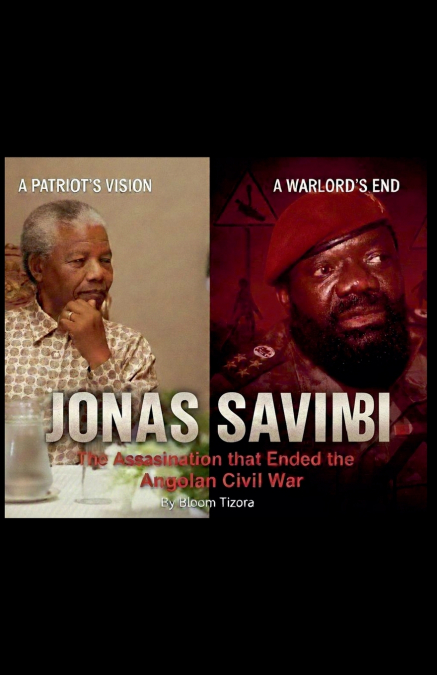
PrefaceThe history of post-colonial Africa is often told through the lens of sweeping ideologies-Cold War maneuvers, the clash of Marxism and Capitalism, and the struggle for self-determination. Yet, occasionally, the history of an entire nation becomes so inextricably tied to the heartbeat of a single individual that the two cannot be separated. Such is the story of Angola and Jonas Malheiro Savimbi.For nearly thirty years, Savimbi was the 'Lion of the Bush,' a man of immense intellectual depth and terrifying ambition. To some, he was the ultimate African patriot-a linguist, a philosopher-king, and a 'Freedom Fighter' hailed in the halls of the White House. To others, he was a warlord of staggering ego, a man who preferred to see his country burn than to see himself play a secondary role in its governance.Jonas Savimbi: The Assassination that Ended the Angolan Civil War is not merely a biography of a rebel leader; it is an investigation into the cost of charismatic authority. This book traces the arc of a life that began in the disciplined mission stations of the Bié Plateau, moved through the radicalized student cafes of Europe, and ended amidst the marshes of the Luvuei River. It explores how a man who once held the promise of healing his people through medicine chose instead to lead them into a 'Total War' that left half a million dead and a landscape littered with ten million landmines.The central tragedy of Savimbi’s life-and the core of this book-is the paradox of his passing. It is a rare and chilling truth that for Angola to finally breathe, its most famous son had to stop breathing. The silence that followed the fifteen bullets fired on February 22, 2002, was not the silence of defeat, but the silence of a nation finally finding its voice after decades of gunfire.Through archival research, tactical analysis, and a deep look at the human toll of the conflict, we examine the transition of Savimbi from a liberation icon to a global pariah. We ask the uncomfortable question: Can a single man’s ambition be so vast that his death becomes the most significant humanitarian gift to his country?As Angola stands today as one of Africa’s leading economies, the ghost of Savimbi still lingers in the red dust of the central highlands. This book seeks to exhume the truth of his legacy, weighing the brilliance of the man against the sorrow of the fields he left behind.