Inicio > Tecnología, ingeniería, agricultura > Tecnología: cuestiones generales > Joint Source Channel Coding Using Arithmetic Codes
Joint Source Channel Coding Using Arithmetic Codes

Joint Source Channel Coding Using Arithmetic Codes

Bi Dongsheng / Khalid Sayood / Michael Hoffman

38,13 €
IVA incluido
Disponible
Editorial:
Springer Nature B.V.
Año de edición:
2009
Materia
Tecnología: cuestiones generales
ISBN:
9783031005473
38,13 €
IVA incluido
Disponible

Selecciona una librería:

  • Librería Samer Atenea
  • Librería Aciertas (Toledo)
  • Kálamo Books
  • Librería Perelló (Valencia)
  • Librería Elías (Asturias)
  • Donde los libros
  • Librería Kolima (Madrid)
  • Librería Proteo (Málaga)

Based on the encoding process, arithmetic codes can be viewed as tree codes and current proposals for decoding arithmetic codes with forbidden symbols belong to sequential decoding algorithms and their variants. In this monograph, we propose a new way of looking at arithmetic codes with forbidden symbols. If a limit is imposed on the maximum value of a key parameter in the encoder, this modified arithmetic encoder can also be modeled as a finite state machine and the code generated can be treated as a variable-length trellis code. The number of states used can be reduced and techniques used for decoding convolutional codes, such as the list Viterbi decoding algorithm, can be applied directly on the trellis. The finite state machine interpretation can be easily migrated to Markov source case. We can encode Markov sources without considering the conditional probabilities, while using the list Viterbi decoding algorithm which utilizes the conditional probabilities. We can also use context-based arithmetic coding to exploit the conditional probabilities of the Markov source and apply a finite state machine interpretation to this problem.The finite state machine interpretation also allows us to more systematically understand arithmetic codes with forbidden symbols. It allows us to find the partial distance spectrum of arithmetic codes with forbidden symbols. We also propose arithmetic codes with memories which use high memory but low implementation precision arithmetic codes. The low implementation precision results in a state machine with less complexity. The introduced input memories allow us to switch the probability functions used for arithmetic coding. Combining these two methods give us a huge parameter space of the arithmetic codes with forbidden symbols. Hence we can choose codes with better distance properties while maintaining the encoding efficiency and decoding complexity. A construction and search method is proposed and simulation results show that we can achieve a similar performance as turbo codes when we apply this approach to rate 2/3 arithmetic codes.Table of Contents: Introduction / Arithmetic Codes / Arithmetic Codes with Forbidden Symbols / Distance Property and Code Construction / Conclusion

Artículos relacionados

  • Science and the Big Issues of Our Time
    Martin Gellender
    Within the last few generations, our world has been shaped by technological change enabled by scientific advances. This is particularly evident to the 'baby boomer' generation, who have lived through and witnessed huge changes in society over the course of their lifetimes. Although many have little education in science, or have forgotten what they learned in high school, they u...
    Disponible

    26,58 €

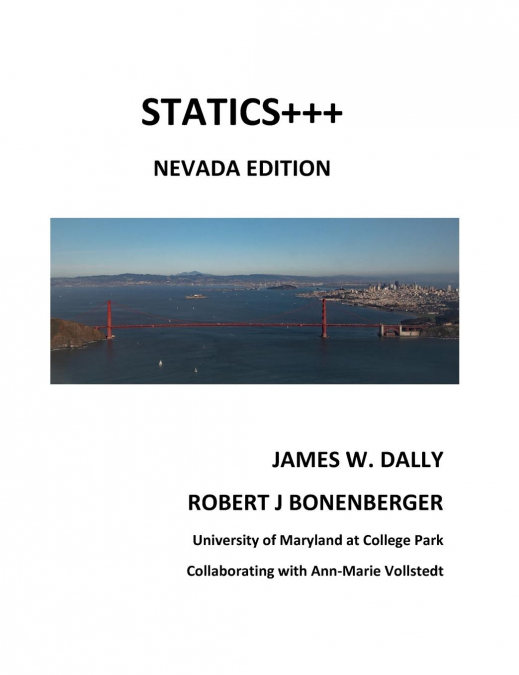
  • Statics+++
    James W Dally / Robert J Bonenberger
    This textbook has been prepared to support a course offering for Statics at the University of Nevada at Reno.  Statics provides the first exposure of engineering students to the study of mechanics.  While Statics is a relatively simple subject, many students find it difficult, and they often perform far below our expectations.  In an effort to improve the curriculum, several me...
    Disponible

    101,22 €

  • Technical Writing, Presentational Skills, and Online Communication
    Raymond Greenlaw
    This book addresses four main topics: professional ethics, technical writing, presentation skills, and online writing. These topics are woven throughout the book and some of them are the main subjects of one or more chapters. The overarching theme of this book is to provide well-tested, best-practice techniques and strategies for main topic areas while focusing on information t...
    Disponible

    229,44 €

  • Project Management Techniques and Innovations in Information Technology
    John Wang
    Managing cost, time, and quality of a project can be a challenging task for any project manager, but especially in times of an ever-changing and burgeoning field of IT. Project Management Techniques and Innovations in Information Technology offers a vital compendium of the latest research, case studies, best practices, and methodologies within the field of IT project management...
    Disponible

    229,98 €

  • Phenomenology, Organizational Politics, and IT Design
    Information systems are researched, published on, and utilized as an extremely broad and vital sector of current technology development, usually studied from the scientific or technological viewpoints therein. Phenomenology, Organizational Politics, and IT Design: The Social Study of Information Systems offers a new look at the latest research and critical issues within the fie...
    Disponible

    230,06 €

  • Geotechnical Applications for Earthquake Engineering
    Disaster preparedness and response management is a burgeoning field of technological research, and staying abreast of the latest developments within the field is a difficult task. Geotechnical Applications for Earthquake Engineering: Research Advancements has collected chapters from experts from around the world in a variety of applications, frameworks, and methodologies, and p...
    Disponible

    236,13 €