

 Librería Samer Atenea
 Kálamo Books
 Librería Elías (Asturias)
 Librería Kolima (Madrid)
 Librería Proteo (Málaga)
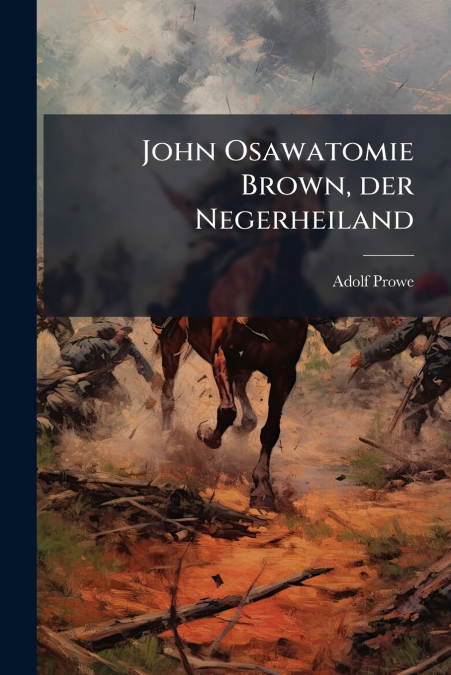
Eine Biographie über John Brown, den radikalen Abolitionisten, der eine entscheidende Rolle in der Vorgeschichte des amerikanischen Bürgerkriegs spielte. Adolf Prowe schildert Browns Leben, seine Überzeugungen und Taten, die ihn zu einer kontroversen Figur machten. Brown, bekannt für seinen militanten Kampf gegen die Sklaverei, wird hier als ’Negerheiland’ dargestellt, was seine Bedeutung für die afroamerikanische Bevölkerung hervorhebt. Die Biographie beleuchtet Browns Überfall auf Harpers Ferry im Jahr 1859, ein Ereignis, das die Nation spaltete und den Konflikt zwischen Nord und Süd verschärfte. Prowe analysiert Browns Motive und Strategien und untersucht die Auswirkungen seines Handelns auf die amerikanische Gesellschaft. ’John Osawatomie Brown, der Negerheiland’ bietet ein detailliertes Porträt eines Mannes, der bereit war, für seine Ideale zu sterben, und dessen Vermächtnis bis heute nachwirkt.This work has been selected by scholars as being culturally important, and is part of the knowledge base of civilization as we know it. This work was reproduced from the original artifact, and remains as true to the original work as possible. Therefore, you will see the original copyright references, library stamps (as most of these works have been housed in our most important libraries around the world), and other notations in the work.This work is in the public domain in the United States of America, and possibly other nations. Within the United States, you may freely copy and distribute this work, as no entity (individual or corporate) has a copyright on the body of the work.As a reproduction of a historical artifact, this work may contain missing or blurred pages, poor pictures, errant marks, etc. Scholars believe, and we concur, that this work is important enough to be preserved, reproduced, and made generally available to the public. We appreciate your support of the preservation process, and thank you for being an important part of keeping this knowledge alive and relevant.





