

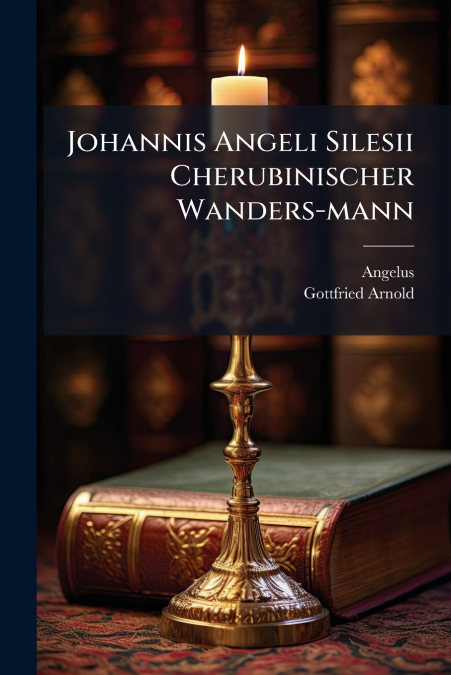
Angelus (Silesius) / Gottfried Arnold
 Librería Samer Atenea
 Kálamo Books
 Librería Elías (Asturias)
 Librería Kolima (Madrid)
 Librería Proteo (Málaga)
Johannis Angeli Silesii Cherubinischer Wandersmann, also known as 'The Cherubinic Pilgrim,' is a collection of epigrams by Angelus Silesius (1624-1677), a German Catholic priest and mystic. Published in 1657, this work is renowned for its profound spiritual insights expressed through concise and paradoxical verses. The collection, subtitled 'Oder Geistreiche Sinn- Und Schluss-reime, Zur Göttlichen Beschaulichkeit Anleitende,' invites readers to contemplate divine mysteries and seek inner enlightenment. Silesius’s work blends Christian mysticism with elements of Neoplatonism and pantheism, offering a unique perspective on the relationship between God and the soul. Each epigram serves as a meditative tool, encouraging readers to transcend earthly concerns and embrace a deeper understanding of the divine presence within themselves. This edition preserves the original German text, allowing contemporary readers to engage with the rich spiritual and literary heritage of the 17th century.This work has been selected by scholars as being culturally important, and is part of the knowledge base of civilization as we know it. This work was reproduced from the original artifact, and remains as true to the original work as possible. Therefore, you will see the original copyright references, library stamps (as most of these works have been housed in our most important libraries around the world), and other notations in the work.This work is in the public domain in the United States of America, and possibly other nations. Within the United States, you may freely copy and distribute this work, as no entity (individual or corporate) has a copyright on the body of the work.As a reproduction of a historical artifact, this work may contain missing or blurred pages, poor pictures, errant marks, etc. Scholars believe, and we concur, that this work is important enough to be preserved, reproduced, and made generally available to the public. We appreciate your support of the preservation process, and thank you for being an important part of keeping this knowledge alive and relevant.





