Inicio > Humanidades > Filosofía > Filosofía no occidental > Filosofía oriental y de la India > Jñānagarbha’s Commentary on the Distinction Between the Two Truths
Jñānagarbha’s Commentary on the Distinction Between the Two Truths

Jñānagarbha’s Commentary on the Distinction Between the Two Truths

Malcolm D. Eckel / Malcolm DEckel

47,37 €
IVA incluido
Disponible
Editorial:
State University of New York Press
Año de edición:
1987
Materia
Filosofía oriental y de la India
ISBN:
9780887063022
47,37 €
IVA incluido
Disponible

Selecciona una librería:

  • Librería Samer Atenea
  • Librería Aciertas (Toledo)
  • Kálamo Books
  • Librería Perelló (Valencia)
  • Librería Elías (Asturias)
  • Donde los libros
  • Librería Kolima (Madrid)
  • Librería Proteo (Málaga)

The Mādhyamaka School of Indian Buddhist thought has had tremendous influence in the Buddhist world, particularly in Tibet, China and Japan: in the West it has become the subject of intense interest in the fields of comparative religion and philosophy. Many aspects of Mādhyamaka thought, however, remain obscure, especially during the period when Buddhist thought was first introduced to Tibet.Jñānagarbha’s Commentary on the Distinction between the Two Truths is a concise and lucid introduction to the issues and personalities that dominated Indian Mādhyamaka thought on the eve of its introduction to Tibet. As an example of the influential but little-known Svātantrika branch of the Mādhyamaka School, Jñānagarbha’s work shows quite vividly how the commitment to reason in the search for ultimate truth shaped not only the dialogue between Mādhyamaka thinkers and members of other Buddhist schools, but also the evolution of the Mādhyamaka tradition itself.David Eckel has translated Jñānagarbha’s text in its entirety and provided an introduction that situates the text clearly in its historical and philosophical context. Extensive notes, a transliterated version of the Tibetan translation, and a reproduction of the original Tibetan blockprints make this volume useful to scholars as well as to the interested general reader.

Artículos relacionados

  • Bhagavad Gītā
    Swami Lakshmanjoo
    This treasure of knowledge was one of the last works by Swami Lakshmanjoo. He said, "It was a new revelation of the supreme secrets, hidden in the Kashmiri recension of the Bhagavad Gita." Based on Abhinavagupta's commentary of the Gitarthasamgraha, "The Essence of the Gita", Swamiji declared that, "this revelation was initiated by his direct experience of the state of Univ...
  • Fiery World III
    Agni Yoga Society
    Fiery World III is the eleventh book from the Agni Yoga Series which is composed of fourteen books. In them is found a synthesis of ancient Eastern beliefs and modern Western thought and a bridge between the spiritual and the scientific. Unlike previous yogas, Agni Yoga is a path not of physical disciplines, meditation, or asceticism—but of practice in daily life. It is the yog...
    Disponible

    14,47 €

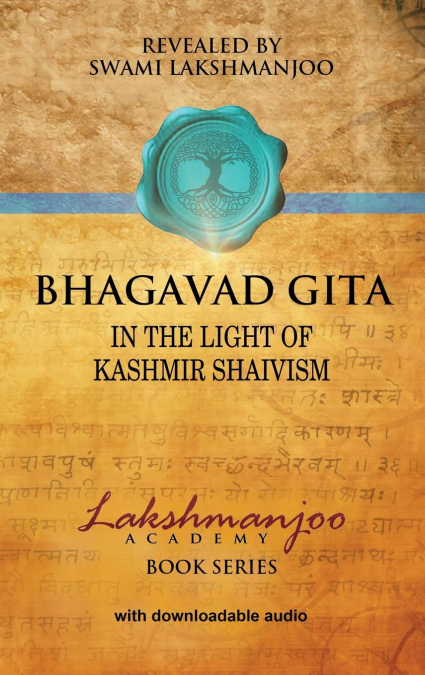
  • Bhagavad Gī̄tā
    Swami Lakshmanjoo
    This treasure of knowledge was one of the last works by Swami Lakshmanjoo. He said, "It was a new revelation of the supreme secrets, hidden in the Kashmiri recension of the Bhagavad Gita." Based on Abhinavagupta's commentary of the Gitarthasamgraha, "The Essence of the Gita", Swamiji declared that, "this revelation was initiated by his direct experience of the state of Univ...
    Disponible

    26,24 €

  • The Quantum Screen
    Samuel Avery
    What is the connection between physics and consciousness? In this groundbreaking new book, Samuel Avery presents the quantum screen, a paradigm-shifting model of perceptual consciousness and of the world. This model looks to the enigmas of modern physics to demonstrate the primacy of consciousness—the essential oneness of spirit and matter.Our intellectual culture is divided be...
    Disponible

    13,80 €

  • Confucian Analects
    Confucius
    The superior man bends his attention to what is radical. That being established, all practical courses naturally grow up. Filial piety and fraternal submission,-are they not the root of all benevolent actions?To rule a country of a thousand chariots, there must be reverent attention to business, and sincerity; economy in expenditure, and love for men; and the employment of the ...
  • Leaves of Morya’s Garden II
    Agni Yoga Society
    Leaves of Morya's Garden II (Illumination) is the second book from the Agni Yoga Series which is composed of fourteen books. In them is found a synthesis of ancient Eastern beliefs and modern Western thought and a bridge between the spiritual and the scientific. Unlike previous yogas, Agni Yoga is a path not of physical disciplines, meditation, or asceticism—but of practice...
    Disponible

    12,10 €