
Issue #5

Issue #5

Issue #5

Peter Nowogrodzki

19,06 €
IVA incluido
Disponible
Editorial:
INCITE Journal of Experimental Media
Año de edición:
2015
ISBN:
9780985741952
Páginas:
272
Encuadernación:
Otros
19,06 €
IVA incluido
Disponible

Selecciona una librería:

  • Librería Samer Atenea
  • Librería Aciertas (Toledo)
  • Kálamo Books
  • Librería Perelló (Valencia)
  • Librería Elías (Asturias)
  • Donde los libros
  • Librería Kolima (Madrid)
  • Librería Proteo (Málaga)

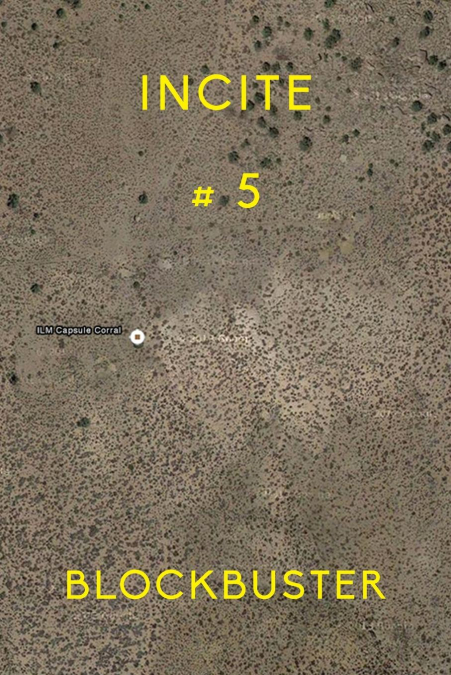
The term BLOCKBUSTER first appeared in the 1940s, coined by U.S. print media outlets to describe a new design of large, aerial bomb capable, upon explosion, of destroying an entire city block. By the 1970s, BLOCKBUSTER had been appropriated by the entertainment industry and was used by reporters and reviewers to hype awesome audience responses to movies like Jaws and Star Wars, which subsequently ballooned the Hollywood landscape into a mass-market cultural phenomenon. In the decades since, the meaning of BLOCKBUSTER has transformed yet again. The word now connotes marketing rhetoric, and is deployed as much by Pharmaceutical companies to sell drugs-like the osteoporosis 'bone blockbuster' Denosumab-as by producers to sell tickets. The BLOCKBUSTER, no longer descriptive of destructive potential nor viewer response, has become a directive to consumers: A Must See command. Today, with the rise of instantaneous and participatory media, this BLOCKBUSTER entertainment experience has been divorced from an exclusive relationship with theater and is quickly creeping inside public institutions like Art and Science. We find ourselves unable to turn our attention away from James Cameron on the ocean floor, tweeting 'Hitting bottom never felt so good'; or The Hobbit on New Zealand Airlines flights; or Roger Ebert's death atop headlines; or Tilda Swinton in the MoMA and Kubrick at the LA County Museum of Art and Herzog in the Whitney. The BLOCKBUSTER experience is crowd-sourcing, and everyday life is, more transparently, an act of audience. The BLOCKBUSTER, therefore, will be the theme for the fifth issue of INCITE. CONTRIBUTORS: Sam Axelrod, Christina Battle, Colin Beckett, Roger Beebe, Giampaolo Bianconi, Ian Cheng, Pablo de Ocampo, Brian Droitcour, Walter Forsberg, Anna Ialeggio, Gregory Kalliche, John Klacsmann, Norman Klein, Oliver Laric, Kevin B. Lee, Olia Lialina, Jodie Mack, Ian Page, Lucy Raven, Kalan Sherrard, and Amy Sloper.
Artículos relacionados

  • Harmonia
    Michael Betancourt
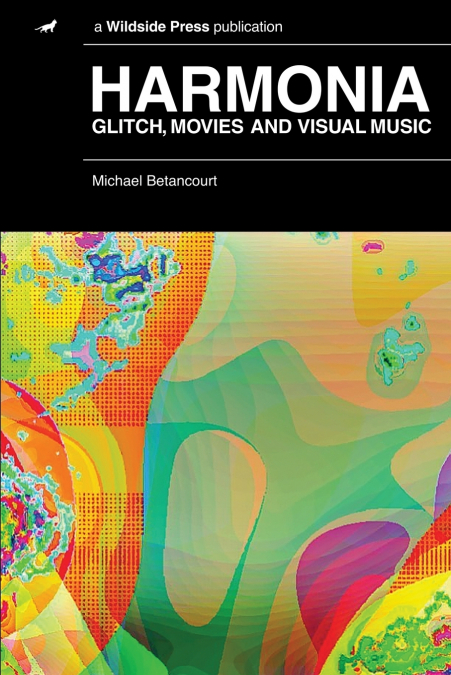
    Harmonia, “harmonies,” analyzes the connections between glitch art, visual music, abstraction, and motion pictures. It is a theory and a critique of visual music.This collection is a chronological survey of artistic research into, around, and with digital motion pictures. The result unveils a theory of both visual music and abstraction, one that is directly connected to a criti...
    Disponible

    27,87 €

  • Harmonia
    Michael Betancourt
    Harmonia, 'harmonies,' analyzes the connections between glitch art, visual music, abstraction, and motion pictures. It is a theory and a critique of visual music.This collection is a chronological survey of artistic research into, around, and with digital motion pictures. The result unveils a theory of both visual music and abstraction, one that is directly connected to a crit...
  • Russian Avant-Garde
    Evgueny Kovtun
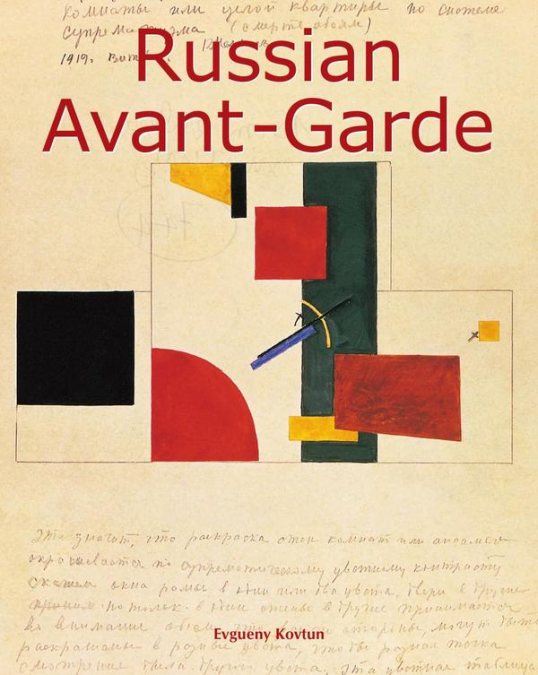
    The Russian Avant-Garde was born at the turn of the twentieth century in pre-revolutionary Russia. The intellectual and cultural turmoil had then reached a peak and provided fertile soil for the formation of the movement. For many artists influenced by European art, the movement represented a way of liberating themselves from the social and aesthetic constraints of the past. It...
    Disponible

    37,44 €

  • Russian Painting
    Peter Leek
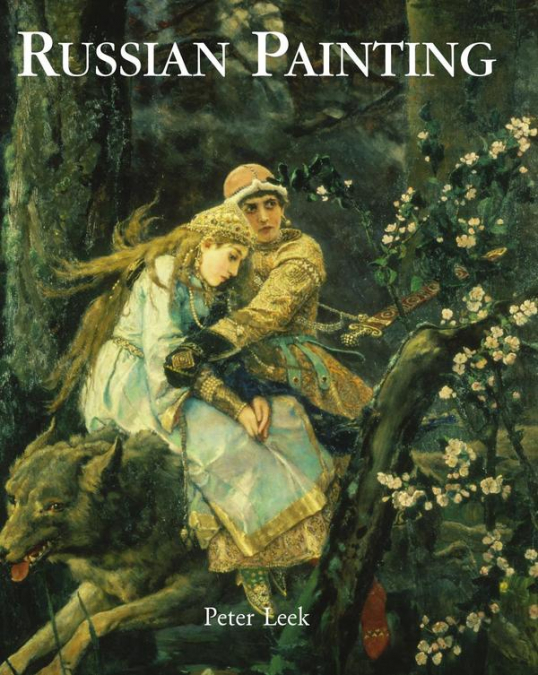
    For centuries Russia had no great painters to speak of. Artists like Rublov concentrated nearly all their creative talent on the painting of icons. But with the accession to the throne of Peter the Great, the world of the European Enlightenment flooded into this large and reputedly backwards empire. St. Petersburg emerged from the swamps as if by miracle, thanks to the genius o...
    Disponible

    42,64 €

  • Art Nouveau
    Sutherland Lyall
    The Russian painters of water recaptures the impressions of water in the works held at the Russian State Museum of Russian Painters, from the 18th century onward. Among the paintings are works by Sylvester Shechedrin, Ivan Aivazovsky, Polenov. Arkhipov and Repin. Sutherland Lyall narrates vividly and elegantly the exciting and varied appearance of water in the world of Russian ...
    Disponible

    37,44 €

  • Les Trésors Perdus De L’art Persan
    Vladimir Lukonin
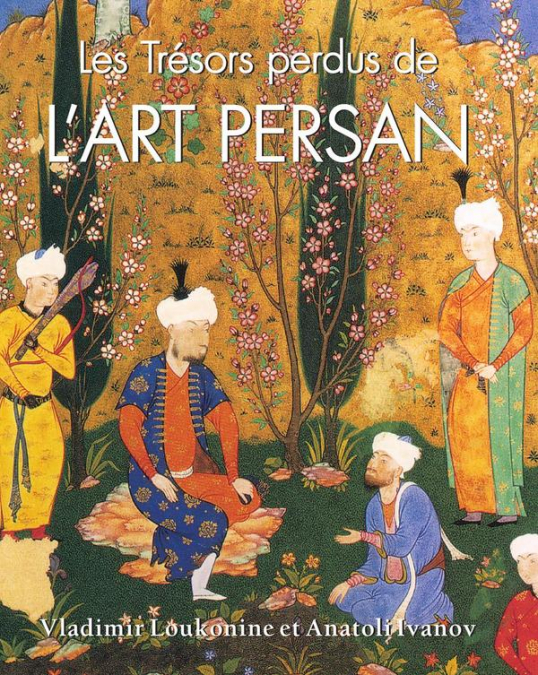
    Certains des trésors de l’art perse ont été conservés au musée de l’Ermitage à Saint-Pétersbourg, et dans d’autres institutions culturelles de Moscou ou des anciennes républiques de l’Union soviétique. Pour la plupart, ils sont aujourd’hui disparus mais reproduits ici pour la première fois sous la forme de planches de couleurs.Depuis trois millénaires, cet art a conservé une un...
    Disponible

    42,64 €