Islamic Banking

Islamic Banking

Islamic Banking

Carina Schütz

59,09 €
IVA incluido
Disponible
Editorial:
GRIN Verlag GmbH
Año de edición:
2014
ISBN:
9783656662662
59,09 €
IVA incluido
Disponible

Selecciona una librería:

  • Librería Samer Atenea
  • Librería Aciertas (Toledo)
  • Kálamo Books
  • Librería Perelló (Valencia)
  • Librería Elías (Asturias)
  • Donde los libros
  • Librería Kolima (Madrid)
  • Librería Proteo (Málaga)

Diplomarbeit aus dem Jahr 2007 im Fachbereich BWL - Bank, Börse, Versicherung, Note: 2,0, Universität Kassel, 91 Quellen im Literaturverzeichnis, Sprache: Deutsch, Anmerkungen: Als Anhang ist eine Excel-Datei angefügt. Diese beinhaltet eine Untersuchung zur Sharia-Konformität deutscher DAX / MDAX Unternehmen. , Abstract: Immer wieder rückt der Islam unter religiösen, kulturellen und politischen Aspekten in den Blickpunkt der westlichen Welt. In jüngster Vergangenheit stehen vor allem durch den großen wirtschaftlichen Erfolg der Emirate Dubai und Abu Dhabi auch ökonomische Aspekte im Vordergrund der Betrachtung. Auch das Islamic Banking findet mittlerweile große Beachtung und gilt als eine zukunftsträchtige Branche. Für den westlichen Betrachter ist Islamic Banking zunächst oft nicht nachvollziehbar, da es auf das verzichtet, was die Basis des konventionellen Bankenwesens darstellt: den Zins. Für einen Muslim ist „Islamic Finance ... a part of a Muslim's practice of his or her religion' (DeLorenzo, 2005, S. 5). In dieser Arbeit soll das Islamic Banking beschrieben und erklärt werden. Ausgangspunkt der Arbeit ist die Darstellung des islamischen Rechtssystems, da dieses den Handlungsrahmen für das Islamic Banking setzt. Anschließend sollen die Rahmenbedingungen, die das islamische Recht für Banken festlegt, erläutert werden. Wesentlicher - aber nicht einziger - Bestandteil und Unterschied zu herkömmlichen Banken ist das Verbot von Zins, dem so genannten Riba. Denn im Gegensatz zu konventionellen Banken, die ihren Geschäftsablauf an ökonomische und weltlich-juristische Anforderungen anpassen ist eine islamische Bank in erster Linie so gestaltet, um den Ansprüchen des Islam zu genügen. Danach werden die wichtigsten Finanzinstrumente und ihre Einsatzmöglichkeiten im Islamic Banking beschrieben. Die islamische Finanzwelt wird im Anschluss daran von ihren Anfängen bis in die Gegenwart beschrieben und aktuelle Trends sollen aufgezeigt werden. Ein Schwerpunkt soll auf di

Artículos relacionados

  • Technological Change and the British Iron Industry, 1700-1870
    Charles K. Hyde
    This book describes technological change in an industry that played a central role in the Indsutrial Revolution. While earlier scholars have examined isolated aspects of ironmaking in the eighteenth- and nineteenth-century Britain, Charles Hyde surveys all aspects of its development. Costs, prices, profits, shrewd leaders, competition, new inventions, and productivity all figur...
    Disponible

    71,94 €

  • Corporate Governance in Asia
    ...
    Disponible

    72,99 €

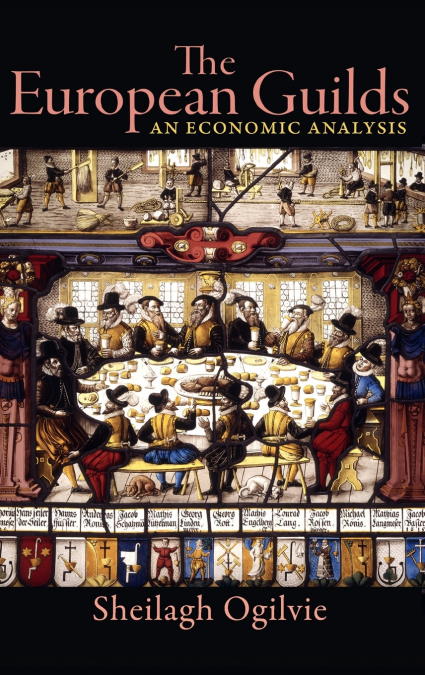
  • The European Guilds
    Sheilagh Ogilvie
    A comprehensive analysis of European craft guilds through eight centuries of economic historyGuilds ruled many crafts and trades from the Middle Ages to the Industrial Revolution, and have always attracted debate and controversy. They were sometimes viewed as efficient institutions that guaranteed quality and skills. But they also excluded competitors, manipulated markets, and ...
  • Technological Change and the British Iron Industry, 1700-1870
    Charles K. Hyde
    This book describes technological change in an industry that played a central role in the Indsutrial Revolution. While earlier scholars have examined isolated aspects of ironmaking in the eighteenth- and nineteenth-century Britain, Charles Hyde surveys all aspects of its development. Costs, prices, profits, shrewd leaders, competition, new inventions, and productivity all figur...
  • Technology Differences over Space and Time
    Francesco Caselli
    Technology Differences over Space and Time looks at how countries use their productive resources-such as workers, skills, equipment and structures, and natural resources. Francesco Caselli develops methods to assess the efficiency with which productive inputs are used, and how these efficiencies vary across countries and over time.Caselli finds that richer countries use skilled...
  • Cybersecurity Measures for Logistics Industry Framework
    Global supply chains are becoming more customer-centric and sustainable thanks to next-generation logistics management technologies. Automating logistics procedures greatly increases the productivity and efficiency of the workflow. There is a need, however, to create flexible and dynamic relationships among numerous stakeholders and the transparency and traceability of the supp...