Is Science Compatible with Free Will?

Is Science Compatible with Free Will?


208,81 €
IVA incluido
Consulta disponibilidad
Editorial:
Springer Nature B.V.
Año de edición:
2012
Materia
Neurología y neurofisiología clínicas
ISBN:
9781461452119

Selecciona una librería:

  • Librería Samer Atenea
  • Librería Aciertas (Toledo)
  • Kálamo Books
  • Librería Perelló (Valencia)
  • Librería Elías (Asturias)
  • Donde los libros
  • Librería Kolima (Madrid)
  • Librería Proteo (Málaga)

Anyone who claims the right ’to choose how to live their life’ excludes any purely deterministic description of their brain in terms of genes, chemicals or environmental influences. For example, when an author of a text expresses his thoughts, he assumes that, in typing the text, he governs the firing of the neurons in his brain and the movement of his fingers through the exercise of his own free will: what he writes is not completely pre-determined at the beginning of the universe. Yet in the field of neuroscience today, determinism dominates. There is a conflict between the daily life conviction that a human being has free will, and deterministic neuroscience. When faced with this conflict two alternative positions are possible: Either human freedom is an illusion, or deterministic neuroscience is not the last word on the brain and will eventually be superseded by a neuroscience that admits processes not completely determined by the past. This book investigates whether it is possible to have a science in which there is room for human freedom. The book generally concludes that the world and the brain are governed to some extent by non-material agencies, and limited consciousness does not abolish free will and responsibility. The authors present perspectives coming from different disciplines (Neuroscience, Quantumphysics and Philosophy) and range from those focusing on the scientific background, to those highlighting rather more a philosophical analysis. However, all chapters share a common characteristic: they take current scientific observations and data as a basis from which to draw philosophical implications. It is these features that make this volume unique, an exceptional interdisciplinary approach combining scientific strength and philosophical profundity. We are convinced that it will strongly stimulate the debate and contribute to new insights in the mind-brain relationship. ​
Artículos relacionados

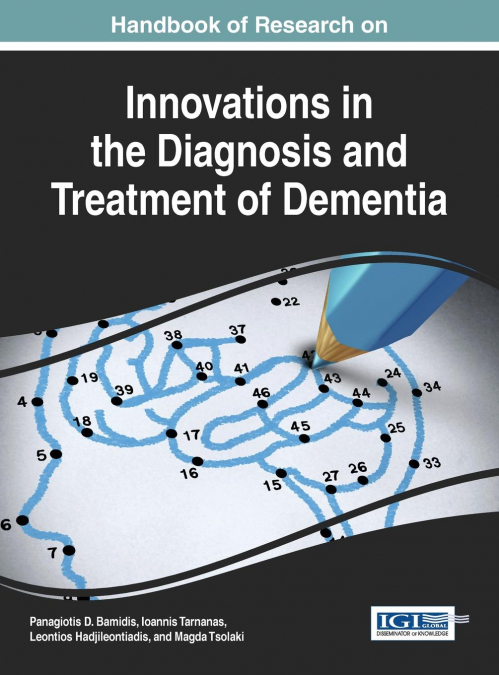
  • Handbook of Research on Innovations in the Diagnosis and Treatment of Dementia
    Ionnis Tarnanas / Leontios Hadjileontiadis / Panagiotis D Bamidis
    Technology is playing an increasing role in the lives of the elderly. One of the most prevalent developments for the aging population is the use of technological innovations for intervention and treatment of individuals with mental impairments. The Handbook of Research on Innovations in the Diagnosis and Treatment of Dementia offers empirical research and theoretical analyses o...
  • Biomedical Engineering and Cognitive Neuroscience for Healthcare
    Jinglong Wu
    New developments in medical technology have paved the way for the ongoing studies of cognitive neuroscience and biomedical engineering for healthcare. Their different but interconnected aspects of science and technology seek to provide new solutions for difficult healthcare problems and impact the future of the quality of life. Biomedical Engineering and Cognitive Neuroscience ...
  • Handbook of Functional MRI Data Analysis
    Jeanette A. Mumford / Russell A. Poldrack / Thomas E. Nichols
    ...
    Disponible

    63,88 €

  • How Do You Feel?
    A. D. Craig
    A book that fundamentally changes how neuroscientists and psychologists categorize sensations and understand the origins and significance of human feelingsHow Do You Feel? brings together startling evidence from neuroscience, psychology, and psychiatry to present revolutionary new insights into how our brains enable us to experience the range of sensations and mental states kno...
    Disponible

    47,73 €

  • Deep Learning Approaches for Early Diagnosis of Neurodegenerative Diseases
    Within the context of global health challenges posed by intractable neurodegenerative diseases like Alzheimer’s and Parkinson’s, the significance of early diagnosis is critical for effective intervention, and scientists continue to discover new methods of detection. However, actual diagnosis goes beyond detection to include a significant analysis of combined data for many cases...
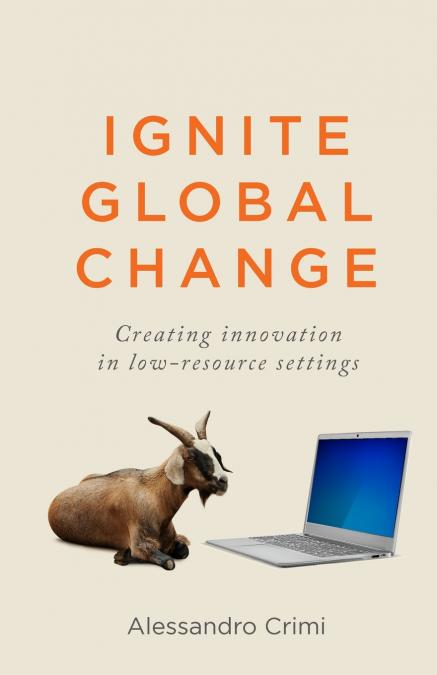
  • Ignite Global Change
    Alessandro Crimi
    Your essential guide to global entrepreneurship and activism. From Accra and Mumbai to Milan and New York, a vibrant new generation of activist entrepreneurs turn visionary ideas into impactful realities. Ignite Global Change offers a roadmap for crafting wealth from minimal resources, from ideation to implementation. Its practical, real-world approach provides strategies that ...
    Disponible

    23,34 €