Introduction to Logic

Introduction to Logic

Immanuel Kant

10,13 €
IVA incluido
Disponible
Editorial:
Philosophical Library
Año de edición:
1963
Materia
Filosofía: lógica
ISBN:
9780806529745
10,13 €
IVA incluido
Disponible

Selecciona una librería:

  • Librería Samer Atenea

  • Kálamo Books
  • Librería Elías (Asturias)
  • Librería Kolima (Madrid)
  • Librería Proteo (Málaga)

Written during the height of the Enlightenment, Kant’s Introduction to Logic is an essential primer for anyone interested in the study of Kantian views on logic, aesthetics, and moral reasoning. More accessible than his other books, Introduction to Logic lays the foundation for his writings with a clear discussion of each of his philosophical pursuits. For more advanced Kantian scholars, this book can bring to light some of the enduring issues in Kant’s repertoire, and for the beginner, it can open up the philosophical ideas of one of most influential thinkers on modern philosophy. This edition comprises two parts, including the first Introduction to Logic and the second an essay titled The False Subtlety of the Four Syllogistic Figures, in which Kant analyzes Aristotelian logic. Immanuel Kant was a Prussian philosopher, physicist, and mathematician whose contributions to the study of logic, epistemology, metaphysics, aesthetics, and moral reasoning have had a lasting influence on philosophical scholarship. Born in Königsberg, East Prussia in 1724 to a modest family, Kant was raised Pietist, and initially went to the University of Königsberg to study theology. He later abandoned theology for mathematics and physics after becoming interested in the work of Sir Isaac Newton. He was appointed chair of logic and metaphysics at the University of Königsberg and, at the height of the Enlightenment, began publishing his most famous philosophical texts, including his most important work, Foundations of the Metaphysics of Morals. Kant has had a tremendous impact on modern philosophy, influencing scholars throughout history, including Karl Marx and G. W. F. Hegel, and he continues to be read and studied today. 3
Artículos relacionados

  • Argument, Sex and Logic
    Dov Gabbay / Gadi Rozenberg / Lydia Rivlin
    This book is intended for the formal argumentation community and for the sex offender therapist community.Both communities use logic.The message of this book is that the argumentation logic models are applicable for modelling and improving the practices of the sex offender therapist community and in parallel stimulate new logic models of argumentationDov Gabbay is a Professor a...
    Disponible

    30,70 €

  • Experience and the Ultimate Structure of Reality on Husserl’s Pursuit of Truth
    Claire Hill / Claire Ortiz Hill
    Experience and the Ultimate Structure of Reality, Husserl’s Pursuit of Truth follows the evolution of Edmund Husserl’s thought through those crucial years at the end of the nineteenth century and the beginning of the twentieth century when reason compelled the young doctor of mathematics to forsake empirical psychology and to strive to find the theories respecting the central t...
    Disponible

    24,14 €

  • Memorabilia (Royal Collector’s Edition) (Case Laminate Hardcover with Jacket)
    Henry Graham Dakyns / Xenophon
    The lengthiest and most famous of Xenophon’s Socratic writings, the Memorabilia is a defense of Socrates, offering edifying examples of Socrates’ conversations and activities. Xenophon argues that Socrates was innocent of the formal charges against him: failure to recognize the gods of Athens, introduction of new gods, and corruption of youth. He demonstrates through recounted ...
  • Logic
    Bernard Bosanquet
    ...
    Disponible

    65,95 €

  • Logic
    Bernard Bosanquet
    ...
    Disponible

    50,66 €

  • Logic and Information
    Edwin Mares
    ...
    Disponible

    29,90 €

Otros libros del autor

  • Kant
    Immanuel Kant
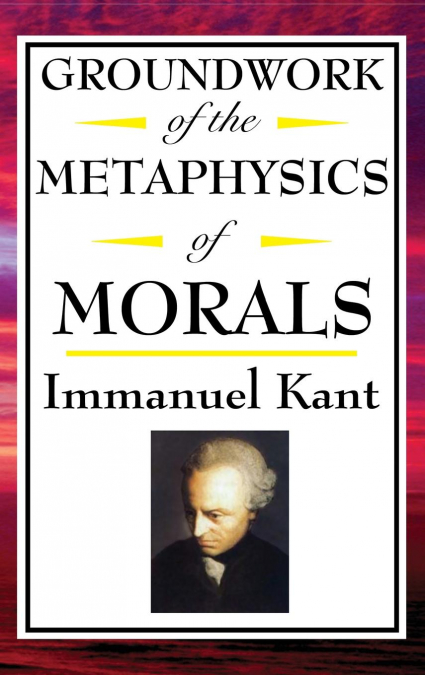
    Kant’s Groundwork of the Metaphysics of Morals is one of the most important works in modern moral philosophy. It belongs beside Plato, Aristotle, Machiavelli, and Hobbes. Here Kant sets out to articulate and defend the Categorical Imperative - the fundamental principle that underlies moral reasoning - and to lay the foundation for a comprehensive account of justice and human vi...
  • Critique of Pure Reason
    Immanuel Kant
    'Critique of Pure Reason' by Immanuel Kant is a foundational work of philosophy that radically redefines how we understand knowledge, reality, and the limits of human reason.First published in 1781, Kant investigates how our minds shape experiences, introducing the concept that space and time are not properties of the external world, but forms of human intuition. He distinguish...
    Disponible

    30,43 €

  • Critique of Judgement
    Immanuel Kant
    Immanuel Kant’s influential philosophical treatise Critique of Judgement, originally published in 1790, constituting Kant’s major contributions to the fields of aesthetics and teleology. Critique of Judgement is the third of Kant’s critiques and is divided into two main sections: the Critique of Aesthetic Judgment and the Critique of Teleological Judgment, and also includes a l...
    Disponible

    23,02 €

  • Three Critiques
    Immanuel Kant
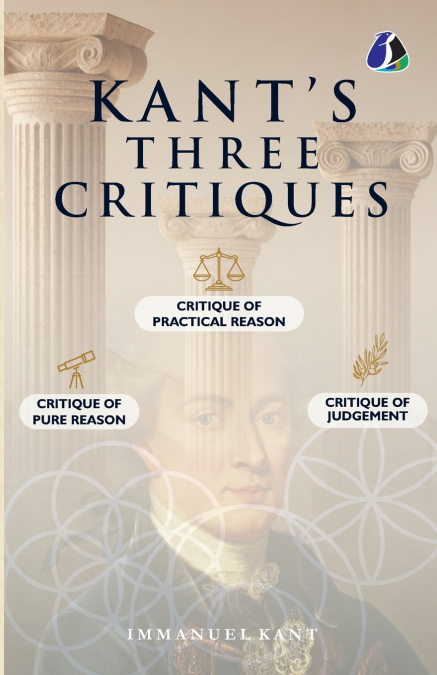
    In 'Kant’s Three Critiques,' Immanuel Kant presents a foundational exploration of Human Knowledge, Ethics, and Aesthetics through his seminal texts: the 'Critique of Pure Reason,' 'Critique of Practical Reason,' and 'Critique of Judgment.'In one volume, all three of Immanuel Kant’s Critiques -- monumental works that marked the beginning of modern Western philosophy:Critique of ...
    Disponible

    51,67 €

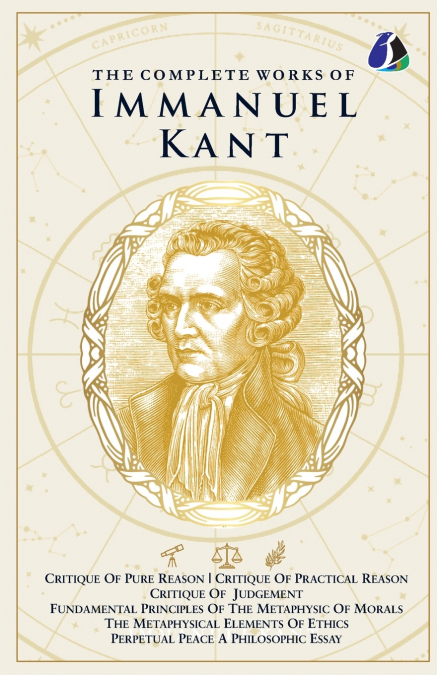
  • Complete Works of Immanuel Kant
    Immanuel Kant
    Immanuel Kant’s corpus revolutionizes Western philosophy by establishing a system of Transcendental Idealism and deontological ethics. He argues that while sensory experience provides raw data, the human mind actively structures this input using innate, a priori concepts, thereby shaping our perception of reality while limiting our knowledge strictly to the observable world.Inc...
    Disponible

    57,05 €

  • The Metaphysical Elements of Ethics
    Immanuel Kant
    The Metaphysical Elements of Ethics is Immanuel Kant’s foundational treatise on moral philosophy. It establishes ethics on pure reason rather than empirical desires, arguing that moral duties are unconditional commands (Categorical Imperatives). Kant introduces a strictly deontological framework, where the moral worth of an action is determined by intention and duty, not by its...
    Disponible

    9,10 €