Introduction to Automated Modeling with FEniCS

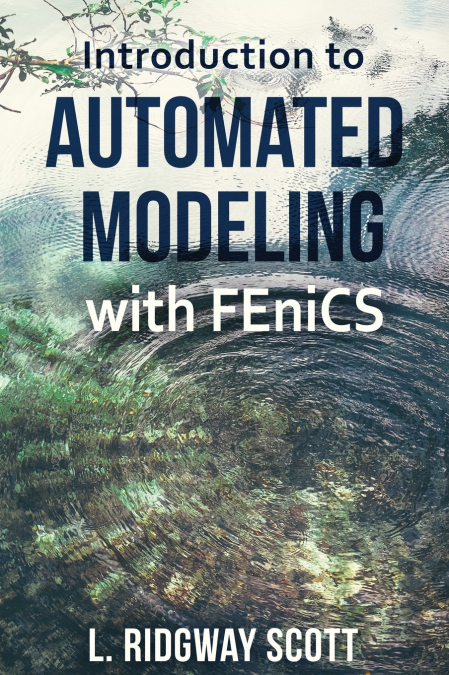
Introduction to Automated Modeling with FEniCS

Introduction to Automated Modeling with FEniCS

L Ridgway Scott / L. Ridgway Scott

158,49 €
IVA incluido
Consulta disponibilidad
Editorial:
Computational Modeling Initiative LLC
Año de edición:
2018
ISBN:
9781949133004

Selecciona una librería:

  • Librería Samer Atenea
  • Librería Aciertas (Toledo)
  • Kálamo Books
  • Librería Perelló (Valencia)
  • Librería Elías (Asturias)
  • Donde los libros
  • Librería Kolima (Madrid)
  • Librería Proteo (Málaga)

Introduction to Automated Modeling with FEniCS exploressolution of partial differential equations via the finiteelement method. It illustrates the use of automated softwaregeneration via the FEniCS Project systems. The book reviewsmost common types of partial differential equations arisingin technical simulation. It is ideal for engineers and forcomputational and applied mathematicians.PDEs are used pervasively in science, engineering, and technologyto model phenomena of interest. The most widely used techniqueto convert a PDE into a computable form is the finite element method.This book is primarily about PDEs as they are used in models. Ouremphasis is on the diversity of PDEs that occur in practice, theirfeatures and their foibles. Our intent is to enable explorationof new models and to show how easily this can be done. However,this approach is not without caveats. We describe pitfalls in variousaspects of the use of PDE models. We show how to be sure that a PDEmodel is well posed in many cases. In particular, we use this theoryto understand appropriate boundary conditions.Secondarily, the book introduces basic concepts of numerical methodsfor approximating the solutions of PDEs. This is done so that thelanguage used by software from the FEniCS Project can be properlyunderstood. We limit the discussion of numerical methods as much aspossible, except when it is essential to avoid catastrophes.A tertiary objective is to present some examples of the modelingprocess. One important type of model is derived by specializing amore general model. An important example of this is the plate modelin structural mechanics. We show how the plate model is derived fromthe general elasticity model and indicate some issues that ariserelated to it. When relevant, we explain other modeling approaches aswell. Ultimately, FEniCS can support an automated approach to modeling.
Artículos relacionados

  • Modeling and Simulation Techniques in Structural Engineering
    The development of new and effective analytical and numerical models is essential to understanding the performance of a variety of structures. As computational methods continue to advance, so too do their applications in structural performance modeling and analysis. Modeling and Simulation Techniques in Structural Engineering presents emerging research on computational techniqu...
  • Arduino Programming
    Ryan roffe
    New to programming and seeking an open-source electronic interface? Look no further than Arduino!With various Arduino models available and a plethora of online and offline projects utilizing Arduino technology, its versatility and user-friendliness have drawn both beginners and experts alike.Introducing 'Arduino Programming: A Comprehensive Beginner’s Tutorial to Master Arduin...
    Disponible

    23,50 €

  • Modeling and Simulation of Functional Nanomaterials for Forensic Investigation
    Nanotechnology continues to contribute to the progress of innovations in the area of forensic science ranging from sensing, DNA monitoring, and counterfeiting to fingerprinting. In recent years, functional nanomaterials are widely applied in nanoscience and forensic investigation. They can be used in future interdisciplinary research by scientists, engineers, and biotechnologis...
    Disponible

    249,04 €

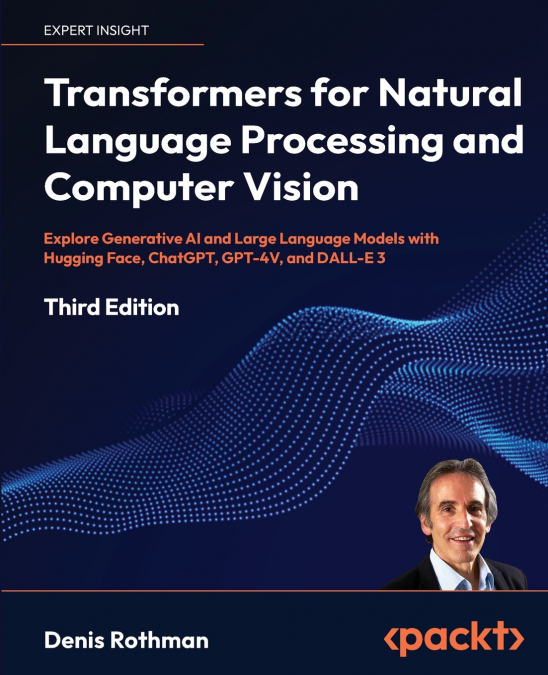
  • Transformers for Natural Language Processing and Computer Vision - Third Edition
    Denis Rothman
    The definitive guide to LLMs, from architectures, pretraining, and fine-tuning to Retrieval Augmented Generation (RAG), multimodal AI, risk mitigation, and practical implementations with ChatGPT, Hugging Face, and Vertex AIGet With Your Book: PDF Copy, AI Assistant, and Next-Gen Reader FreeKey Features:- Compare and contrast 20+ models (including GPT, BERT, and Llama) and multi...
    Disponible

    79,99 €

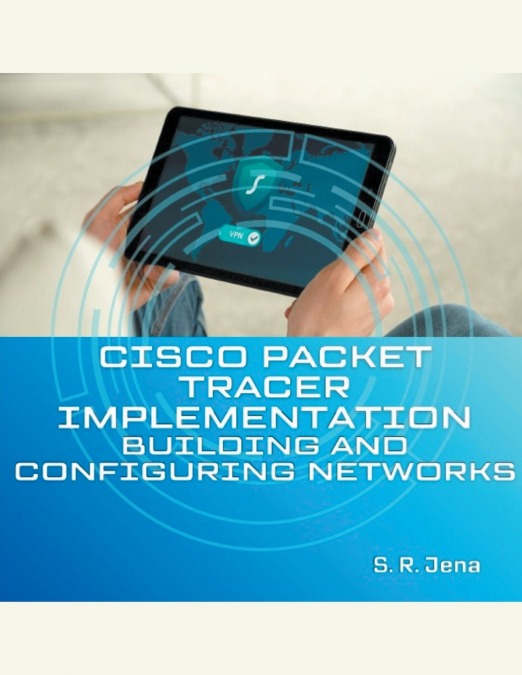
  • Cisco Packet Tracer Implementation
    S. R. Jena
    Welcome to the World of Cisco Packet Tracer! This book 'Cisco Packet Tracer Implementation: Building and Configuring Networks' serves as a comprehensive guide for network engineers, students, and enthusiasts who want to master the art of building and configuring networks using Cisco Packet Tracer. In today’s digital age, networks play a critical role in connecting people, devic...
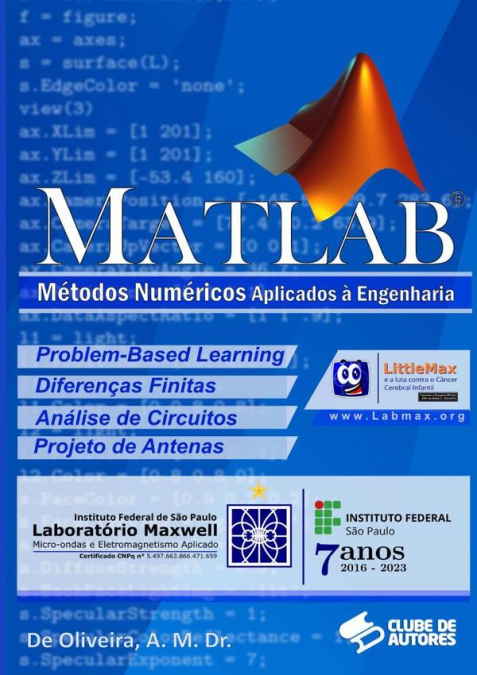
  • Matlab
    De Dr. A. M. Oliveira
    O objetivo deste trabalho é apresentar a aplicação da metodologia de aprendizagem baseada em problemas (PBL) paraaulas da disciplinas de Algoritmos e Cálculo Numérico em Matlab para cursos de Engenharia, com intuito de comprometer os alunos com a resolução de problemas reais de engenharia através do uso da PBL de tal forma que os mesmos sintam-se inspirados a participar das aul...
    Disponible

    15,08 €