
Inicio > Derecho > Teoría general del derecho > Interpol e la lotta al traffico internazionale di armi
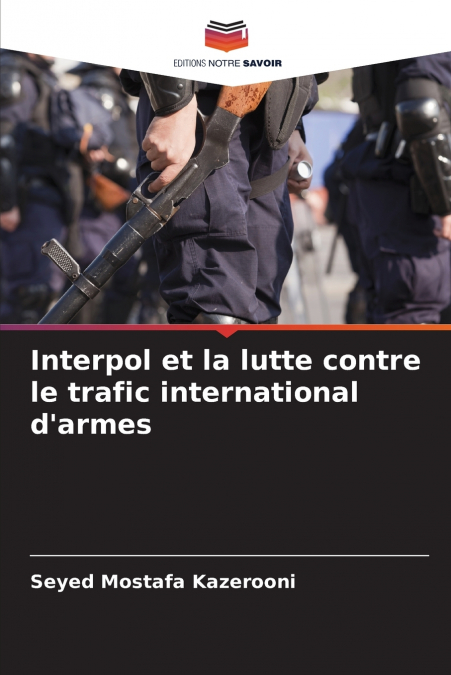
Interpol e la lotta al traffico internazionale di armi

Interpol e la lotta al traffico internazionale di armi

Seyed Mostafa Kazerooni

53,79 €
IVA incluido
Disponible
Editorial:
KS OmniScriptum Publishing
Año de edición:
2025
Materia
Teoría general del derecho
ISBN:
9786200745156
53,79 €
IVA incluido
Disponible

Selecciona una librería:

  • Librería Samer Atenea
  • Librería Aciertas (Toledo)
  • Kálamo Books
  • Librería Perelló (Valencia)
  • Librería Elías (Asturias)
  • Donde los libros
  • Librería Kolima (Madrid)
  • Librería Proteo (Málaga)

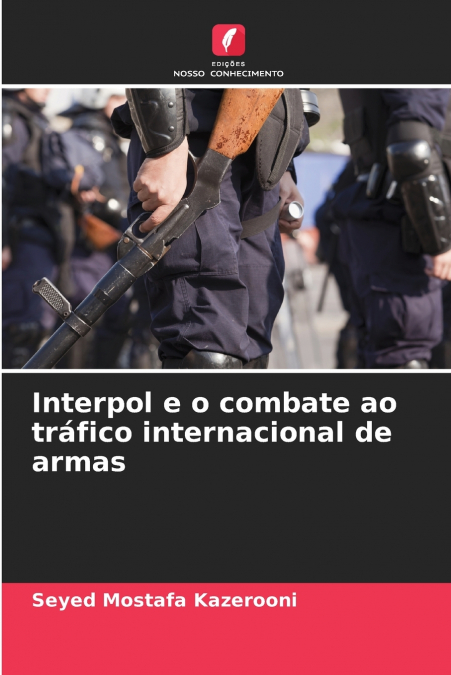
Gli sforzi internazionali per combattere il traffico di armi hanno una lunga storia che risale all’epoca della Società delle Nazioni. Durante la Guerra Fredda, la principale cooperazione internazionale per combattere il traffico internazionale di armi era finalizzata all’emanazione di dichiarazioni non vincolanti che non hanno avuto alcun effetto concreto. Ai sensi dell’articolo 3 dello Statuto dell’INTERPOL, che vieta all’Organizzazione qualsiasi intervento e lotta contro attività di natura politica, militare, religiosa o razziale, va sottolineato che nell’ambito della lotta dell’INTERPOL contro il traffico internazionale di armi, tale operazione deve essere priva di qualsiasi carattere militare, politico, religioso o razziale.Sebbene la lotta al traffico internazionale di armi non sia stata chiaramente dichiarata una delle sei priorità globali dell’INTERPOL, finora l’Organizzazione ha compiuto sforzi concreti per aiutare le forze dell’ordine ad affrontare meglio le questioni transnazionali relative all’uso improprio delle armi.


Artículos relacionados

  • EU General Data Protection Regulation (GDPR)
    IT Governance Privacy Team
    An in-depth guide to complying with the EU GDPR.Now in its second edition, EU GDPR – An Implementation and Compliance Guide is a clear and comprehensive guide to this new data protection law, providing a detailed commentary on the Regulation, and setting out the obligations of data  processors and controllers in clear and comprehensible terms.Read this book to learn: How the ...
    Disponible

    30,10 €

  • Banking Laws and Regulations in Nigeria
    Bello Mohammed Magaji
    Banking Law and Regulations in Nigeria: Selected Themes essentially deals with the laid down rules or code of conduct meant to control and set standards for banking business. Indeed, the main aim of the ongoing banking reforms in Nigeria, started in 2004, is to ensure banks’ conformity to the laid down banking rules and regulations. The eleven-chapter book contains vital and ri...
    Disponible

    41,17 €

  • States and the Interpretation of Treaties
    Dimitris Liakopoulos
    States and the Interpretation of Treaties opens with a provocative reconsideration of a debate on the subject of comparative international legal obligations by the United Nations’s International Law Commission. In this book, distinguished Tufts University legal scholar Dimitris Liakopoulos identifies and explores relevant considerations in the work of the Commission and offers ...
  • The role of customs in international treaties
    Dimitris Liakopoulos
    The Role of Customs in International Treaties concentrates on issues of friction between member states of the United Nations. In view of the role played by the United Nations in resolving international disputes, Dimitris Liakopoulos hypothesizes that 'practical guides' based on custom often catalyze the positions taken by states, courts, scholars, and other actors, constituting...
  • Debtor protection in American and European Union bankruptcy law
    Dimitris Liakopoulos
    In Debtor Protection in American and European Union Bankruptcy Law, international law scholar Dimitris Liakopulos raises a delicate issue at the foundations of the modern banking system by analyzing US bankruptcy law with a focus on the concept of automatic stay. His work identifies legal sources and authorities having repercussions in terms of operational protection. It then e...
  • Capital punishment in American courts
    James Biser Whisker / Kevin Spiker
    In the 400 years since the first known execution was carried out for treason in Virginia, American jurisdictions have debated both the appropriateness and methods of capital punishment. Over that time, courts have placed varying restrictions on its application, excluding categories of citizens (for example the insane or the underaged) and evaluating and excluding methods of exe...

Otros libros del autor

  • Interpol und die Bekämpfung des internationalen Waffenhandels
    Seyed Mostafa Kazerooni
    Internationale Bemühungen zur Bekämpfung des Waffenhandels haben eine lange Geschichte und reichen bis in die Zeit des Völkerbundes zurück. Während des Kalten Krieges konzentrierte sich die internationale Zusammenarbeit zur Bekämpfung des internationalen Waffenhandels auf die Verabschiedung unverbindlicher Erklärungen, die jedoch keine Wirkung zeigten. Gemäß Artikel 3 des INTER...
    Disponible

    53,85 €

  • Interpol et la lutte contre le trafic international d’armes
    Seyed Mostafa Kazerooni
    Les efforts internationaux visant à lutter contre le trafic d’armes remontent à loin et remontent à l’époque de la Société des Nations. Pendant la guerre froide, la coopération internationale en matière de lutte contre le trafic international d’armes s’est principalement traduite par l’adoption de déclarations non contraignantes qui sont restées sans effet. Conformément à l’art...
    Disponible

    53,85 €

  • Interpol i zwalczanie międzynarodowego handlu bronią
    Seyed Mostafa Kazerooni
    Międzynarodowe działania na rzecz zwalczania handlu bronią mają długą historię i sięgają czasów Ligi Narodów. W okresie zimnej wojny główna współpraca międzynarodowa w zakresie zwalczania międzynarodowego handlu bronią polegała na wydawaniu niewiążących oświadczeń, które w rzeczywistości nie przyniosły żadnych efektów. Zgodnie z art. 3 statutu INTERPOLU, który zabrania organiza...
    Disponible

    53,79 €

  • Interpol e o combate ao tráfico internacional de armas
    Seyed Mostafa Kazerooni
    Os esforços internacionais para combater o tráfico de armas têm uma longa história e remontam à época da Liga das Nações. Durante a Guerra Fria, a principal cooperação internacional para combater o tráfico internacional de armas consistiu na emissão de declarações não vinculativas que não tiveram qualquer efeito prático. De acordo com o artigo 3.º do Estatuto da INTERPOL, que p...
    Disponible

    53,79 €