 Librería Samer Atenea
 Kálamo Books
 Librería Elías (Asturias)
 Librería Kolima (Madrid)
 Librería Proteo (Málaga)
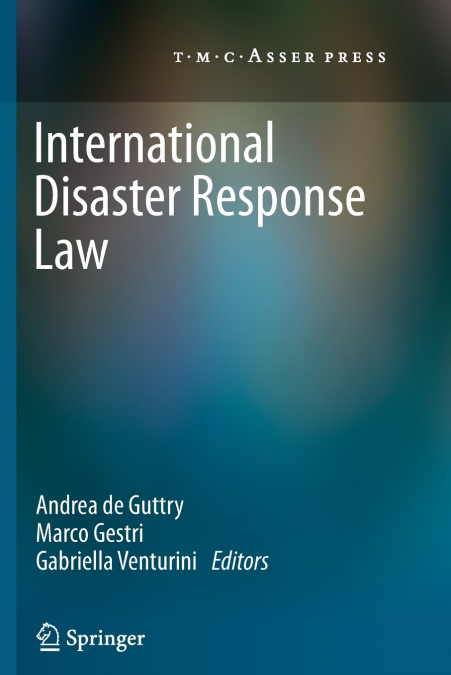
With a Foreword by Kristalina Georgieva, European Commissioner for International Cooperation, Humanitarian Aid and Crisis ResponseOver the last decades natural and man-made disasters have been increasing in terms of frequency, size, number of people affected and material damage caused. There is growing awareness of the importance of adequate national and international legal frameworks for disaster prevention, mitigation and response. The implementation of these frameworks, however, poses serious challenges.This book analyses International Disaster Response Law as developed in recent times and identifies the main existing normative gaps. The authors address the rights and duties of States in preventing and mitigating disasters, in facilitating access to their territory for humanitarian relief actors, as well as issues related to liability and compensation. Due attention is paid to European Union law governing disaster response (and to its reform in the light of the Lisbon Treaty) and to the main trends in domestic legislation. Human rights obligations are thoroughly examined and the potential relevance of international criminal law is assessed. Additional topics such as the status of relief personnel, the hindrances to the delivery of relief consignments by customs and excise administration, the use of civilian and military defence assets in emergency situations, the mechanisms and procedures available to offer financial support for recovery and rehabilitation, risk insurance, and the issue of corruption during disaster-related activities are specifically addressed.By drawing on the expertise of lawyers, political scientists, economists and humanitarian practitioners, the book promotes much-needed interdisciplinary dialog and sheds light on a largely uncharted field of research. It is therefore essential reading for academics and practitioners in international and EU law, policy makers, civil protection and humanitarian operators and for anyone interested in exploring the legal facets of the international community’s response to large-scale calamitous events.Over the last decades natural and man-made disasters have been increasing in terms of frequency, size, number of people affected and material damage caused. There is growing awareness of the importance of adequate national and international legal frameworks for disaster prevention, mitigation and response. The implementation of these frameworks, however, poses serious challenges.This book analyses International Disaster Response Law as developed in recent times and identifies the main existing normative gaps. The authors address the rights and duties of States in preventing and mitigating disasters, in facilitating access to their territory for humanitarian relief actors, as well as issues related to liability and compensation. Due attention is paid to European Union law governing disaster response (and to its reform in the light of the Lisbon Treaty) and to the main trends in domestic legislation. Human rights obligations are thoroughly examined and the potential relevance of international criminal law is assessed. Additional topics such as the status of relief personnel, the hindrances to the delivery of relief consignments by customs and excise administration, the use of civilian and military defence assets in emergency situations, the mechanisms and procedures available to offer financial support for recovery and rehabilitation, risk insurance, and the issue of corruption during disaster-related activities are specifically addressed.By drawing on the expertise of lawyers, political scientists, economists and humanitarian practitioners, the book promotes much-needed interdisciplinary dialog and sheds light on a largely uncharted field of research. It is therefore essential reading for academics and practitioners in international and EU law, policy makers, civil protection and humanita