 Librería Samer Atenea
 Kálamo Books
 Librería Elías (Asturias)
 Librería Kolima (Madrid)
 Librería Proteo (Málaga)
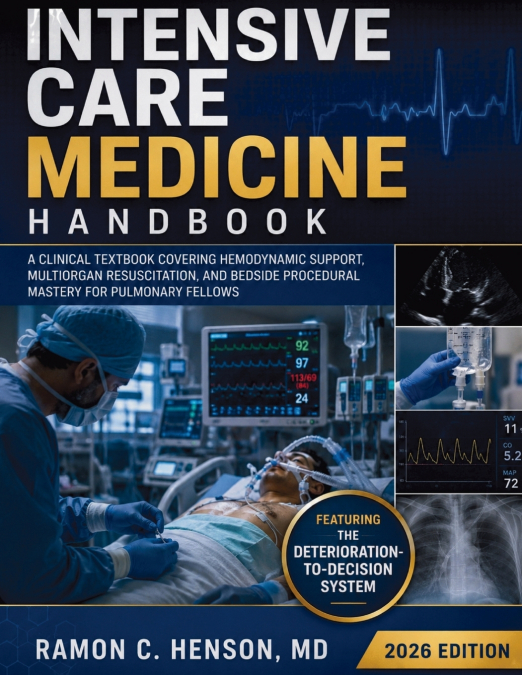
Built for the physician managing a patient whose vital signs are quietly wrong before they’re dramatically wrong, this handbook connects the physiology of early decompensation - oxygen delivery, intracranial compliance, coagulation cascades, acid-base chemistry - to the specific bedside action each derangement demands. It moves from primary assessment and point-of-care ultrasound through every organ system a critically ill adult can fail in, and into the procedural, pharmacologic, and ethical decisions that follow. Point-of-care ultrasound algorithms, ventilator troubleshooting sequences, and antidote-driven reversal protocols turn dense physiology into a decision you can defend at 3 a.m. What This Book Puts in Your Hands Classify undifferentiated shock at the bedside - point-of-care cardiac and IVC ultrasound that separates hypovolemic, cardiogenic, distributive, and obstructive physiology before the labs return. Fix the ventilator without guessing - the disconnect-and-reassess maneuver that distinguishes auto-PEEP hypotension from tension pneumothorax in status asthmaticus and severe COPD. Run the Hour-1 sepsis bundle correctly - lactate, cultures, antimicrobials, fluids, and vasopressors sequenced for time-critical execution, not textbook order. Recognize herniation before the second pupil goes - the parallel imaging-and-treatment response that doesn’t wait on radiology to act. Reverse the bleed that shouldn’t be happening - targeted antidotes for direct oral anticoagulants, tricyclic overdose, and toxic alcohol ingestion, titrated to a physiologic endpoint instead of a fixed dose. Separate TTP from DIC from HIT - the coagulation and smear findings that change platelet transfusion from routine to contraindicated. Time the prognosis conversation correctly - the 72-hour, multimodal framework that keeps a recoverable patient from a premature withdrawal decision. Negotiate a time-limited trial that actually resolves conflict - a structured approach to the family meeting that turns disagreement into shared decision-making. Put the reasoning your next unstable patient needs within arm’s reach - open it before the next call, not after.