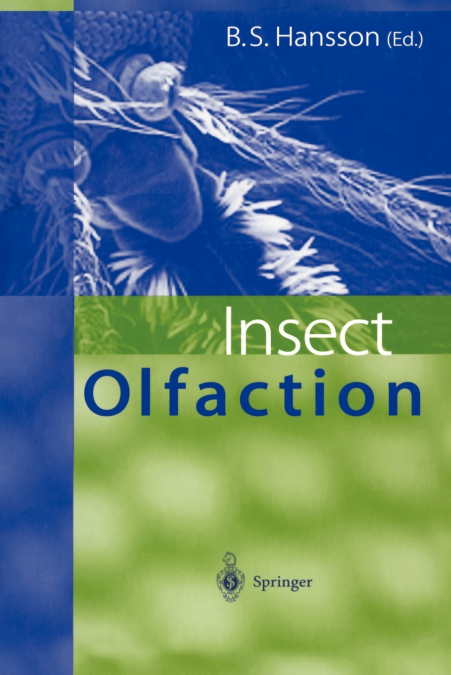
Insect Olfaction

Insect Olfaction

Bill S. Hansson

463,67 €
IVA incluido
Consulta disponibilidad
Editorial:
Springer Nature B.V.
Año de edición:
1999
ISBN:
9783540650348

Selecciona una librería:

  • Librería Samer Atenea
  • Librería Aciertas (Toledo)
  • Kálamo Books
  • Librería Perelló (Valencia)
  • Librería Elías (Asturias)
  • Donde los libros
  • Librería Kolima (Madrid)
  • Librería Proteo (Málaga)

JOHN G. HILDEBRAND Research on insect olfaction is important for at least two reasons. First, the olfactory systems of insects and their arthropod kin are experi­ mentally favourable models for studies aimed at learning about general principles of olfaction that apply to vertebrates and invertebrates alike. Detailed comparisons between the olfactory pathways in vertebrates and insects have revealed striking similarities of functional organisation, physiol­ ogy, and development, suggesting that olfactory information is processed through neural mechanisms more similar than different in these evolution­ arily remote creatures. Second, insect olfaction itself is important because of the economic and medical impact of insects that are agricultural pests and disease vectors, as well as positive impact of beneficial species, such as the bees and moths responsible for pollination and production of honey. The harm or benefit attributable to an insect is a function of what it does - that is, of its behaviour - which is shaped by sensory information. Often olfaction is the key modality for control of basic insect behaviour, such as ori­ entation and movement toward, and interactions with, potential mates, appro­ priate sites for oviposition, and sources of food. Not surprisingly, therefore, much work on insect olfaction has been motivated by long-term hopes of using knowledge of this pivotal sensory system to design strategies for mon­ itoring and managing harmful species and fostering the welfare of beneficial ones.
Artículos relacionados

  • Interviews with my Godfather
    Juventino Manzano
    Interviews with my Godfather contains two interviews with Entomologist Dr. Edward Mockford on his discovery of the world’s smallest insect, a type of parasitic wasp, and his work on biological warfare at Camp Detrick. It also includes a poem by his Godson, Juventino Manzano, that was nominated for the Pushcart award in 2008. If you are interested in entomology or biological war...
    Disponible

    17,46 €

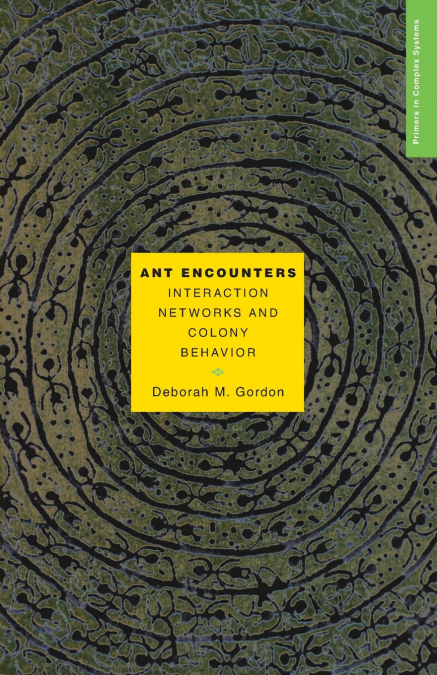
  • Ant Encounters
    Deborah M. Gordon
    How do ant colonies get anything done, when no one is in charge? An ant colony operates without a central control or hierarchy, and no ant directs another. Instead, ants decide what to do based on the rate, rhythm, and pattern of individual encounters and interactions--resulting in a dynamic network that coordinates the functions of the colony. Ant Encounters provides a reveali...
    Disponible

    43,45 €

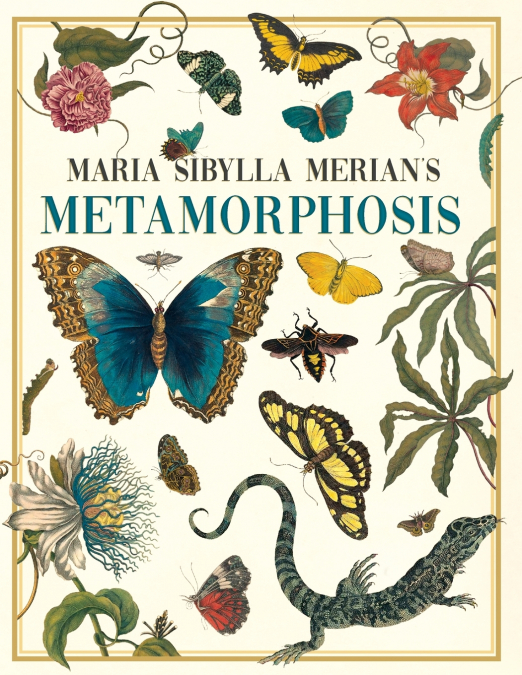
  • Maria Sibylla Merian’s Metamorphosis
    Discover the trailblazing work of artist naturalist Maria Sibylla Merian in this beautifully illustrated volume on the life cycle of butterflies and moths.Maria Sibylla Merian is one of the greatest entomologists of the seventeenth century. Her work documenting the life cycle and transformation of insects yielded a wealth of groundbreaking discoveries, captured vividly in beaut...
    Disponible

    34,73 €

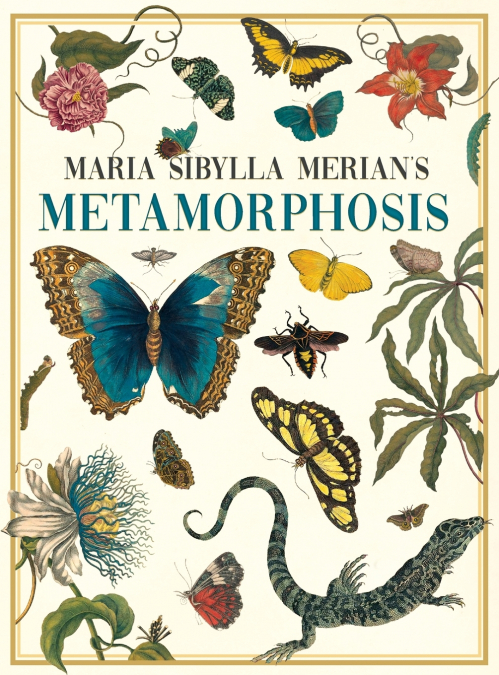
  • Maria Sibylla Merian’s Metamorphosis
    Discover the trailblazing work of artist naturalist Maria Sibylla Merian in this beautifully illustrated volume on the life cycle of butterflies and moths.Maria Sibylla Merian is one of the greatest entomologists of the seventeenth century. Her work documenting the life cycle and transformation of insects yielded a wealth of groundbreaking discoveries, captured vividly in beaut...
  • Annotated Catalogue of African Grasshoppers
    H. B. Johnston
    ...
    Disponible

    89,54 €

  • Annotated Catalogue of African Grasshoppers
    H. B. Johnston
    ...
    Disponible

    90,46 €

Otros libros del autor

  • Insect Olfaction
    Bill S. Hansson
    JOHN G. HILDEBRAND Research on insect olfaction is important for at least two reasons. First, the olfactory systems of insects and their arthropod kin are experi­ mentally favourable models for studies aimed at learning about general principles of olfaction that apply to vertebrates and invertebrates alike. Detailed comparisons between the olfactory p...
    Disponible

    465,05 €