 Librería Samer Atenea
 Kálamo Books
 Librería Elías (Asturias)
 Librería Kolima (Madrid)
 Librería Proteo (Málaga)
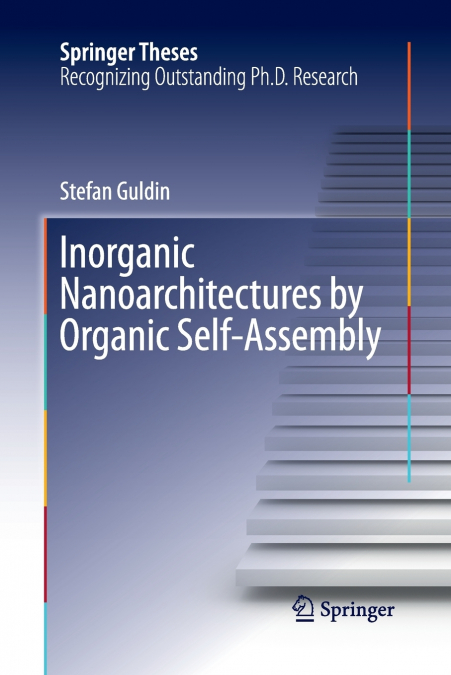
Macromolecular self-assembly - driven by weak, non-covalent, intermolecular forces - is a common principle of structure formation in natural and synthetic organic materials. The variability in material arrangement on the nanometre length scale makes this an ideal way of matching the structure-function demands of photonic and optoelectronic devices. However, suitable soft matter systems typically lack the appropriate photoactivity, conductivity or chemically stability. This thesis explores the implementation of soft matter design principles for inorganic thin film nanoarchitectures. Sacrificial block copolymers and colloids are employed as structure-directing agents for the co-assembly of solution-based inorganic materials, such as TiO_2 and SiO_2. Novel fabrication and characterization methods allow unprecedented control of material formation on the 10 - 500 nm length scale, allowing the design of material architectures with interesting photonic and optoelectronic properties.