INORGANIC CHEMISTRY

INORGANIC CHEMISTRY

MUKHERJEE RABINDRANATH / RABINDRANATH MUKHERJEE

143,72 €
IVA incluido
Consulta disponibilidad
Editorial:
World Scientific Publishing Co Pte Ltd
Año de edición:
2024
ISBN:
9789811281761

Selecciona una librería:

  • Librería Samer Atenea
  • Librería Aciertas (Toledo)
  • Kálamo Books
  • Librería Perelló (Valencia)
  • Librería Elías (Asturias)
  • Donde los libros
  • Librería Kolima (Madrid)
  • Librería Proteo (Málaga)

This book focuses on molecular shapes, molecular symmetry, application of molecular orbital concepts to the compounds of main-group and transition elements of varied symmetry, metal-metal bonding, organometallic compounds such as ferrocene, fundamentals of redox properties, and spectroscopic term symbols. For compounds of d-block elements, it delves into discussions on structures and bonding theories (valence bond, crystal field, and molecular orbital), properties (magnetic, spectral, and redox), and reactivities. Basics and applications of organometallic compounds of d-block elements in catalysis and selected topics of bioinorganic chemistry have also been included. An attempt has been made to integrate selected focused topics, which is expected to help both the students and instructors, reducing the need to consult other specialized books.For the convenience of the instructors and students, the book highlights in each chapter take home messages. Examples in each subtopic, and at the end of any chapter a list of further reading and exercises to critically think about the concepts are discussed. Almost every chapter lists references to the literature and reviews that has been found to be particularly useful in the advanced Inorganic Chemistry courses. At the end of the book an appendix that gives hints/full answers of the exercises is included.

Artículos relacionados

  • Recycled Polymers
    Didier Perrin
    The efficient ecodesign of secondary raw materials from recycled multiphase polymer systems is performed through the study of various things, such as:The compatibility of mixtures of recycled polymers where work on knowledge of the miscibility of mixtures depends on the different rates and the nature of the constituents;The aging of recycled polymers in terms of the structuring...
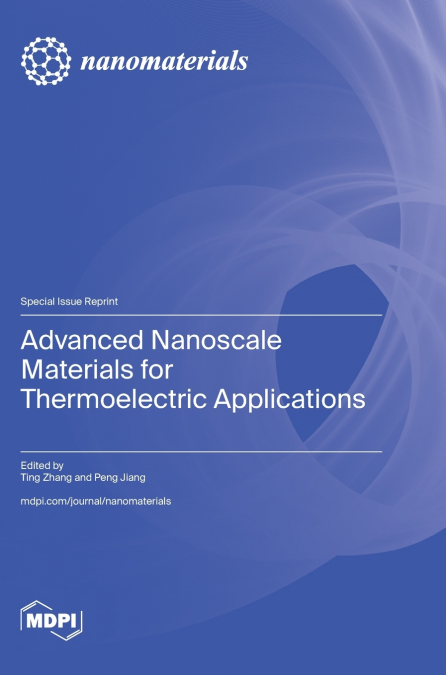
  • Advanced Nanoscale Materials for Thermoelectric Applications
    This Special Issue covers preparations, measurements, devices, and applications based on thermoelectric nanomaterials and summarizes the latest developments towards highly efficient thermoelectric nanomaterials and thermoelectric devices. ...
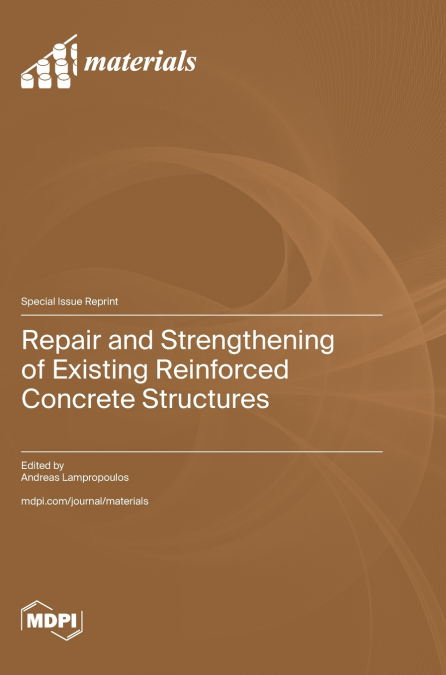
  • Repair and Strengthening of Existing Reinforced Concrete Structures
    Andreas Lampropoulos
    It is crucial that we strengthen existing structures worldwide, especially in earthquake-prone areas. Recent earthquakes have highlighted the inadequacy of many existing structures, which have been damaged from previous powerful earthquakes and have been designed without code provisions or according to old code provisions that are now obsolete. Furthermore, the majority of exis...
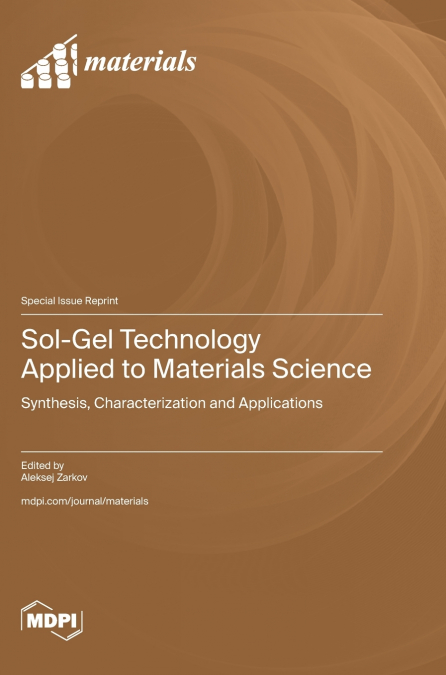
  • Sol-Gel Technology Applied to Materials Science
    Aleksej Zarkov
    Rapid advances in technologies around the globe necessitate the development of new materials, nanostructures, and multicomponent composites with specific chemical and physical properties that can meet the requirements of modern technologies. Using appropriate synthetic approaches is crucial for the preparation of inorganic materials with designed microstructure and properties. ...
  • Functional Polymer Composites
    Functional polymer composites are showing increasing potential as materials in chemistry and materials science. Polymer composites, including nanocomposites, are made via the incorporation of fillers in polymer matrices and offer many advantages. The properties of polymer composites are further improved via the surface modification of fillers or the matrix phase. Currently, the...
  • Feature Papers in Section Biosensors 2023
    Evgeny Katz
    This reprint, based on the Special Issue, provides a general overview of different biosensors, briefly explaining the general approaches to identifying them, their construction, and their performance. A discussion concerning how the required components of biosensors are combined to perform analytical work is presented. Different signal-transducing mechanisms are discussed, part...